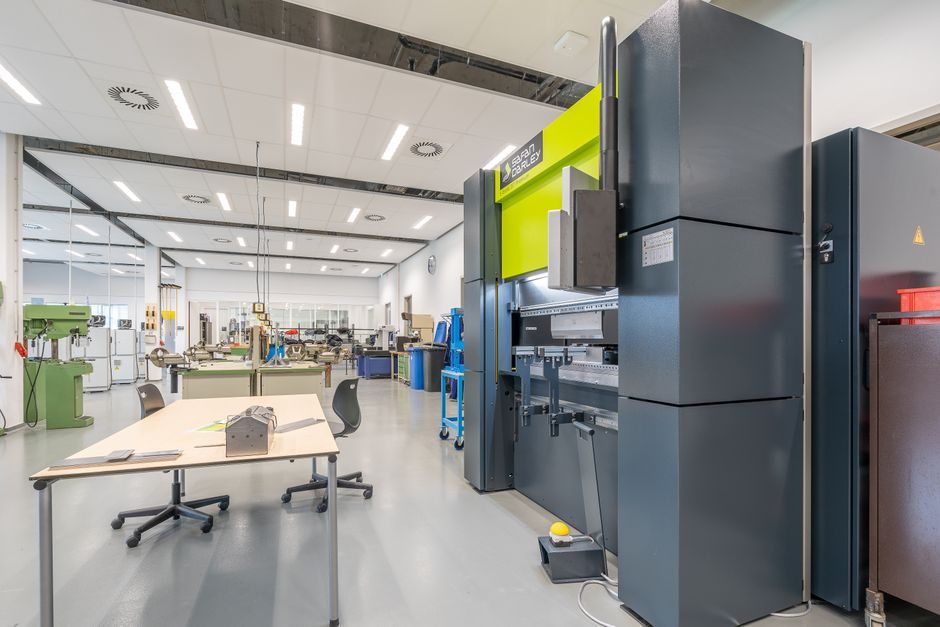
Vacuum-brazed and controlled-atmosphere-brazed liquid cold plates and heat sinks are the dominant liquid-cooling hardware class entering serial production in 2026, with Mstirling (Shenzhen) listing heat exchangers, refrigeration parts, ultra-low temperature cooling systems and brazed/welded thermal-management subassemblies as its core product categories [S3].
Shenzhen Lian Li Liquid Cooling Equipment Technology Co., Ltd., established 2014 and headquartered at Gaoke Avenue / Baolong Avenue, Longgang District, Shenzhen, has publicly positioned itself as a liquid-cooling supplier for AI infrastructure and next-generation data centers, with parallel R&D and manufacturing lines supporting that scope [S4]. Laird Thermal Systems is publishing custom-design prototyping services for ambient and below-ambient compressor-based and liquid heat-exchanger cooling loops, signalling that bespoke rather than catalogue cold plates are the norm in 2026 [S6].
Why liquid cooling moved from process water to smart manufacturing
Engineers moved liquid cooling out of the plant utility room and onto the factory floor because the heat fluxes they are trying to reject — AI accelerators, laser diodes, EV power modules, and induction welding heads — are now in the 100–1,000 W/cm² range, well above what finned heatsinks with forced air can handle [S3][S4].
The same closed-loop architectures used for server cold plates are being retrofitted onto spindle bearings, welding transformers and motor housings; multifunctional chemical additives (corrosion inhibitors, scale preventers, cavitation suppressants) are the established way of keeping these loops reliable, and have been the subject of laboratory and operational test programmes published in Russian Engineering Research [S1]. In parallel, the resin that flows through a mould is itself a fluid whose temperature, pressure and viscosity must be controlled in real time — which is why the same engineering culture that builds cold plates is also the one that builds digital twins for liquid moulding [S2].
Digital twin and sensor stack for liquid-cooled production lines
An instantiated digital twin for resin transfer moulding (RTM) composites manufacturing has been developed using two surrogate models based on encoder/decoder deep learning architectures—one providing on-the-fly representation of fabric permeability and the other offering real-time representation of flow progress and pressure field—trained on synthetic data generated by high-fidelity multi-physics simulations and informed by five pressure sensors distributed over the mould surface [S2].
That benchmark matters for cold-plate production because RTM-style closed-mould filling shares the same control problem: a non-uniform flow front creates dry spots, voids and race-tracking. The architecture — an encoder/decoder deep-learning disturbance detector plus a quantities-of-interest (QoI) predictor for flow front and pressure field — is the same template a smart cold-plate line would use to detect manifold blockage, port starvation, or coolant gelation in real time [S2]. For factories that make the metal side of the loop, the analogous sensors are manifold inlet/outlet thermocouples, differential pressure transmitters, and flow meters on each rack, with the digital twin consuming the streams at sub-second latency [S2][S3].
Smart factory hardware on a liquid-cooling line
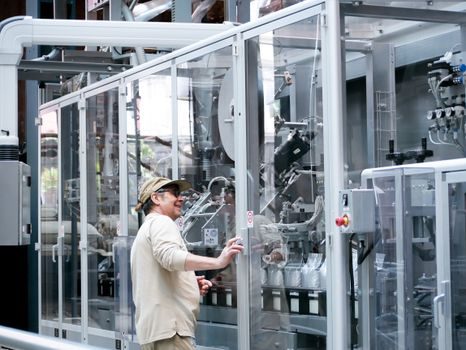
A 2026 liquid-cooling smart factory is typically built from four physical layers: vacuum-brazed cold-plate skids, refrigerant secondary loops, rack-level coolant distribution units (CDUs), and an MES layer that ties them together [S3][S4][S6].
Brazing is the make-or-break process: vacuum brazing and controlled-atmosphere brazing (CAB) are the two methods most often quoted by Asian OEM fabs, with welded assemblies for higher-pressure refrigerant headers [S3]. On the QA side, helium leak detection, burst testing to 1.5–2× working pressure, and thermal-hydraulic characterisation at full flow are the standard gates before a cold plate ships to a data-center customer. Inspection coverage is moving from manual leak-check to automated AOI of brazed joint fillet geometry, in line with the same AOI-and-robotics stack being deployed across the chip packaging smart manufacturing and battery pack smart manufacturing sectors. Smart valve positioners and smart meters on each branch of the coolant skid are used to log setpoint deviation and prove the loop is operating inside its designed flow window before the unit is released to the customer [S3][S4].
Where the technology fits — and where it does not
Liquid cooling makes economic sense above roughly 30 kW per rack (single-phase dielectric or water-glycol) and above 70 kW per rack (two-phase immersion or cold-plate with refrigerant boiling), and below that threshold air cooling with additive-manufactured heat sinks remains the lower-cost route [S3][S4].
For factory automation cells — robot controllers, servo drives, machine vision smart cameras with onboard inferencing — the heat densities are far lower and air cooling is usually sufficient; pulling liquid into these cells adds sealing, leak-detection and maintenance cost without a thermal benefit. The factory itself is the better place to apply liquid cooling: process-water cooling of induction heater busbars, oil-cooling of large motor stators, and direct jacket cooling of hydraulic power packs all map to the same coolant skid architecture that hyperscale data centers use, so a plant can amortise one set of pumping, filtration and additive-dosing equipment across both IT and OT loads [S1][S3].
Supplier landscape and selection criteria in 2026 H1
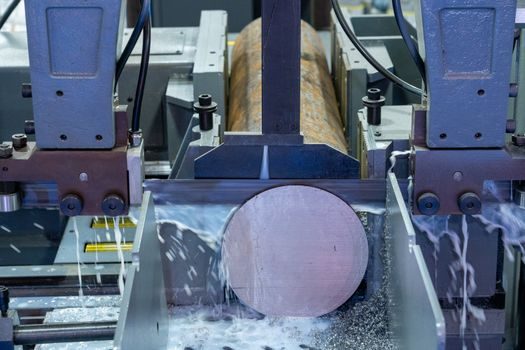
Selection of a liquid-cooling OEM in 2026 is driven by four criteria: (1) brazing process capability (vacuum vs CAB) and NDT coverage, (2) in-house CNC machining of microchannel cold plates, (3) digital-twin compatibility for OEM integration, and (4) ability to manufacture under ISO 9001:2015 / ISO 14001:2015 / ISO 45001:2016 quality systems [S3][S5].
On the supplier side, the market separates into three layers. Tier 1 — full-stack AI-server liquid-cooling ODMs such as Shenzhen Lian Li with R&D and manufacturing on Gaoke/Baolong Avenue, Longgang — sell finished rack-level CDUs to hyperscalers [S4]. Tier 2 — specialised heat-exchanger and brazed-plate shops such as Mstirling, with metallurgical roots — supply cold plates, heat sinks and ultra-low-temperature refrigeration skids to OEMs and system integrators [S3]. Tier 3 — custom-design engineering houses such as Laird Thermal Systems — provide prototype loops for ambient and below-ambient compressor-based and liquid heat-exchanger systems, which are then handed to a Tier 1/2 shop for serial production [S6]. The same tiering appears in adjacent power-electronics production: DC fast charger smart manufacturing and EV charger smart manufacturing both require liquid-cooled power modules and so pull from a shared cold-plate supply base.
Process-control limits and known failure modes
The 1% pressure-field error / sub-50 ms surrogate benchmark from the RTM digital-twin work is a useful upper bound for what a liquid-cooling line digital twin can claim in steady state, but it assumes a sensor network that is intact, calibrated, and not subject to race-tracking in its own flow paths [S2].
The historical failure modes of closed-loop liquid systems in motors and process equipment are scale, corrosion, cavitation and additive depletion, all of which degrade heat-transfer coefficient long before a hard failure trips — which is why multifunctional chemical additive dosing with periodic water-chemistry analysis remains the maintenance backbone, even on a "smart" line [S1]. On the manufacturing side, the leading defects are vacuum-brazing fillet voids, microchannel burrs that clog the manifold, and O-ring seat damage from robotic handling — all of which are caught only by combining helium-sniff EOL test, AOI of fillet geometry, and a flow-vs-pressure curve at end-of-line. The digital twin can interpolate across these tests but cannot replace them [S2][S3][S6].
Trackable signals over the next reporting window: (a) further capacity announcements from Shenzhen-area cold-plate ODMs, (b) public demonstrations of two-phase refrigerant CDUs at rack scale above 100 kW, and (c) standards activity around factory-level coolant chemistry, which is the gap that PEM electrolyser smart manufacturing and the broader electrolyzer smart manufacturing sector will also feel as they ramp their own water-loop production.