Roller conveyors sized for apparel distribution run in the 5-60 m/min speed band and handle unit loads up to 50 kg on the carton and polybag lanes, with gravity or zero-pressure-accumulate (ZPA) zones controlling back-pressure on induction sortation [S2].
Suppliers such as Huzhou Jiutong Logistics Machinery Co. in Zhejiang list powered, gravity, and accumulate roller series alongside sprocketed drive rollers for these duty cycles, while Indian integrators like Advance Equipment Co. in Thane pair the same roller frames with belt conveyors using AEC 100 friction-driven bends for the package-handling perimeter [S1][S2]. For an overview of frame, roller, and bearing options, the roller conveyor reference page lays out the standard configurations, and the roller bearing entry covers the precision-versus-pressed bearing choice that drives noise and service life on long apparel lanes.
Load Class, Speed, and Roller Diameter Map
Unit-load roller conveyors for apparel DCs cluster into three load classes — 10-30 kg for hanging-bag divert lanes, 30-50 kg for master cartons on the sorter feed, and 50-100 kg for palletised roll goods at the inbound dock [S2]. Roller diameters of 50 mm, 60 mm, 76 mm, and 89 mm cover the spread, with 76 mm being the workhorse diameter for 30-50 kg carton lanes. Surface finish matters: galvanized or PVC-coated steel rollers are typical for garment DC corridors where lint, plastic strapping, and occasional oil from forklift wheels contact the rollers.
Speed selection follows the same envelope as the AEC belt range — 5 m/min minimum for hand-induction stations and 60 m/min ceiling for high-throughput sortation feed conveyors, without product position shift [S2]. Above 60 m/min, lightweight polybag totes begin to skate and tumble, so most apparel sortation induction runs 25-40 m/min. For heavier 50-100 kg carton flows, the standard rule is to stay at the lower end of the speed band to keep start-stop acceleration within the friction grip of the drive roller lagging.
Gravity vs Powered vs ZPA Accumulate for Apparel
They require no drive, no motor control cabinet, and no power distribution box tie-in, which makes them the spec-by-default for mezzanine pick modules where ceiling height limits the working envelope. The trade-off is throughput: gravity lanes rarely exceed 15 m/min sustained, and they are ruled out for any merge or divert that needs positive control.
Powered roller conveyors with a motor-driven drum or chain-through-sprocket drive cover the 15-60 m/min band and are the right answer for sortation feed, takeaway, and merge conveyors that must hold a fixed pitch [S1][S2]. ZPA (zero-pressure-accumulate) sections add photo-eye zones and a slip clutch or VFD-controlled drive so that a stopped downstream tote does not back-pressure the upstream totes — this is the standard for the live-accumulation lanes feeding a sliding-shoe or cross-belt sorter in an apparel DC. Vendors such as Huzhou Jiutong explicitly list accumulate roller series alongside straight powered rollers for these zones [S1].
Bearing Choice, Noise, and Service Interval
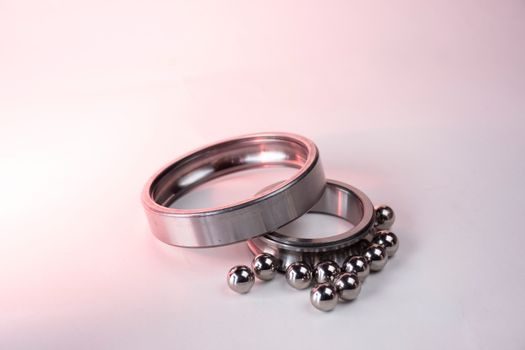
The bearing decision drives both noise and service life on apparel DC roller conveyors. Precision deep-groove ball bearings (typically 6202 / 6203 / 6204 ZZ) are specified for the heavy-duty 250 kg-and-above roller stations, while pressed-steel sintered bearings cover the lighter 10-50 kg carton and tote lanes [S2]. The pressed bearing gives a lower first cost but a shorter L10 life and a higher running noise figure, which is a real concern on mezzanine pick modules where pickers stand within 1 m of the conveyor for full shifts.
For apparel DCs, the operating-environment factor is the deciding element: lint from polybags and fabric dust migrates into unsealed bearings, accelerating wear on pressed-steel types. Sealed 2RS deep-groove ball bearings are the default in modern ZPA lanes for that reason, even at higher unit cost. Roller surface finish also feeds into bearing life — galvanized or PVC-coated steel rollers resist the rust bloom that comes from condensation in unheated apparel DCs during winter loading-dock swings.
Frame, Supports, and Drive Layout
Roller conveyor frames for apparel DCs are predominantly mild-steel channel or formed sheet, painted or powder-coated after welding, with bolt-on feet on 1.0-1.5 m centres to handle live-load deflection over the span [S1][S2]. Cross-bracing is required at every joint on ZPA lanes because the photo-eye brackets and the drive-shaft guards add weight that plain C-channel cannot carry on a long run.
Drive layout splits into three options: (1) motorised drum (drum motor) for short, sealed, washdown-friendly sections; (2) end-shaft drive with chain and sprocket to a line shaft, common in Indian and Chinese-built integrate lines [S1][S2]; and (3) individual motorized roller (IMR / MDR) for ZPA sections, where each roller has its own 24 V or 400 V brushless drive and a photo-eye controls upstream-downstream handoff. The IMR/MDR option dominates new apparel DC builds because it scales by adding rollers and the controls wiring lives in standard distribution cabinet enclosures rather than custom line-shaft guards. Hazardous-area zones (battery-charging rooms, solvent stores) instead route through explosion-proof distribution panels per ATEX 2014/34/EU, though most apparel DC footprints do not require this.
Selection Criteria Compared for Apparel Duty
Three roller conveyor families are realistic for an apparel DC: (1) gravity roller with pressed bearings for static pick modules; (2) line-shaft or chain-driven powered roller with precision bearings for sortation feed; (3) IMR/MDR ZPA with sealed 2RS bearings for live accumulation. On cost, gravity wins; on throughput, line-shaft and ZPA both deliver 30-60 m/min; on noise, ZPA with sealed bearings is the quietest; on maintenance access, IMR/MDR is the easiest because a single roller changeout does not require breaking a line shaft. On lead time for a 200-500 m apparel DC install, the Chinese-built integrate roller lines (Huzhou Jiutong class) typically ship in 4-6 weeks, while Indian-built equivalent lines (Advance Equipment class) ship in 6-10 weeks including export packing [S1][S2].
The decision rule that engineers in this segment use: gravity for any lane under 15 m/min and under 50 kg/unit, powered non-accumulate for fixed-pitch takeaway at 15-40 m/min, and ZPA for any lane feeding a sorter or holding product against a divert. For adjacent conveyor families in other industries, the automotive parts roller conveyor spec map covers heavier 100-500 kg unit loads, while construction-spec readers can compare the same vendor landscape against the concrete admixture selection map for warehouse slab specs under roller conveyor lines.
Standards, Safety, and Acceptance Tests
Roller conveyor safety in the EU aligns with EN ISO 12100 (general machinery safety) and EN 619 (continuous mechanical handling equipment — safety rules for powered conveyors), with finger-pinch and reach guards required at all transfer points and at the head/tail pulley [S2]. Acceptance testing typically covers no-load run for 30 minutes, then stepped-load run at 25%, 50%, 75%, and 100% of rated unit load, with current draw logged on the drive motor to confirm bearings are free and the chain is at correct tension. Noise at operator stations is commonly limited to 78 dB(A) at 1 m for the powered sections, which the IMR/MDR ZPA option typically meets without extra guarding.
Electrical tie-ins to motor control cabinets, VFDs, and photo-eye power supplies follow IEC 60204-1 for general machine electrical equipment, with the distribution cabinet sized for the inrush of simultaneous VFD bus charging at line start. A final acceptance gate for an apparel DC roller conveyor line is 8 hours of continuous loaded run at rated speed with no more than two photo-eye nuisance stops, which is the working proxy for vibration, bearing health, and ZPA logic tuning.