
Satellite production in 2026 is structured around a tiered build flow — bus integration, payload mating, environmental qualification and AIT (assembly, integration and test) — and Euroconsult's 28th "Satellites to Be Built & Launched" market intelligence report, released 2026-05-22, tracks the resulting global manufacturing and launch throughput [S3].
The process borrows heavily from adjacent industrial domains: precision alignment tooling, cleanroom contamination control, vibration and thermal-vacuum screening, and traceability chains that look more like an automotive electronics line than a traditional aerospace job shop. Specifying a satellite bus in 2026 means matching the platform's volume, mass and thermal capacity against the payload's power draw, data-rate and pointing budget — and locking those trades before any aluminium honeycomb panel is machined.
Bus Structure and Platform Classes by Mass Bucket
The satellite platform (the "bus") is the structural, power, propulsion and avionics carrier that hosts the mission payload, and platform class is governed primarily by wet mass at launch. SmallSat buses (1-500 kg) now use standardized CubeSat or ESPA-ring form factors that accept commercial off-the-shelf reaction wheels, star trackers and pressure transducers inside the propellant feed lines [S1].
Euroconsult's 28th-edition dataset tracks satellites across the 1-50 kg, 50-500 kg, 500-2,000 kg and >2,000 kg wet-mass buckets, with the 50-500 kg class dominating operator orders for LEO constellations in the 2026-2030 horizon [S3]. Medium-Earth-orbit navigation and geostationary comsats still fall into the >2,000 kg bracket and require bespoke bus structures rather than the ESPA-class interfaces used for SmallSats.
Payload Integration: Optics, Antennas and RF Chains
Payload integration is where mission value actually sits, and it is the single largest driver of satellite build cost. Earth-observation payloads combine a telescope structure, focal-plane detector stack and cryocooler loop; the cryocooler interfaces to the bus through dedicated flow-meter and temperature taps that must be commissioned before thermal-vacuum testing [S1].
Communications payloads add a high-gain antenna, traveling-wave-tube amplifiers (TWTAs) or solid-state power amplifiers (SSPAs), and an input/output multiplexer that routes 12-24 transponders across Ku-, Ka- or V-band. Euroconsult's 2026 dataset flags V-band (40-75 GHz) and Q/V-band payload proliferation as a measurable shift relative to the 27th edition, driven by HTS (high-throughput satellite) operator roadmaps through 2030 [S3].
Environmental Test Sequence: Vibration, Thermal-Vacuum and EMI/EMC
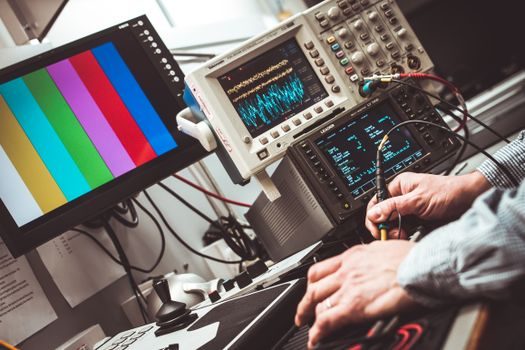
Every flight article — engineering model, qualification model and flight model — runs a documented test sequence designed to prove survival of launch loads and on-orbit thermal cycling. The base sequence covers sine and random vibration, acoustic noise, thermal-vacuum (TVAC) cycling across the qualification temperature limits, and EMI/EMC compliance scans against the platform's specified emissions and susceptibility envelope [S1].
Acceptance TVAC typically runs 8-12 cycles between -40 °C and +85 °C for LEO payloads, with dwell times sized to let the pressure transmitter readouts on propellant and xenon tanks stabilize before the next ramp. Random vibration is qualified to the launch-vehicle's coupled-loads analysis at levels commonly specified in the 8-12 gRMS range for small launchers and 14-20 gRMS for heavy-lift class [S1].
Propulsion and Tankage: Electric, Chemical and Cold-Gas
Most modern satellites carry an orbit-raising and station-keeping propulsion subsystem, and the choice between electric Hall-effect thrusters, chemical bipropellant, monopropellant hydrazine and cold-gas nitrogen drives both tank volume and AIT sequence. Electric thrusters need xenon feed lines, industrial valve latch-ups, and dedicated propellant-loading cells with recovery scrubbing because xenon displaces breathing air [S1].
Chemical bipropellant (typically MON-3 oxidizer + hydrazine fuel, or the lower-toxicity AF-M315E / LMP-103S blends) requires class 1A flammable-gas loading and full SCAPE-suited fueling, which adds days to the campaign. Cold-gas nitrogen is the lowest-risk option and remains the default for sub-100 kg SmallSats where specific impulse around 70 s is acceptable.
Avionics, GNC and the Software Stack
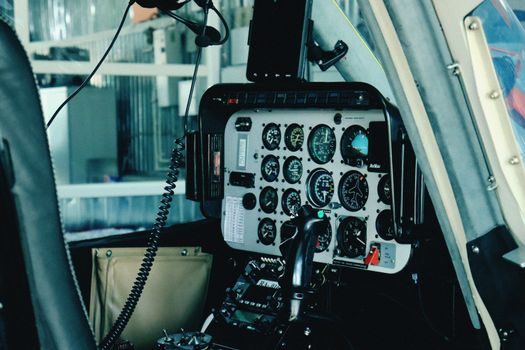
Satellite avionics today means a radiation-hardened command-and-data-handling (C&DH) computer, an attitude-determination-and-control subsystem (ADCS) running star trackers, sun sensors, gyros, magnetorquers and reaction wheels, and a software stack that ranges from vendor flight software to open frameworks. The C&DH talks to ground via an S-band or X-band TT&C link, and to payloads via SpaceWire, CAN or Ethernet backplanes on the bus [S1].
ADCS pointing budgets in 2026 typically target 0.001-0.01° knowledge and 0.01-0.05° control for LEO Earth-observation, with fine-pointing modes driving reaction-wheel torque authority. Modern stacks often expose a PLC-style command interface on the payload bus so that operators can reconfigure modes without uploading new flight code — a deliberate echo of terrestrial process control that lowers integration cost for industrial payloads.
Cleanroom, Contamination Control and AIT Flow
Cleanroom class is not optional: optical payloads and cold surfaces will condense molecular films that wreck sensor performance, and propulsion feed lines cannot tolerate FOD (foreign object debris) above a documented particle-count budget. Optical-integration work runs in ISO Class 7 (Class 10,000) or better, with the flight optics and focal-plane array often handled in ISO Class 5 laminar-flow benches [S1].
General AIT flows in ISO Class 8 cleanrooms, with ESD flooring, controlled humidity at 30-55% RH for static control, and bonded stores for flight fasteners. Servo motors driving antenna-pointing mechanisms are built and torqued in the same class before being bagged for transport to the launch site.
Comparison: Platform Classes on Mass, Cost and Lead Time
The four platform classes already introduced line up against four procurement criteria that any operator must trade off. A side-by-side view: 1-50 kg SmallSats lead the field on cost (often sub-$500k flight unit) and lead time (typically 6-12 months from order to delivery), but payload mass, power and data-rate are constrained; 50-500 kg SmallSats double payload mass and power headroom at 2-5x the unit cost; 500-2,000 kg medium buses add 12-24 months lead time and a 7-15x cost multiplier in exchange for full HTS-class payload volume; >2,000 kg GEO/HEO platforms run 24-36 months and dominate cost but are the only class that supports multi-ton optical or drone production technology-class spot-fabrication instruments [S3].
Trade studies should score each class on wet-mass headroom, payload power (W peak and W orbit-average), payload data-rate (Mbps orbit-average), and on-orbit lifetime (typically 5 years for LEO SmallSats, 15+ years for GEO) before locking the bus selection. Euroconsult's report pairs these classes against operator demand from 2026-2030, flagging the 50-500 kg bracket as the highest-volume growth line for commercial constellations [S3].
Launch Interface and Mechanical / Electrical Mate
Every bus terminates in a standardized launch interface: a 937 mm (ESPA-class) or 1666 mm ring for small launchers, or a custom adapter for heavy lift. Mechanical mate is via M8-M12 flight-grade bolts torqued to a documented preload, and the separation system (typically a clamp-band plus pyrotechnic or non-explosive actuator) is acceptance-tested for pull-off force before integration [S1].
Electrical mate is a dedicated umbilical that breaks cleanly at separation and provides last-minute ground power, propellant-latch enable, and separation-indication discretes. Mating procedures must be rehearsed on an electric motor production technology-class test stand so that the final closeout at the launch site runs without rework.
Failure Modes and Operator-Side Limitations
Three failure modes dominate post-2020 commercial-satellite loss records: propulsion-line leaks discovered only after fueling, radiation-induced single-event upsets in C&DH memory that the on-board software is supposed to scrub, and contamination of optical surfaces from outgassing or human handling. A fourth, increasingly visible mode is supply-chain shock on space-grade EEE parts, which can push delivery by 6-18 months on a single long-lead item [S3].
Operators mitigate these by demanding parts-control plans, materials-and-process lists, and a flight-acceptance-data package that records every TVAC cycle, vibe run, and mass-properties measurement. Anything that does not have a signed MAR (material approval request) and a PCD (process control document) should be treated as a process-engineering red flag and rejected from the build flow [S1].
Standards, Sourcing and 2026 Tracking Signals
Satellite production today is built on a layered standards stack: ECSS (European Cooperation for Space Standardization) for materials, processes and AIT; NASA-STD for U.S. agency programs; and MIL-STD-810-style environmental test methods for vibration, shock and thermal. Each is invoked by contract, not by default, and the procurement document must state which ECSS branch — ECSS-Q-ST-60 for EEE parts, ECSS-E-ST-10 for system engineering, ECSS-E-ST-20 for electrical design — actually applies to the build [S1].
Trackable signals for 2026-07: Euroconsult's next "Satellites to Be Built & Launched" update (29th edition) is the canonical throughput benchmark [S3]; cross-reference is also worth pulling against current additive-manufacturing material vs metal powder spec data, since more satellite bus brackets and thruster injector plates are now being qualified in metal-AM rather than conventionally machined Inconel or titanium. Operators should also watch the Q3 2026 FCC and ITU filings for V-band payload filings, which function as a leading indicator of bus-class demand 24-36 months before launch.