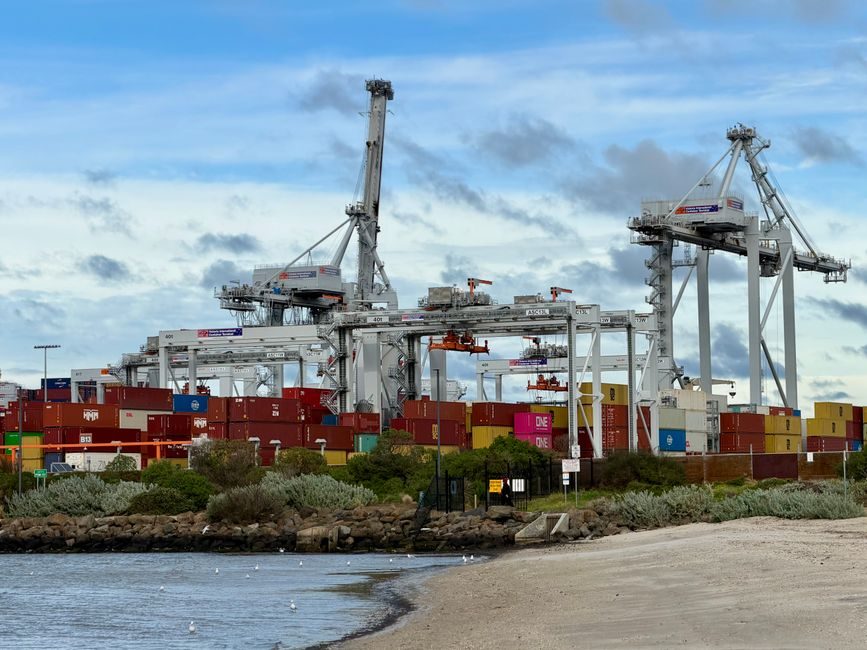
Port terminals moving iron ore, limestone, cement, grain, and fertilizer blends most often specify inclined screw conveyors at 15°–30° with carbon-steel troughs and abrasion-resistant flight linings, sized for continuous ship-loader or stockyard feed at 20–200 t/h [S2].
The decision cuts three ways: shafted units (with central pipe and bearings) for free-flowing dry bulk, shaftless spirals for sticky, fibrous, or dewatered cake, and vertical screw conveyors for lifting reclaim material into silos or onto conveyors feeding the belt conveyor stacker [S1]. Outbound port logistics can reach 80% of mine operating cost for some bulk commodities, so the choice between a screw reclaim unit, a chain conveyor, or a belt reclaim is not academic — it shows up in the OPEX line of every feasibility study [S3].
Operating Envelope: Angle, Length, Capacity
Standard horizontal or inclined units are designed for service at inclinations up to 30° without derating, and with proper conveyor geometry inclinations of 30°–45° are reachable, above which a dedicated screw elevator or a belt conveyor reclaimer becomes the more honest answer [S2].
Port applications cluster between 20 t/h for barge-loading dust and 400 t/h for ship-loader surge feed; flight diameters from 150 mm (light reclaim) through 600 mm (heavy mineral concentrate) dominate new-builds in 2024–2026 catalogues, with trough widths typically 1.5–2× flight diameter for a clean volumetric fill factor of 0.30–0.45 [S1][S2].
Selection Criteria: Material, Corrosion, Containment
Material characteristics drive the spec more than any other variable: free-flowing grain and limestone accept a standard helix at 100–180 rpm, while sticky filter cake, wood-chip fractions, or dewatered sludges demand a shaftless spiral run at 20–40 rpm, with torque ratings 2–4× the equivalent shafted unit [S1][S2].
Construction material and liner selection follow the bulk: carbon steel with industrial coating for dry aggregate and grain, stainless steel 304/316 for food-grade grain or fertilizer hygiene duty, and abrasion-resistant steel flights (typically 400–500 HB) when the commodity is iron ore, mineral sands, or copper concentrate with high silica content [S2]. Wear parts — flights, casings, and end-bearing assemblies — are routinely specified as the replaceable element, since the trough and gearbox typically outlast the helix by a 3:1 to 5:1 ratio under abrasive port duty [S2].
Comparison: Shafted vs Shaftless vs Vertical at Port Duty
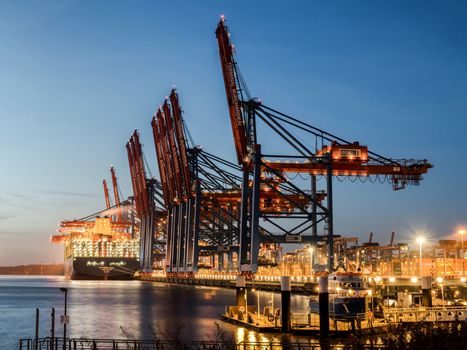
For port-engineering readers choosing between the three common architectures, the table below lines up the decision criteria that govern a 2026 tender:
1) Shafted horizontal screw conveyor — best for free-flowing dry bulk (grain, cement, limestone, fly ash), 20–200 t/h, 0°–30° inclination, lowest unit cost, intermediate bearing maintenance at every 3–4 m of trough length. 2) Shaftless screw conveyor — best for sticky, dewatered, or fibrous material (MSW, cake, wood chips), 10–80 t/h, 0°–45° with reduced capacity, no intermediate bearings so the trough can be sealed for odour or leachate, torque 2–4× shafted equivalent. 3) Vertical screw conveyor — best for silo-reclaim or ship-loader head-feed, 5–50 t/h vertical lift up to 6–9 m, smallest footprint, highest specific power draw per tonne lifted [S1][S2].
For comparison, the lead screw family is engineered for precise linear actuation rather than bulk throughput, so it is rarely a credible substitute in port reclaim where volumetric capacity dominates. By contrast, when the duty is high-volume horizontal transfer over 30–50 m, the belt conveyor or chain conveyor routinely beats the screw on energy per tonne and on capital cost per metre of centreline [S1][S3].
Compliance: ATEX, PED, and Combustible-Dust Zones
For European port terminals handling grain, feed, fertilizer, or any combustible-dust bulk, screw conveyors are routinely built to the ATEX directive for the classified zone around the trough and gearbox, and to the Pressure Equipment Directive (PED) for any unit operating under pressure or vacuum [S2].
For grain terminals, the dust-cloud zone inside the trough and the area within roughly 1 m of the conveyor shell is treated as ATEX zone 20/21 depending on dust layer behaviour, so gearboxes with documented temperature class and anti-spark seals are typically specified, and bearing housings are purged or dust-sealed to ISO 60079-series requirements [S2]. ATEX 2014/34/EU governs the equipment category on the EU side; outside the EU, IECEx certification to IEC 60079-31 (dust ignition protection by enclosure 't') is the equivalent technical route in many 2026 port tenders. Independent bulk-logistics advisory for mining projects consistently treats compliance verification as a separate work-package, not an afterthought inside the conveyor RFP [S3].
Integration with Port Outbound Logistics

Within the wider port outbound flow, the screw reclaim or transfer unit is almost never the bottleneck — it is the feed interface between stockyard/reclaim and the belt conveyor stacker or the direct ship-loader chute [S3].
Pit-to-port corridor studies for bulk commodities (iron ore, lithium concentrate, mineral sands, phosphate, copper concentrate, limestone) treat screw reclaim as one of several transfer options evaluated against CAPEX, OPEX, energy-per-tonne, and maintainability under marine-corrosion exposure; the screw usually wins on footprint and dust containment but loses on long-distance horizontal efficiency [S3]. For ship-loader surge feed ahead of the belt conveyor trim conveyor, screw feeders of 5–50 t/h are the standard interface, accepting controlled feed from a rotary valve or a weigh-belt discharge to keep the loading rate steady under varying hatch demand [S1][S2].
Failure Modes and What to Watch in 2026 Specifications
The most common premature-failure modes on port-installed screw conveyors are flight wear at the material-entry zone, intermediate hanger-bearing seizure in dusty or wet service, and gearbox failure from over-torque during cold-start with a full trough [S1][S2].
Three design moves that materially extend service life on port duty: (1) specify a replaceable flight-liner or hard-faced leading edge on the first 1.5–2 pitches of the helix; (2) eliminate intermediate hanger bearings entirely and switch to a shaftless spiral if the material is damp, fibrous, or sticky; (3) oversize the gearbox service factor to SF ≥ 1.5 with a soft-start VFD, which is now the 2026 default on most new tender documents for port-side and stockyard units [S1][S2].
Who This Spec Is For — and Who It Is Not
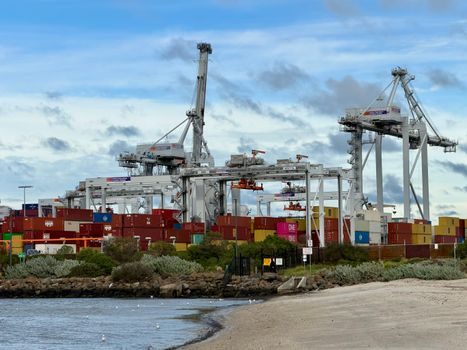
Specify a screw conveyor when the duty is short (typically under 25–30 m horizontal), inclined, contained, or vertical, and when the material is either free-flowing (shafted) or sticky/fibrous (shaftless) [S1][S2].
Do not specify a screw conveyor for: long-distance horizontal transport over 30–40 m (a belt conveyor wins on CAPEX per metre and energy per tonne), high-temperature material above the elastomer or bearing limits of the unit, large lump sizes that block flight pitch, or any application where a sealed chain conveyor or en-masse conveyor offers comparable dust containment at lower specific power [S2][S3]. For the broader chemical-handling variation, the screw pump family covers enclosed liquid/slurry service; for precise linear positioning, the ball screw family applies — neither is a substitute for the bulk-reclaim screw described here [S2].
For warehouse-side automated dry-bulk handling the selection map shifts toward stainless and hygienic construction; for chemical shipping the priority is ATEX, PED, and corrosion-resistant alloys — see the screw conveyor selection for warehouse automation and the screw conveyor spec map for chemical shipping reference specs for the parallel non-port decision trees. Trackable signals to monitor through 2026: tender language drifting from "ATEX zone 21" to "ATEX zone 20" inside enclosed reclaim hoppers, and gearbox service factors of 1.5–2.0 becoming the default rather than the upgrade option in port RFPs [S2].