A single girder crane is a runway-mounted lifting machine: one main girder, an end-carriage on each side, a hoist (usually electric wire-rope or chain) suspended below the girder, and a current collector that feeds power to the hoist. The crane travels along the runway and the hoist travels along the girder, giving a 2-axis x/y lifting envelope over the bay below.
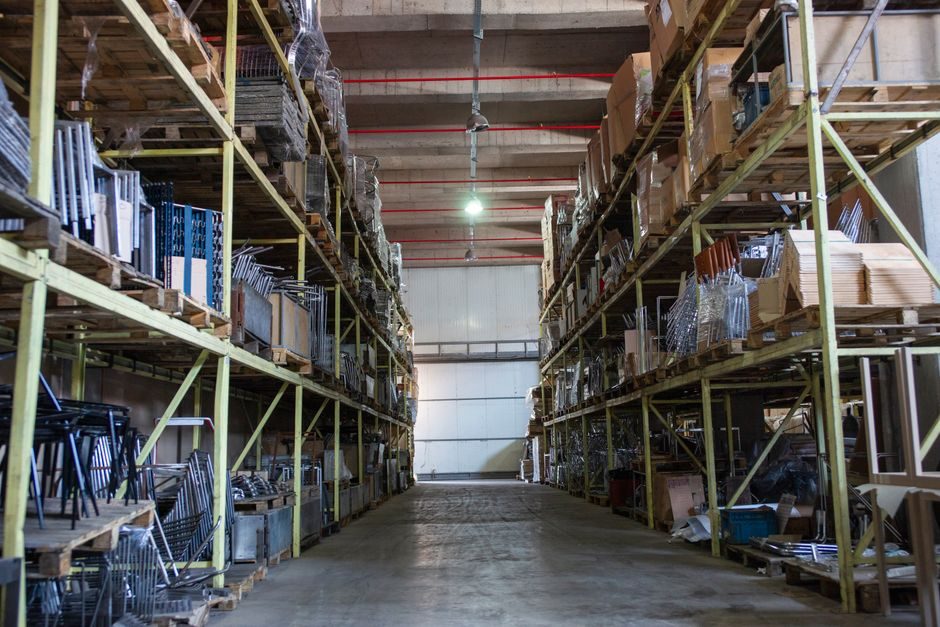
A storage rack is a static, ground-anchored steel structure — typically selective pallet rack frames with bolted or welded beams, plus bracing, anchors, and row-end guards — designed to hold palletised or hand-loaded unit goods in fixed positions. It does not lift, it does not travel, and it does not move product horizontally under power. Conflating the two is the most common engineering mistake in greenfield warehouse layout reviews.
What each system actually does inside a warehouse
Single girder cranes published in 2026 supplier catalogues cover lifting capacities from 500 kg to 5,000 kg for wall-travel jib builds (KM Kumsan) [S1] and extend up to 550 t class for heavy gantry variants [S6]. The 500 kg–5 t band is the working envelope for European-style ABUS EHB suspended single-girder kits, which hang the girder from the runway structure rather than riding on top of it [S2]. That span — half a tonne to half a megagramme — is the real selection window for distribution-centre and light-manufacturing duty.
Heavy duty storage racks sold through Made-in-China in 2026 index 159,039 product listings across 6,361 suppliers, with selective pallet rack, cantilever rack, and steel pallet rack dominating the SKU mix. That is the SKU footprint you are matching against when you decide whether a load is a lifting job or a storing job — not a "could be either" decision.
Decision criteria lined up side by side
Four criteria cleanly separate the two. (1) Motion: a single girder crane moves the load in x and y under power; a storage rack holds it still in x, y, and z. (2) Energy: the crane needs a power supply (busbar or festoon), contactors, overload protection, and an isolating switch; the rack needs nothing beyond correctly torqued anchor bolts into a slab of known compressive strength. (3) Building integration: a suspended EHB crane [S2] transfers all wheel loads into the building's roof trusses or runway brackets — a structural review is mandatory — while a rack transfers vertical load straight into the floor via baseplates. (4) Standards envelope: cranes are designed and inspected against FEM/ISO lifting-duty classifications and the relevant machinery safety standard; racks are designed against racking codes (EN 15635 / EN 15512 family, project-specific) and the pallet/beam load tables published by the rack maker.
The crossover point — where engineers start arguing the call — is usually a sub-1-tonne unit load on a short cycle that still needs to clear a wide aisle. If the load never leaves its footprint, it is a rack problem; if the load must traverse the bay, it is a crane problem. Mixed systems (a crane servicing multiple rack rows, or a stacker crane running inside a rack aisle) are legitimate, but they are not a "crane vs rack" choice, they are a third design.
Who each option is for — and who it is not for
Specify a single girder crane when the load is below 5 t (EHB suspended class), the cycle is open-loop (operator on pendant or radio), the bay is single-storey with adequate headroom for hoist travel plus hook approach, and the building can accept runway point loads. ABUS EHB suspended kits are the typical fit for low-headroom workshops because the girder hangs below the runway, gaining hook approach height the top-running double-girder loses [S2]. Wall-travel jib cranes from KM Kumsan (500 kg–5 t) fit cell work and machine-tending duty where the lift is local to one workstation [S1].
Specify a storage rack when the unit load is pallet-shaped, the load is parked more than 90% of its time, the lift is done once with a forklift or pallet jack, and the floor slab is rated for the column loads. The 2026 Made-in-China heavy-duty rack index is dominated by selective pallet rack and cantilever rack, which signals where the volume demand is concentrated. Cantilever suits long goods (timber, pipe, extrusions); selective pallet rack suits standard GMA/CHEp footprints. A crane is wrong for a storing job because it adds capex, power, maintenance, statutory inspection, and operator training for no throughput gain; a rack is wrong for a lifting job because it cannot reposition a load mid-cycle.
Failure modes and misuse patterns from the field
Three failure patterns show up repeatedly. First, headroom mis-spec: a single girder crane needs clearance for the hoist body between the girder bottom flange and the load pick point, plus safe approach distance; a rack needs clearance for the fork tips plus pallet height plus the next beam level. Cramming a 5 t crane into a bay sized for rack-only operation wastes hook lift and forces low hook position, which is the root cause of most "the crane is too slow" complaints in retrofit plants. Second, baseplate/anchor mismatch on racks: the rack has no idea what the floor compressive strength is, and a heavy duty selective rack on a 25 N/mm² slab is a different anchor pattern than the same rack on 40 N/mm². Third, mixed equipment on a crane runway: a single girder crane runway is not a rack support. Hanging cable tray, sprinklers, or light fittings from the runway changes the wheel-load distribution and forces a re-check of the runway structure. [S1]
Sourcing reality, 2026 channel mix, and price bands
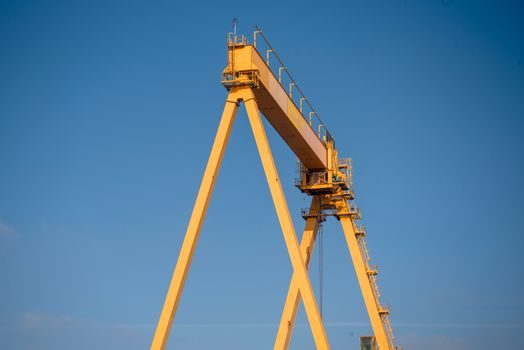
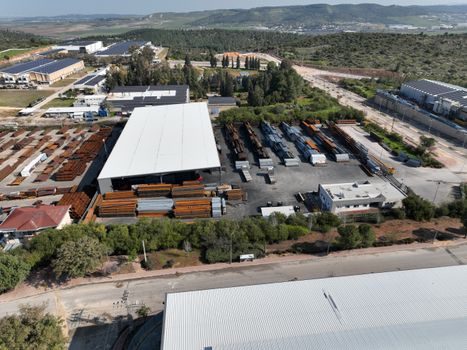
2026 sourcing for both product types runs heavily through Chinese OEM and trading platforms. Xiecheng's product index lists single girder crane, double girder crane, suspension crane, and European-style crane as parallel SKUs on one supplier page [S3], which is the typical buying pattern — a buyer RFQs both crane families from one source to consolidate documentation. Indian and EU makers (Monotech Engineers, ABUS Kransysteme) remain active in the sub-100 t EOT segment, with Monotech's Oct-08-24 quote band listed at $8.50K–$100.00K per EOT crane with MOQ not specified. Chinese gantry offerings reach 550 t class for the single-girder with-hook variant [S6]. On the rack side, the Made-in-China 2026 index of 159,039 heavy-duty rack listings across 6,361 suppliers is the volume benchmark — pricing per bay is highly dependent on beam length, frame height, and finish (powder coat vs hot-dip galvanise), and is not usefully quoted without a layout drawing.
Selection rule of thumb for a 2026 spec review
Use the four-question gate: (1) Does the load need powered horizontal motion? If no, it is a rack. (2) Is unit weight inside the 500 kg–5 t EHB band? If yes, a suspended EHB single girder crane [S2] is the cheapest compliant solution; if higher, step up to a top-running single girder or a double girder. (3) Is the bay headroom tight? Suspended EHB wins; top-running loses hook approach. (4) Is the cycle operator-driven or automated? Manual pendant/radio fits single girder; AS/RS fits rack-aisle stacker cranes, which is a different product class. For a deeper dive on the seven gates that decide single girder crane fit before you issue an RFQ, the site's Single Girder Crane: 7 Selection Criteria That Decide Fit Before You Quote article walks the same logic in more detail.
Trackable signals to watch over the next sourcing cycle: any change in the ABUS EHB published approach height, the next update of the Made-in-China heavy-duty rack SKU count past 159,039 listings, and any new FEM duty-class entries from Chinese suppliers bridging the 5 t–20 t EOT gap that currently sits between EHB and full double-girder kits.