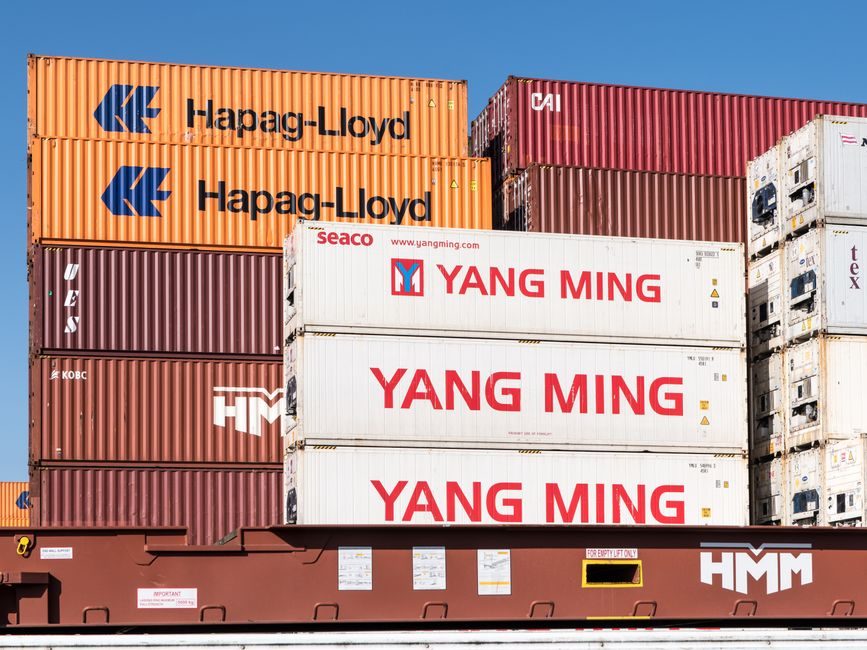
Selecting a tank container is a cargo-first engineering decision, not a freight-rate decision: payload, UN/IMO number, specific gravity, viscosity, temperature window and voyage duration all constrain the frame, lining and code before price is even discussed [S2].
Three frame lengths dominate the global fleet — 20ft (6058 x 2438 x 2591 mm shell, ~DN2380 barrel, 3700 kg tare), 30ft (9125 x 2438 x 2591 mm, ~DN2200, 5068 kg tare) and 40ft (12192 x 2438 x 2591 mm, ~DN2300, 6700 kg tare), each built to ISO 1496/3 frame geometry for intermodal lift, stack and twist-lock handling [S5].
Gate 1: Cargo Class, UN/IMO Number and Hazard Tier
Every spec is anchored to the product list and its hazard classification: caustic soda, glacial acetic acid, methanol, benzene, gasoline, diesel and acetone each carry a distinct UN number that drives the tank code, relief setting and placard regime [S5]. The tank container code (T1–T22 for liquids under IMDG, T50 for refrigerated liquefied gases, T75 for cryogenic, T70 for non-refrigerated gases) fixes the MAWP, design temperature and test pressure before any steel is cut [S4].
If the cargo is non-hazardous food-grade or a benign chemical, a standard T11/T14 stainless barrel is sufficient; if it is LPG, ammonia or cryogenic, the same 20ft frame must switch to a T50, T75 or purpose-built pressure vessel with submerged or bottom-fill arrangements [S2]. Choosing the wrong code is a regulatory and safety failure, not a commercial one — reclassifying a fleet unit is rarely cheaper than specifying it correctly at order.
Gate 2: Specific Gravity, Payload and Frame Size
Tank shells are designed around a maximum specific gravity (SG), typically 1.0–1.6 for general-purpose units and up to 1.9–2.2 for lead-lined or special-alloy units running concentrated acids [S2]. The 20ft frame offers the highest intermodal compatibility (rail, road, sea, barge) and the densest depot network, so it is the default unless payload forces a longer frame or the cargo needs heating coils that consume shell length [S5].
The 30ft and 40ft variants exist for two distinct reasons: high-volume, low-SG liquid bulks where the operator wants more cubic capacity per lift, and bitumen/asphalt or other high-viscosity cargoes where longitudinal heating coils dictate a longer barrel to keep surface area-to-volume reasonable [S5]. Operators running heated bitumen across cold-sea voyages have documented the penalty of undersizing: a 20ft heated unit with insufficient coil surface drops below pumpable viscosity long before discharge and triggers costly line-flushing [S5].
Gate 3: Lining and Material Compatibility
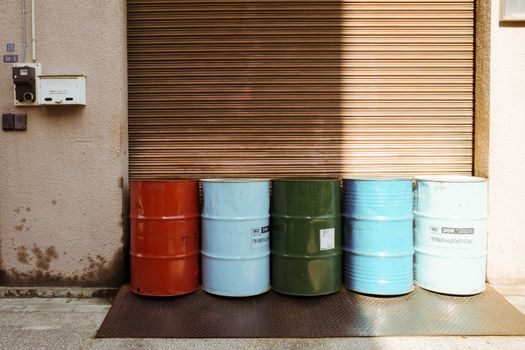
Barrel material is the single highest-impact corrosion decision: 316L stainless for most food and chemical grades, rubber-lined carbon steel for hydrochloric acid and ferric chloride, PTFE/perfluoroalkoxy-lined stainless for high-purity or aggressive solvent service, and expoxide phenolic or zinc-silicate coatings for fuel and lube oils [S2]. The lining choice dictates cleanability, turnaround time at a depot, and the permissible next-cargo list — a tank cleaning machine cycle time can swing 2x depending on whether the prior cargo was epoxy-lined or rubber-lined [S2].
A common procurement error is specifying 304 stainless where the product sheet calls for 316L: chloride-bearing cargoes and CIP (clean-in-place) detergents will pit 304 at the weld seam within a handful of cycles, and the repair is a full-barrel reline, not a patch. Rubber-lined carbon steel remains the cost-effective choice for HCl below ~38% concentration at ambient temperature, but the upper service temperature is roughly 80 °C — past that, blistering and debonding accelerate [S2].
Gate 4: Pressure, Vacuum and Relief Setting
Design pressure is the most under-discussed selection gate: a standard T11 ambient liquid tank typically carries 4 bar test pressure with a 0.4–0.6 bar relief setting, while a T50 non-refrigerated gas unit runs 10–15 bar MAWP and a T75 cryogenic unit sits below atmospheric at 0.5–4 bar MAWP with high-vacuum perlite insulation [S2]. Get the relief setting wrong and the unit vents on a hot day in Rotterdam, or worse, holds vacuum it was never leak-tested for [S4].
Vacuum capability matters for hot-loaded cargoes that cool during sea transit: a tank filled at 90 °C and discharged at 20 °C contracts significantly, and units without vacuum-relief hardware will panel-suck. Specify the vacuum rating explicitly — typically 0.2–0.4 bar — and verify the rupture-disc and vacuum-breaker setpoints are present on the nameplate, not assumed [S4].
Gate 5: Heating, Cooling and Thermal Service

Heated-tank service is its own spec family, with steam coils, thermal-oil jackets, or electric trace heating sized to keep cargo above pour point throughout a 21-day voyage plus discharge dwell [S5]. The 30ft bitumen/asphalt unit at 5068 kg tare and ~DN2200 barrel is the canonical heated-bulk example, with a coil surface area tuned to recover from a cold start in roughly 8–12 hours at the depot's saturated steam supply [S5].
Cryogenic and refrigerated service reverses the problem: a T75 LNG or LCO₂ unit must hold boil-off to roughly 0.1–0.3% per day through a multi-layer vacuum-insulated shell, and any spec error in the perlite pack or getter material shows up as gas demand on the carrier, not as a failed test at handover [S2]. This is also where the line blurs into the broader IBC tank decision — for low-hazard, short-sea, last-mile chemical distribution, a 1000-litre IBC remains more economical than a 26,000-litre ISO tank, and forcing the choice into the ISO frame inflates both capex and cleaning cost per litre shipped [S2].
Gate 6: Fittings, Valves and Bottom-Discharge Geometry
Fitting geometry drives turn-around time and operator safety: top-discharge with vapour return suits fuels and solvents, bottom-discharge with a DN80 or DN100 stainless ball valve suits viscous food and chemical cargoes, and a 3-inch ANSI or DIN flanged top manway is the modern default for CIP access [S2]. Stale spec sheets still show 2-inch bottom valves on chemical units — these throttle viscous flow, raise pump NPSH requirements, and force operators to fit unrated quick-couplers downstream.
The discharge valve is also a maintenance pivot: a full-bore stainless ball valve with PTFE seats and a flame-arrestor in the vapour line is the minimum spec for any flammable cargo, and the industrial valve choice on the vapour-recovery side is what determines whether the unit passes a vapour-tightness test on the second cycle or starts seeping at the bonnet [S2]. Spares compatibility across the fleet — same valve supplier, same seal kit — is a hidden saving that matters more than first-cost premium on the valve itself.
Gate 7: Total Cost, Depot Network and Residual Value
Purchase price is roughly 55–65% of the five-year lifecycle cost of a tank container; the rest is cleaning, recertification (2.5-year and 5-year periodic inspections under IMDG/ADR/RID frameworks), insurance, depot handling and repositioning [S3]. Choosing a less-common code or non-standard frame kills residual value on the secondary market and lengthens the depot search radius — the tank container market is liquid for 20ft T11/T14 316L units and thin for niche units like 40ft T75 cryogenics or rubber-lined acid units [S1].
The fleet operator's working assumption is that a standard 20ft 316L unit outlasts a 2.5-year recertification cycle roughly three times before a major barrel refurbishment, while a rubber-lined or PTFE-lined unit needs lining inspection every cycle and full reline every 6–10 years depending on cargo mix [S3]. For operators scaling a 2026 fleet, the buying logic that wins the lifecycle math is the same logic laid out in this tank container buying guide for 2026: match the cargo list first, lock the code, then price the frame, the lining and the depot network in that order. If a piece of equipment outside the tank domain enters the spec conversation — say, a tank cleaning machine versus a forklift question at the depot — the two answer spaces do not overlap, as covered in this tank-cleaning-machine vs forklift comparison, so keep the decisions separate.
Trackable signals for the next buying cycle: (1) the Tankcontainer Media quarterly code-mix report, which publishes fleet composition by UN class; (2) the ALP Tank Containers used-equipment list, which is a live read on residual value and 2.5/5-year recertification throughput; (3) any revision notice on ISO 1496/3 and the IMDG Code amendment cycle, which together re-anchor the relief-setting and test-pressure numbers used in Gate 4 [S2][S4].