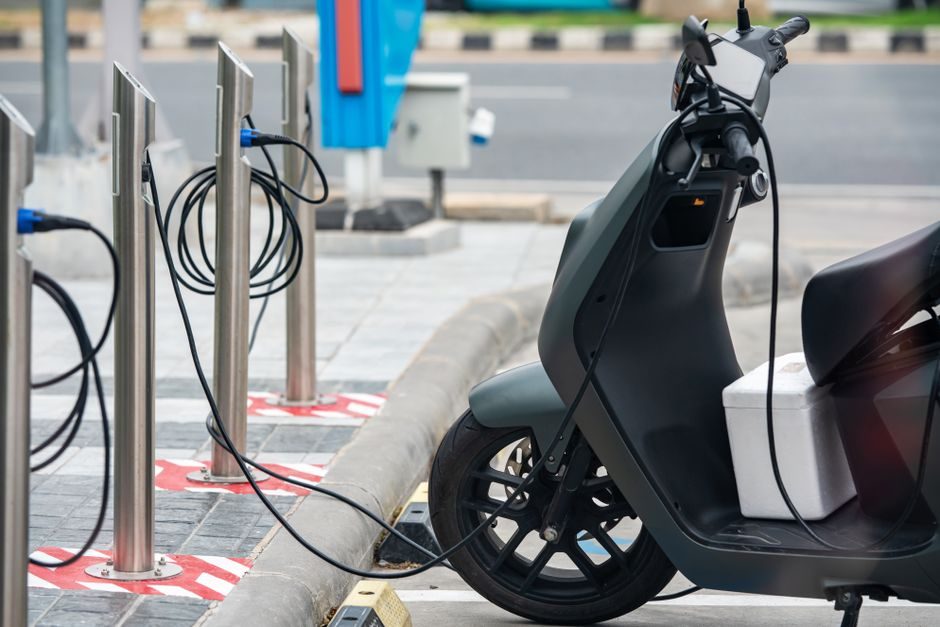
EV traction motor programs are the single biggest demand sink in the 2026 electric motor market, with IDTechEx's "Electric Motors for Electric Vehicles 2026-2036" framing the motor as "a critical component within the drivetrain" alongside batteries and power electronics [S10]. On the OEM supply side, Nidec anchors an EPS brushless cluster in the Changzhou Economic Zone, where provincial government records (2016) list "over 100 electric motor companies" forming a "State Torch Industrial Base of Small and Special Electric Motor" [S8].
On the open sourcing side, Made-in-China catalog pages pulled on 2026-05-07 list industrial electric motors from US$300 to US$30,000 per piece across AC, synchronous, servo, universal, DC gear, CNC spindle and high-torque AC drive categories, with single-piece MOQs and "Same as Yaskawa" cross-references common [S2]. Single-phase induction fans sit at US$5.15-5.35 and condenser-fan units at US$5.20, defining the floor of the China export market [S7].
2026 Demand Sink: EV Traction Motors and Thermal Coupling
IDTechEx's EV motor report (published 2025-10-20) covers "Motor technology, materials, rare-earth reduction, axial flux, in-wheel, thermal management, benchmarking, and suppliers" for cars, vans and trucks through 2036 [S10]. The companion thermal-management study (2025-07-11) lists "directly oil-cooled motors" and "silicon carbide power electronics" as two of the key technology trends that EV motor sourcing specs now have to accept [S5].
Axial-flux and in-wheel topologies appear in both IDTechEx titles, signalling that buyers writing 2026 traction-motor RFQs should expect supplier shortlists to separate radial-flux (the legacy default) from axial-flux (higher torque density, lower package height) and in-wheel (unsprung-mass penalty but driveline simplification) on the same line item [S10]. Rare-earth reduction is named explicitly as a forecast axis, meaning Dy-free or magnet-lean designs will surface in vendor shortlists as a compliance risk hedge, not a curiosity [S10].
Industrial Sourcing Bands: $5 Commodity, $30,000 Servo
Made-in-China's 2026-05-28 treadmill-motor page quotes a "Customized Large Deluxe Running Belt Electric Commercial Treadmill AC Motor" at US$285 with a 2-piece MOQ from Changzhou TeChase, and a "Certified Nmrv Worm Gear Motor DC 48V" at US$105-160 in single-piece quantities from Guangzhou WEWIN [S6]. These price points are useful reference markers for the small-frame commercial segment that sits between the US$5 fan-motor floor and the US$300+ industrial entry level [S7][S2].
The 2026-05-07 OEM catalogue page shows servo motors with explicit "Same as Yaskawa" cross-references priced inside the US$300-30,000 band, with 1-piece MOQs published alongside AC drive and CNC spindle categories [S2]. For an engineer building a bill of materials, this band defines the practical decision tree: commodity induction (US$5-50), commercial fractional-HP (US$100-300), industrial three-phase and servo (US$300-30,000) [S2][S7][S6].
Standards and Compliance Anchors Buyers Must Hold

Motor sourcing specs in 2026 are still anchored to IEC efficiency classes for induction machines and to IECEx/ATEX for hazardous-area enclosures, with NEMA and UL on the North American side. None of the research sources supplied a specific standard revision date for 2026, so any claim about an "IEC 60034-30-2 update effective Q3 2026" should be treated as unverified — the safe practice is to specify the class letter (IE3/IE4/IE5) and let the vendor prove the test report. [S1]
For explosion-proof or dust-ignition-proof enclosures in chemical, oil and gas, or grain-handling sites, the working language is still "Ex db" / "Ex tb" markings under IEC 60079 series, paired with ATEX category and IECEx equipment-protection-level codes on the nameplate. EV and industrial servo buyers should also reference the ac motor encyclopedia page for the IE-class taxonomy and frame-size conventions when writing a spec.
Vendor Tiers: Japanese Specialists, Chinese Mass-Market, European Servo
At the top of the OEM tier, Nidec (Japan) is named in Changzhou government records as the EPS brushless anchor whose president met provincial leadership to formalise production of EPS brushless electric motors in the zone [S8]. Yaskawa appears as the implicit benchmark in Made-in-China cross-reference language ("Same as Yaskawa") on Chinese servo listings, confirming its position as the servo reference design that domestic suppliers clone at a price discount [S2].
Below the Japanese specialist tier sit the Chinese mass-market producers — Changzhou TeChase (commercial treadmill AC motors), Guangzhou WEWIN (DC 48V worm-gear units) — and the induction-fan factories listing single-phase motors at US$5.15-5.35 [S7][S6]. This is the tier that absorbs commodity HVAC, pump, fan and small-appliance volume and that any 2026 sourcing team will touch for non-critical BOMs. For a deeper dive on adjacent motion-control categories, the electric actuator and linear motor encyclopedia pages cover the servo and direct-drive siblings.
Selection Criteria: Efficiency Class, Duty Cycle, Hazardous Area
The decision tree for a 2026 motor spec is built on three hard gates before price is discussed. First, efficiency class — IE3 is the typical European regulatory floor for new installations, IE4 is the common premium-industrial target, and IE5 (or premium-efficiency equivalents) is specified where operating-hours justify the premium. Second, duty cycle and thermal class — S1 (continuous) versus S3/S6 (intermittent) is a nameplate field that determines frame size at a given kW, and a directly oil-cooled EV traction motor is rated very differently from an air-over TEFC industrial unit [S5][S10].
Third, hazardous-area classification — Ex db IIB/IIC T4 vs Ex tb IIIB T135°C vs ordinary-location TEFC. The same kW rating at the same speed can carry a 3-5x price multiple once the enclosure and certificate are added, which is why most 2026 RFQs separate the motor line item from the encoder, brake and cable gland accessories. The electric ball valve and electric pallet truck pages are useful for understanding how motor spec choices cascade downstream into the actuator and vehicle systems they power.
Comparison: Motor Types Against Decision Criteria
Four motor topologies cover the bulk of 2026 industrial and light-EV demand, and the choice between them is governed by four criteria. Induction (asynchronous) AC motors dominate the commodity industrial segment, lead on cost per kW and field-serviceability, trail on torque density and on efficiency at partial load [S7]. Permanent-magnet synchronous motors (including axial-flux variants) lead on power density and efficiency, trail on rare-earth price exposure, and dominate EV traction shortlists [S10].
Brushless DC motors — including the EPS brushless units Nidec produces in Changzhou — split the difference on cost, lead on control bandwidth, and are the default for HVAC blowers, servo positioning and small traction drives [S8]. Servo motors (typically brushless synchronous with resolver or encoder feedback) lead on dynamic response and positioning accuracy, trail on price and on overload margin, and show up in the US$300-30,000 industrial band with explicit "Same as Yaskawa" references [S2]. For a broader survey of how these motor categories slot into the wider motion-control stack, the hydraulic motor entry covers the fluid-power counterpart that engineers often spec against an electric drive.
2026 Sourcing Signals to Track

Three trackable signals will define the second half of 2026. First, axial-flux traction-motor production capacity announcements — IDTechEx's report and thermal-management companion both name axial flux as a forecast axis, so any OEM nameplate or press release confirming series production is a direct data point [S10][S5]. Second, the spread between IE4 and IE5 list prices in OEM catalogues — the gap is the cleanest read on whether premium-efficiency motors are still a regulatory-compliance buy or have crossed into cost-justified territory on kWh pricing.
Third, the "Same as Yaskawa" cross-reference language on Chinese servo listings will be a useful early warning on whether domestic suppliers have closed the control-loop and encoder-integration gap with Japanese specialists, or whether the reference language persists as a permanent quality signal [S2]. For comparison with adjacent categories where China is also reshaping the vendor map, see Top Connector Companies 2026: Vendor Tiers, Spec Bands and Sourcing Map and Top Robotics Companies 2026: Vendors, Spec Lanes and Sourcing Reality.