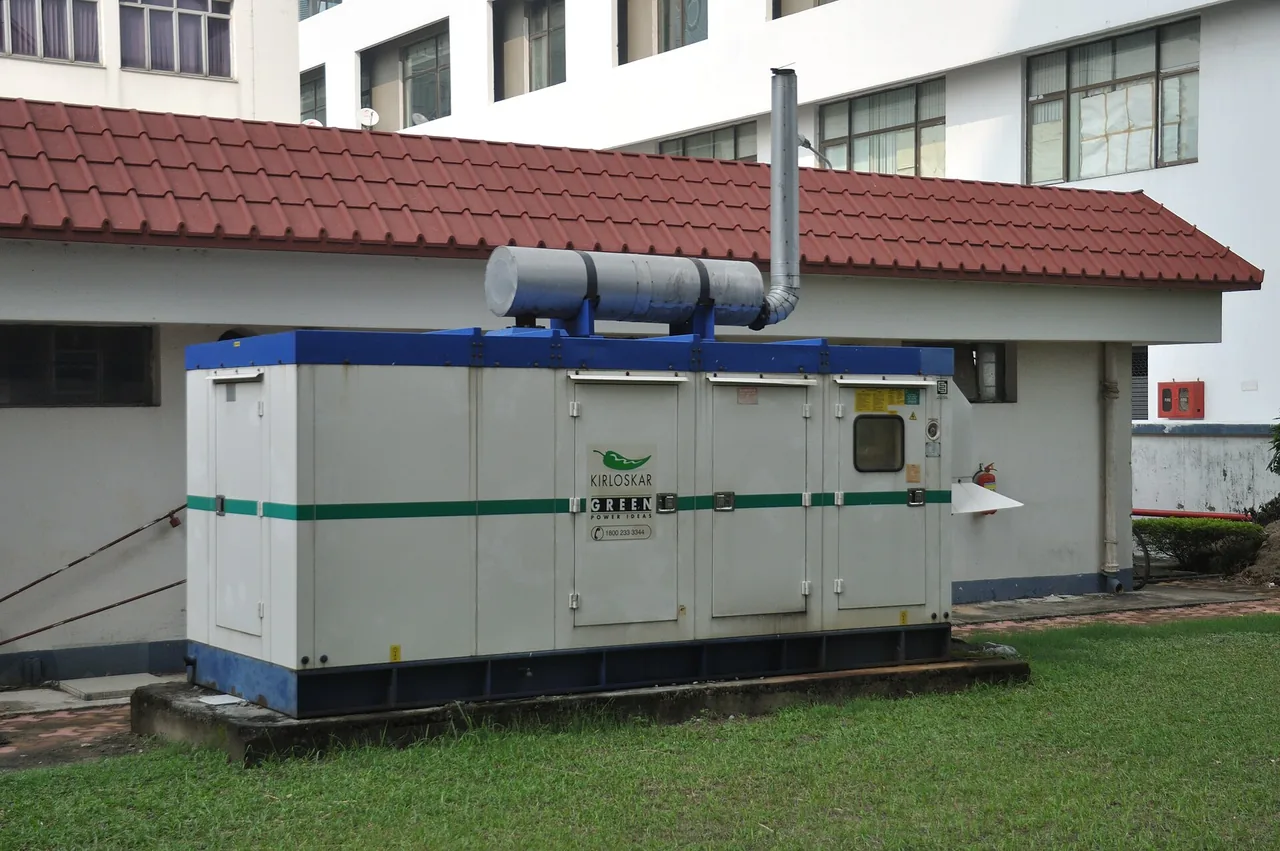
A machine noise control housing is the acoustic enclosure or sound hood built around a noisy machine, most often a compressor, a pump, a diesel generator set, a hydraulic power unit or a press, so that less airborne sound reaches the people working beside it. It is a path treatment rather than a change to the machine. A heavy outer shell blocks sound, a porous lining absorbs the energy that builds up inside, and sealed doors, windows and silenced openings let cooling air, pipes and cables through without reopening the noise path. A well designed and reasonably airtight housing removes 20 to 40 dB of machine noise, which is often enough to bring a workstation back under an exposure limit.
The purchase concentrates on a few decisions. The first is the insertion loss actually needed at the operator position, because a housing is only one of several controls and the machine itself, its silencers and its mounts come first. The second is the panel: skin material, surface weight, lining and damping set the laboratory rating, and that rating collapses if doors, penetrations and vents leak. The third is heat, since a housing that overheats its machine will have its doors removed within weeks. The fourth is verification, meaning the fixed measurement points, the instrument class and the in situ method that prove the installed result. Getting one of them wrong costs more than a heavier panel would have.
Five things decide a machine noise control housing. First the insertion loss required at the operator position, which follows from the measured level and the exposure target. Second the panel construction, since surface weight, lining and damping set the rating that every leak then wastes. Third the cooling path, because silenced ventilation decides whether the machine survives closed doors. Fourth the structure-borne path through mounts and pipework, which no amount of panel can block. Fifth the acceptance test at fixed points with a calibrated sound level meter. A sixth, the quality of door and penetration seals after the first maintenance opening, decides whether the result lasts.
Chapter 1 / 06
What a Machine Noise Control Housing Is and How It Works
Every enclosure works by interrupting the airborne path between a vibrating surface and the listener. A compressor casing, a pump body, an engine block and the cooling fan each shake the air and radiate sound outward in all directions. The housing is a closed box of massive panels placed around that source, so sound must pass through the box to reach the room. It is the most common path treatment in industrial noise control, and it is usually chosen after the source has been examined, because a muffler on an exhaust, a damping sheet on a resonating guard or isolators under a pump may remove part of the noise more cheaply. Where several noisy machines stand together, one housing around the group often treats them all at once.
Three mechanisms do the work inside the wall. The first is mass: sound reaching a heavy panel mostly reflects, and only a small part passes through, less as the surface weight and the frequency rise. The second is absorption. Sound that stays inside is reflected from wall to wall and builds to a level above what the machine alone would produce, and a porous lining on the inner faces turns part of that energy into heat. The third is damping: a thin steel skin vibrating at one of its natural frequencies can ring with a resonant tone, and a damping layer bonded to it removes that ring. A housing with mass alone is a drum; one with lining alone is a tent.
Low frequencies are the hard part. Common barrier materials are rated from 20 to 60 dB, and each figure climbs steeply with frequency. A sheet of 18 gauge steel at 10 kilograms per square meter (2 pounds per square foot) stops 15 dB at 125 Hz and 48 dB at 4,000 Hz. Plywood of 6 mm (0.25 inch) at 3.4 kilograms per square meter (0.7 pounds per square foot) stops 17 dB at 125 Hz and 24 dB at 1,000 Hz. A 102 mm (4 inch) perforated metal panel filled with mineral fiber reaches 28 dB at 125 Hz and 62 dB at 4,000 Hz. All of these are weakest at the low end, so a slow reciprocating machine needs more than a single thin sheet.
The parts of a modular housing are few. A frame of floor channels and roof channels carries wall and roof cassettes joined by panel joiners at the corners. Each cassette has a solid outer skin, usually steel plate, an absorber slab of rock wool or glass fiber, and a perforated inner skin that exposes the slab to the sound. Doors and observation windows come as rated units rather than cut on site. Ventilation equipment with an integrated silencer and a centrifugal fan passes cooling air. Options complete the box: internal lighting, fire fighting systems, air conditioning, a sound and vibration isolating floor system, powder coat finishes, and indoor or outdoor layouts. A close fitting hood has the same three layers without the frame.
Sound leaves a housing by its weakest path, and that path is rarely the panel. A gap that passes air passes sound: a section of gasket left out, a cable hole never sealed, a door that no longer lands on its stop. Repeated disassembly and reassembly opens small direct paths along panel joints, which is sound flanking. The ventilation opening is a designed leak that its silencer has to match to the wall rating. Structure-borne sound is the second bypass: machine vibration travels through the slab, the pipework or a rigid frame connection to a surface outside the box, and that surface radiates. A tighter box does nothing for that path; isolation does.
Done well, the result is substantial: a solid enclosure with no acoustical leaks provides 20 to 40 dB of noise reduction across a wide range of frequencies. Done badly, it still costs floor space and access. Interior heat builds up, physical and visual access to the equipment is restricted, product has to get in and out without opening the box, and maintenance staff have to take panels off to reach the machine. Internal lighting and fire suppression may need to be part of the design, and oil mist or other airborne particulates can load the inner surfaces. The answer is a housing with large retracting doors, observation windows, internal lighting and ventilation, with walls that double as machine guarding against pinch points and crushing hazards.
Chapter 2 / 06
Machine Noise Control Housing Types and Structural Variants
Modular steel panel housings are the standard form for machines that already stand in a plant. The cassette is the unit of design: a perforated liner, an absorber slab and an outer skin of sheet steel, joined into a rated frame. In one panel family the standard construction, at 39 kilograms per square meter (8 pounds per square foot), is rated sound transmission class 40, with 20 dB of transmission loss at 63 Hz rising to 58 dB at 2,000 Hz, and it absorbs 0.89 at 125 Hz and 1.20 at 250 Hz; a coefficient above 1 is an artifact of the test conditions. A heavier construction at 103 kilograms per square meter (21 pounds per square foot) reaches class 70.
Close fitting canopies belong to packaged machines. A diesel generator set or a screw compressor is often sold inside its own acoustic enclosure, designed with the machine so that the radiator fan, the exhaust silencer and the service points share one frame. The clearance between machine and wall is small, so the absorber layer is thin and the gain at low frequencies is limited. The skin is sheet steel or an aluminum alloy pressing; where weight and corrosion matter more than mass, a glass reinforced plastic skin carries its absorption as a separate lined layer. Its performance is quoted with the machine's noise data and should be checked with the set at full load.
Partial enclosures and shields cover only the loud side of a machine. They are used when a full box is impossible: a press that must be loaded every few seconds, or a machine whose controls must stay in view. A partial enclosure still uses barrier materials outside and absorptive lining inside, and its open face should point away from the people it protects. The practical limit for an open barrier is 15 to 20 dB. Machine guards can be given the same treatment at little cost: seal the gaps between guard panels and their frames, close the space under the machine cabinet with a dense but flexible barrier, and cover at least 25 percent of the inner surface with absorber.
Site built housings are the economy route. A shop built plywood structure lined with sound absorbing glass fiber is a common way to enclose a planer or a large press, and a lightweight partition panel system can wall off a group of smaller machines. Lagging is the same idea wrapped around a noisy pipe, an absorptive wrap under an airtight limp barrier of loaded vinyl or lead sheet. A thin panel that rings responds well to free layer damping, a dissipating sheet bonded to one face, suited to panels less than 6 mm (0.25 inch) thick, while thicker casings need constrained layer damping, a damping layer under a metal constraining sheet. Each treatment can provide up to 30 dB of noise reduction on a ringing panel, and covering half the area costs about 3 dB against full coverage.
An air intake noise control enclosure silences the intake of an engine or turbine and is part of the air path, while this housing surrounds the whole machine. A pneumatic silencer is a small component fitted to a valve exhaust port and may sit inside this housing, but it is not the housing. The NEMA enclosure rating and the IP enclosure rating classify electrical cabinets by their seal against dust and water; they say nothing about sound. ISO 15667, the guideline for this product, covers the personnel cabin as well, the same box with the source on the other side. The sound level meter measures the result, the hearing protector is the last line of defense, and the housing sits between a machine and the people around it.
Chapter 3 / 06
Machine Noise Control Housing Key Specifications and Standards
A housing datasheet carries two different acoustic quantities. Transmission loss is the drop in sound power level from one face of a panel to the other, measured in a laboratory and reported by octave band or as a single figure such as the sound transmission class. Insertion loss is the fall in sound pressure level at one fixed point once the housing stands in place. The first describes a material and the second the installed result, and the second is always the smaller of the two. Around them sit the absorption coefficients, the panel thickness and surface weight, the door and window ratings and the fire rating.
Three groups of standards apply. ISO 15667 gives guidelines for noise control by enclosures and cabins, and remains current after its latest review. ISO 11546-2 specifies measurements in situ of a machine enclosure for acceptance and verification, while the laboratory part of the same series exists for the declaration of sound insulation performance; a test method measures a property and is not the property itself. Workplace rules then set the target. The OSHA general industry standard, 29 CFR 1910.95, permits 90 dBA over an 8 hour shift in Table G-16, falling to 115 dBA for a quarter hour or less, and 140 dB peak for impact noise. It requires feasible engineering or administrative controls before hearing protectors and starts a hearing conservation program at an 8 hour time weighted average of 85 dBA.
Laboratory ratings come from ideal conditions, and the installed housing loses part of them. Imperfections let sound go around a panel, through cracks and utility paths, or through a door jamb or a window of lower rating, so the exposure of a person outside never falls by the full transmission loss figure. The working rule is that the transmission loss of the barrier should be at least 10 dB greater than the insertion loss expected, so that the panel itself is not the weak path. One retrofit makes the point: eight acoustic panels around a block machine lowered its level from 95 dBA to 88 dBA, a fall of 7 dB.
Parameter
Typical value
What it decides
Noise reduction of a sealed enclosure
20 to 40 dB
Whether the housing alone meets the target
Attenuation of an open barrier or shield
15 to 20 dB
The fallback when a full box cannot be built
Transmission loss of common barrier materials
20 to 60 dB
The upper bound of any panel rating
Transmission loss of 18 gauge steel, 125 Hz to 4,000 Hz
15 to 48 dB
Why one thin sheet fails at low frequency
Transmission loss of a 102 mm (4 in) lined panel
28 to 62 dB
What a lined cassette adds
Sound transmission class of modular steel panels
40 to 70
The step from standard to heavy panels
Surface weight of those panels
8 to 21 lb/ft2
Frame, slab and lifting needs
Absorption coefficient of a lined panel, 125 Hz to 250 Hz
0.89 to 1.20
How fast the build-up inside is absorbed
Noise reduction from damping a resonating panel
up to 30 dB
Whether a ringing skin needs damping
Absorber coverage inside a treated machine guard
at least 25%
The minimum lining inside a sealed guard
OSHA permissible exposure, 8 hour shift
90 dBA
The level the workstation must reach
OSHA permissible exposure, quarter hour or less
115 dBA
The ceiling for short entries
Peak level for impact noise
140 dB
The limit for presses inside the box
Level that starts a hearing conservation program
85 dBA TWA
The usual design target
Chapter 4 / 06
Machine Noise Control Housing Selection and Duty Calculations
Selection starts with the machine and not with the panel catalog. The engineer measures the noise, separates its paths, calculates what the housing must remove and what else has to change for that reduction to survive closed doors, a hot machine and the first maintenance shutdown.
The noise survey comes first. The machine is run alone and with its neighbors, components are switched on and off one at a time, and a sound level meter is probed close to each suspect surface to find where the sound is dominant. An octave band analyzer splits the noise into bands from 16 Hz to 16,000 Hz and shows whether the energy sits low, where panels are weak, or high, where they are strong. The survey also shows how much of the noise is structure-borne. A machine that sounds little quieter once its own cabinet is sealed tight is radiating from the floor or the pipework, and that machine needs isolators before it needs a housing.
The required insertion loss is the measured level at the operator position minus the target. Take a hydraulic power unit that measures 97 dBA at its control station: it has to lose 12 dB to reach 85 dBA, the level at which a hearing conservation program begins. Left at 97 dBA, the station may be occupied for only 3 hours in a shift under Table G-16, which halves the permitted time for each 5 dB step above 90 dBA. Distance is expensive: in a free field the level falls 6 dB for each doubling of distance, so 20 dB is worth ten times the distance, and a second machine of equal sound power adds 3 dB back. A sealed housing gives that reduction in the footprint of the machine.
Heat is the calculation that decides whether the housing stays closed. Most of the power drawn by a motor turns into heat that leaves a closed box only with the cooling air. The airflow follows from the heat rejected and the temperature rise the machine tolerates: as a rule of thumb, every kilowatt of heat calls for roughly 50 cubic meters per minute (1,760 cubic feet per minute) of air for each degree Celsius of permitted rise, and that air enters and leaves through silencers or louvred vents sized to match the walls. A dissipative silencer, lined with absorber, attenuates well from 500 Hz upward and poorly below it; a reactive silencer takes the low frequencies at more pressure loss. A thermostat on the outlet air shows when the path is blocked.
The structure-borne path is judged by exclusion. If the survey shows that the machine radiates through its casing and frame, isolators are specified under it: steel springs, elastomeric mounts or resilient pads, chosen for the machine weight and its disturbing frequency, because isolation mounts are most effective against low frequency noise. Pipework that leaves the machine rigidly carries the vibration past the isolation, so each line gets a flexible expansion joint before it reaches the housing wall, and cables get slack. The housing itself can be set on a vibration isolating floor system so that its panels do not pick up floor vibration and radiate it. A vibration meter on the slab before and after the change shows whether the path was cut.
Access and services are decided at the same time, because they are where the rating leaks away. Doors need full perimeter gaskets, of EPDM rubber or a similar elastomer, and compression or cam lifting hardware, and each door gets a safety interlock switch so that the machine stops or cannot restart while the door is open. The emergency stop button and any pushbutton station or HMI panel move to the outer wall, with a window of laminated glass where the process must be watched; 13 mm (0.5 inch) laminated glass holds 23 dB at 125 Hz and 52 dB at 4,000 Hz. Inside, lighting equipment and electric lamps, a heat detector and a gas fire suppression system go in first.
Decision factor
What to specify
Why it changes the result
Machine sound level and spectrum
A weighted level and octave bands at the operator position
Sets the insertion loss needed and the weak bands
Required insertion loss
Decibels between measured level and target at each point
The panel rating has to exceed it by at least 10 dB
Ventilation and heat
Heat rejected, permitted temperature rise, fan flow, silencer type
An overheated machine gets its doors opened
Structure-borne path
Isolators under the machine, flexible pipe connections, isolated floor
Vibration through the slab bypasses the panels
Access
Door count, removable panels, service clearance
Dismantling for maintenance leaves gaps
Penetrations
Pipe, duct and cable schedules with sealed entries
Each unsealed entry is an open noise path
Safety and services
Interlocks, emergency stop, lighting, fire detection, sockets
Changes how operators reach and see the machine
Environment
Indoor or outdoor, washdown, oil mist, corrosive fumes, hazardous area
Skin, coating and absorber follow
Acceptance test
Measurement points, instrument class, in situ method, tolerance
Makes the quoted reduction verifiable
Fire and other codes
Fire rating of panels and doors where required
Rated constructions are heavier and slower to build
Chapter 5 / 06
Machine Noise Control Housing Installation, Maintenance, and Failure Modes
An enclosure that measures well for one shift and poorly a year later was usually installed, opened or reassembled with less care than it was designed. Installation is mostly seals, and maintenance is mostly noticing what has come undone, and both are cheap to do properly.
Site installation begins on the floor. The machine is set on its isolators, grouted and aligned, and the enclosure floor channels are laid out around it with enough clearance for service. Each channel is fixed with expansion anchors so the frame cannot creep, and a perimeter seal closes the gap between frame and slab. Wall cassettes are then bolted up from the corners with their joiners, the gasket on every joint bedded and compressed before the next panel is set. Roof panels are lowered by the site crane. The last operations are the ones most often rushed: to seal every pipe sleeve and cable entry, and to check that every door closes onto its stop all the way round.
Penetrations are the detail that separates a housing from a leaky shed. Every pipe, duct, shaft and cable that crosses the wall needs a sealed entry. A pipe is taken through a boot or a packed seal rather than packed around on site, a ventilation duct gets a flexible section so that fan vibration does not enter the wall, and cables enter through cable glands on a sealed tray. A shaft that must turn through the wall is passed through a labyrinth or a long, absorber lined clearance. Any line left rigidly attached to both the machine and the housing forms a short circuit, so the flexible connection goes in before the wall is reached.
The acceptance measurement is simple to do and easy to do wrongly. A Type 2 sound level meter is accepted as accurate to plus or minus 2 dBA for compliance readings, and a Type 1 meter to plus or minus 1 dBA. The microphone belongs in the worker's hearing zone, held away from the body so that the person measuring does not shadow the source, and the meter is set to slow response, a 1 second time constant, for steady machine noise. Readings taken before and after at the same points give the insertion loss. A short survey with an octave band analyzer then shows which bands fell short, and that points to the leak.
Record the A weighted level at each fixed point, machine at normal load, on slow response, and note the octave band spectrum.
Check the meter with an acoustic calibrator at 1,000 Hz before the survey and again at the end.
After a move between temperature zones, give the instrument 5 minutes for each 10 degrees Celsius (18 degrees Fahrenheit) of change.
Complete the installation, close every door and confirm that the ventilation runs at its intended flow.
Repeat the readings at the same points, microphone in the hearing zone, a sphere 0.6 m (2 feet) wide around the head.
Subtract for the insertion loss at each point and compare it with the quoted value, using ISO 11546-2 where the contract requires an in situ test.
File the readings as the baseline for the acoustic maintenance survey.
The usual failures follow a short list. Gaskets take a set, get torn when a door is forced, or are left off after maintenance, and the level near that door rises. A door is propped open because the interior is too hot, which removes most of the reduction at once. Oil mist and dust load the absorber until the lining is heavy and dark; a fill protection layer with a spacer in front of the slab guards against it, at the cost of a lower coefficient at 125 Hz, 0.56 against 0.89 for the open slab. Thin skins dent and corrode, then rattle. Isolators age or bottom out, and the floor carries the noise. A warning sign on the door says that the machine runs inside and that a hearing protector is needed when it is open.
An acoustic maintenance program keeps the result. The first step is a baseline survey of every machine in good condition, run under normal load, with the A weighted level recorded at fixed positions. The survey is repeated every two months, every quarter, or at least every half year, and any rise of 2 dBA over the baseline triggers a repair, since a well kept machine runs within 2 dBA of the quietest level it can reach. Seals and gasket material are replaced on a schedule rather than when they fail, because a failed seal is silent. Loose guards and worn bearings on the machine itself are fixed in the same rounds.
Failure mode
Symptom
Action
Leaks at panel joints and door seals
Level rises near one door or joint after an opening
Replace the gasket, reset the door, reseal the joint
Door propped open
Large step in level across the opening
Review heat and access, fit an interlock
Heat build-up
Machine runs hot, staff open the housing
Add fan capacity, larger silencers, clean the coolers
Clogged silencer or cooler
Rising internal temperature with falling airflow
Clean or replace the silencer elements and cooler
Oil mist and dust in the absorber
Lining heavy and dark, little high frequency absorption
Replace liner panels, use a fill protection layer
Dented or corroded panels
Rattles and visible damage on thin skins
Replace the panel, repair the coating
Worn or bottomed isolators
Floor vibration felt or read on a vibration meter
Replace the mounts and realign the machine
Structure-borne break-through
Little change after every gap has been sealed
Isolate pipework and frame, damp resonating panels
Instrument drift
Readings that do not repeat between surveys
Calibrate before and after, send for annual calibration
Chapter 6 / 06
Machine Noise Control Housing Applications and Procurement Checks
Packaged power generation is a familiar case. A diesel generator set commonly ships under a canopy designed with the radiator fan, the exhaust silencer and the vibration isolated skid as one package. Compressed air follows: screw compressor packages take close fitting canopies. In process plants, standalone housings go around centrifugal pump sets and hydraulic power units, and the same panel systems serve plant outdoors. Metalworking plants enclose presses, grinders and saws with partial shields that double as guards. Foundries enclose shakeout equipment, where the enclosure can also serve as the hood for local exhaust ventilation. The same box that quiets a machine can also catch the dust the process gives off.
Cost and lead time follow from how much of the housing is standard. A modular system assembled from catalog panels, joiners, doors and silencers is selected, not designed, and builds quickly. A housing around a machine with many penetrations, a sliding door, panels with a 1 hour fire rating on the solid face and 1.5 hours on the absorptive face, blast resistance or hazardous area equipment takes engineering and custom parts. Weight costs: a 103 kilogram per square meter (21 pounds per square foot) wall needs more frame, lifting and slab strength than a 39 kilogram per square meter (8 pounds per square foot) one. A powder coat is standard, an industrial coating serves corrosive plants, and stainless steel skins serve washdown areas. Against that stands the hearing conservation program that is no longer needed once exposures fall below 85 dBA.
The regulatory position strengthens the case for a well specified housing. The general industry noise standard requires feasible engineering or administrative controls whenever exposure exceeds the levels of Table G-16, and hearing protectors only when those controls fail to bring the level down. Buy quiet programs push the same decision earlier, to the purchase order, by weighing the noise emission of a candidate machine with its price. A housing specified at that stage can be built with the machine rather than around it later. The specification should therefore state the sound pressure level to be met at named positions, the operating condition, the measurement method and the instrument class, so that the result can be verified in situ under ISO 11546-2 and held by survey.
A buyer's inquiry for a machine noise control housing should state, in this order. First the machine: its maker's sound data, its dimensions, its weight, the heat it rejects, the service clearances it needs and its entry points for pipes, ducts and cables. Second the site: the measured level at each operator position, the target level, whether the floor can carry the panel weight, and indoor or outdoor use with washdown, oil mist, corrosive or hazardous conditions. Third the housing: panel type and thickness, surface weight, transmission loss by octave band, the lining and its protection, door and window ratings, the fans and silencers with their attenuation, and the isolators under the machine. Fourth the safety and services: interlocks, emergency stop, lighting, fire detection and suppression, coatings. Fifth the paperwork: the in situ acceptance test with its points and tolerance, the installation sequence, spare gaskets and the maintenance schedule. State in the contract who builds, seals and accepts the housing.
FAQ
How much noise does a machine noise control housing remove?
A sealed housing with no acoustical leaks gives 20 to 40 dB of noise reduction, and a well designed, relatively airtight one reaches as much as 30 to 40 dB. That is the figure for a closed box with silenced ventilation. A partial enclosure or an open barrier is limited to about 15 to 20 dB. The installed value also depends on the spectrum: every panel is weakest at low frequencies, so a reciprocating compressor or a press may need heavier or thicker panels, and reactive silencers on its vents, to reach what a fan enclosure gives.
What is the difference between insertion loss and transmission loss?
Transmission loss describes a panel: the drop in sound power level from one face of a material to the other, measured in a laboratory and reported by octave band. Insertion loss describes the installed housing: the fall in sound pressure level at one chosen point once the enclosure is in place. Insertion loss is always the smaller number, because sound also leaves through gaps, door jambs, windows and the ventilation path. A useful rule is to choose a panel whose transmission loss is at least 10 dB greater than the insertion loss expected.
Why is my enclosure louder than its rating?
The rating belongs to the panel, and the installed housing has other paths. A section of gasket left out after maintenance, a cable entry that was never sealed, a door that no longer lands on its stop, or a joint opened by repeated disassembly each let sound out. Machine vibration can also travel through the floor, the pipework or a rigid frame and radiate from a surface outside the box, and no amount of sealant will stop it. A sound level meter held close to each joint, door and penetration, read before and after a temporary taping of the suspect joint, usually finds the path.
Which panels and absorbers should the housing use?
A steel cassette with a perforated inner skin, a mineral wool or glass fiber slab and a solid outer skin is the standard panel. The absorber must face the inside: foam or wool fixed to the outside of a metal wall has little effect, and absorber that has been painted loses its open pores. A resilient glass fiber board of 16 kilograms per cubic meter (1 pound per cubic foot) density, 38 mm (1.5 inches) thick, absorbs 0.12 at 125 Hz and 0.93 at 4,000 Hz; at twice the density the 125 Hz figure rises to 0.24. Foams and combustible linings need a fire rating, and damping materials must not add a flammability hazard.
How is an enclosed machine cooled without letting the noise out?
Heat build-up is the main penalty of closing a machine in a box. Every kilowatt of heat the machine rejects calls for roughly 50 cubic meters per minute (1,760 cubic feet per minute) of air for each degree Celsius of permitted temperature rise. That air enters and leaves through silencers sized to match the walls. A dissipative silencer, lined with absorber, attenuates well from 500 Hz upward and poorly below it; a reactive silencer takes the low frequencies at the cost of more pressure loss. A clogged silencer leaves the machine hot, and a hot machine soon runs with its doors open.
How is the result measured, and what exposure limits apply?
Read the A weighted level at fixed points, with the machine under its normal load, before the housing is built and again after it is closed. A Type 1 sound level meter is accurate to plus or minus 1 dBA and a Type 2 meter to plus or minus 2 dBA, and the meter should be checked with an acoustic calibrator before and after. ISO 11546-2 covers in situ measurements for acceptance and verification. The OSHA general industry standard, 29 CFR 1910.95, permits 90 dBA over an 8 hour shift in Table G-16 and 140 dB peak for impact noise, and it starts a hearing conservation program at 85 dBA.
What drives the cost and lead time of an acoustic enclosure?
Standardization is the main driver. A housing assembled from catalog panels, joiners, doors and silencers is selected rather than designed. Cost rises with surface weight, because a heavy wall needs a stronger frame and a slab to carry it; with large or sliding doors and observation windows; with ventilation units, fans and silencers sized for a hot machine; and with fire rated panels and doors, blast resistance or hazardous area equipment. Site built housings of plywood and absorber are made in the shop instead of being selected from a catalog, and how well they seal depends on the joinery. An acceptance test under ISO 11546-2 and spare gaskets add little and protect the result.