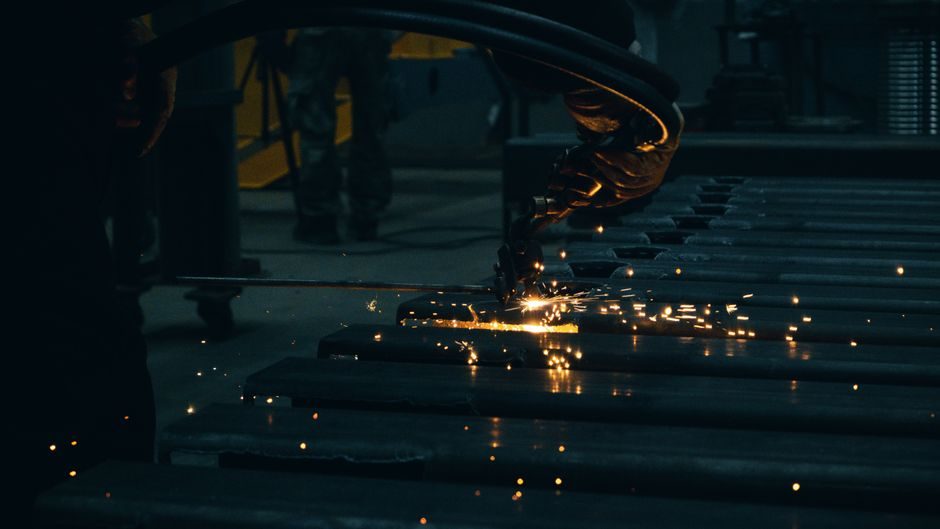
Spot welding and arc welding solve different joining problems: a spot welder passes high current (a TECHNAX bench unit is rated 20,000 W [S1], and the Tecna 404x series modular welder 32,000 W [S3]) through copper electrodes to forge a localized nugget in under a second, while an arc welder sustains a continuous electric arc between a consumable electrode and the workpiece to build a fusion bead along a joint [S7].
The two technologies share a supply chain but not a use case. Chinese OEM listings on made-in-china.com price a multifunction AC/DC inverter arc unit (MMA/TIG/plasma) at US$516-716 per piece with 1-piece MOQ [S7], while a dedicated automatic arc welding machine in the same manufacturer's range sits alongside spot, seam and flash-butt machines in a US$1,000/set FOB Guangzhou quotation [S5]. On the spot side, Tecna's 6010-11 foot-operated inverter spot welder is built specifically for copper joining, with water-cooled transformer, arms and chrome-copper electrode-holders [S2].
How Each Machine Makes a Weld
A spot welding machine is a resistance welder: two copper alloy electrodes clamp the sheets, current passes through the stack, and heat generated by interfacial resistance fuses the interface. The TECHNAX automatic bench model is designed for 2 mm² multi-strand and cable compaction — the parts are manually inserted, the cycle auto-starts once the cable is detected at the stop, and the welder then compacts the strands in one shot [S1]. The Tecna 404x series scales the same principle to industrial production: each module packs its own transformer, SCR contactor, pneumatic cylinder and cooling circuit, and modules can be cascaded to fire multi-spot sequences without an external PLC [S3].
An arc welding machine uses a sustained arc rather than resistance heating. Entry-level portable inverter models in 2026 listings combine MMA (stick), TIG, plasma cutting and CO2 gas-shielded MIG in a single IGBT inverter [S7]. Spot welds are point welds measured in millimetres of nugget diameter; arc welds are continuous beads measured in metres of joint per shift. The Tecna 6010-11 documentation states the time and current are "manually adjustable by potentiometer" [S2] — typical of mid-range spot welders, where pulse profile is set per material rather than read from a recipe library.
Power, Duty Cycle and Cooling Architecture
Power ratings differ by an order of magnitude. A spot welder concentrates 20-32 kW into a single nugget for a fraction of a second, then idles while the next part is loaded. The Tecna 404x series datasheet lists 32,000 W with water-cooled transformer, water-cooled electrode-holders, and a "synchronous SCR contactor insulated from cooling water circuit with protection thermostat" — the SCR, not the mains breaker, switches the weld current, and the thermostat cuts the cycle if the water circuit overheats [S3]. The Tecna 6010-11 uses the same water-cooled architecture for manual foot-pedal operation on copper parts [S2].
An arc welder spreads the same kW across seconds-to-minutes of arc time. A typical portable AC/DC plasma-inverter combination in the US$516-716 band runs on single-phase or three-phase input and accepts a wide range of stick and TIG electrode diameters [S7]. Larger automatic seam/arc systems from Blueflame Industries (Guangdong) integrate longitudinal seam, circumferential seam and automatic arc welding into one product line, suggesting that for long joints an arc-based process is more productive per metre than cascading spot welds [S5].
Joint Type, Material and Thickness Fit
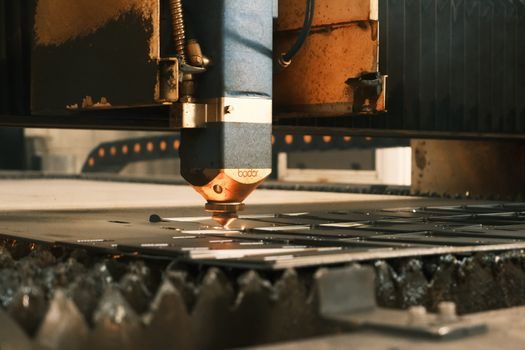
Spot welders excel at overlap joints in thin sheet and wire — the standard choice for automotive bodies, battery tabs, wire mesh, and small cable terminations. The TECHNAX 2 mm² cable compaction application [S1] and the Tecna 6010-11's "for copper" tag [S2] both target electrical-contact joints where the weld must also carry current without high resistance. The Tecna 404x's modular design lets a builder stack single-phase 3-phase modules that share the three-phase mains, so multi-spot automotive sub-assemblies can be welded in sequence while drawing the same instantaneous current as a single-spot machine [S3].
Arc welders are the right tool for butt, fillet and lap joints in thicker plate, for positional work, and for field fabrication. The 2026 made-in-china listings span AC-DC TIG for stainless, MMA stick for site work, and CO2 MIG for production welding [S7]. For long seams — pressure vessel shells, tanks, exhaust tubing — the longitudinal and circumferential seam welding machine category in the Blueflame product list is functionally a continuous arc process, not a sequenced spot process [S5].
Selection Criteria: Spot Welder or Arc Welder?
Use the following decision map. If the joint is an overlap in sheet under ~3 mm or a stranded cable under ~10 mm², a spot welder delivers the lowest cost per joint — expect US$10,000-25,000 for a Chinese-made special-purpose unit (the folding fish-shaped mask ear-strap spot welder is listed at US$20,000/piece FOB Shanghai with 5,000 sets/year capacity [S6]) versus much higher for an equivalent arc-robotic cell. If the joint is a structural seam in plate from 1 mm to over 20 mm, a butt, T or corner joint, or the work is done on site, specify an arc welder — portable inverter MMA/TIG units start at roughly US$516 per piece from Chinese OEMs [S7].
Material also matters. Copper-to-copper electrical joints (busbars, cable terminations, motor windings) almost always use a water-cooled spot welder with chrome-copper electrode-holders such as the Tecna 6010-11 [S2]. Mixed-steel automotive bodies in production volumes use cascaded modular spot welders like the Tecna 404x [S3]. Carbon-steel structural fabrication, stainless tanks and aluminium bodywork move to arc-based MIG/TIG/plasma — categories that overlap heavily with broader welding and assembly equipment portfolios.
Standards, Safety and Sourcing Notes
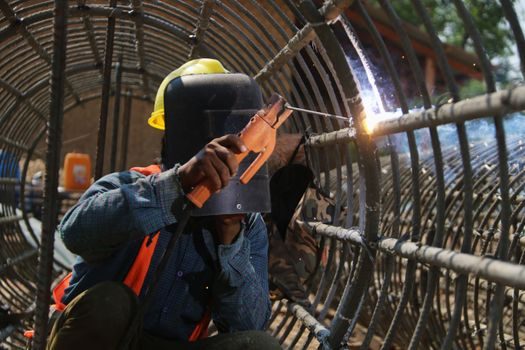
Resistance welding machine safety is governed by IEC 62135-1 (the standard covering resistance welding equipment), while arc welding equipment falls under IEC 60974-1 for safety and IEC 60974-5 for wire feeders. Buyer-side sourcing for spot welders should confirm the transformer is epoxy-resin coated (a Tecna 6010-11 and 404x design point [S2][S3]) and that the SCR contactor is thermally protected. For arc welders, check the IGBT inverter rating, duty cycle at the rated current, and the IP rating of the power source if it will sit near a welding cell. The Blueflame Industries supplier record on ECVV lists a 1-set MOQ and T/T payment terms for its arc/seam/spot product family, indicative of typical Chinese-OEM commercial terms [S5].
Track the next two signals before placing a large order. First, watch Tecna's presence at EuroBLECH 2026 (20-23 Oct 2026, Hall 27, Stand E142 [S2]) for new spot-welder platform launches. Second, watch Chinese OEM pricing on the made-in-china multifunction inverter category — a sub-US$500 unit today may bundle features that previously required separate MIG, TIG and plasma machines, and that integration trend is more disruptive to arc-equipment pricing than to spot-equipment pricing [S7]. A related reference for buyers also weighing robotic welding cells is the 2026 lead-time map for [welding robot supply]((/news/welding-robot-supply-shortage-2026-lead-time-price-and-spec-risk-map.html).
Component reference pages worth checking: coding machine, and core machine.
Related analysis: Hot Chamber Die Casting Machine: Types, Tonnage Bands, and Application Map.