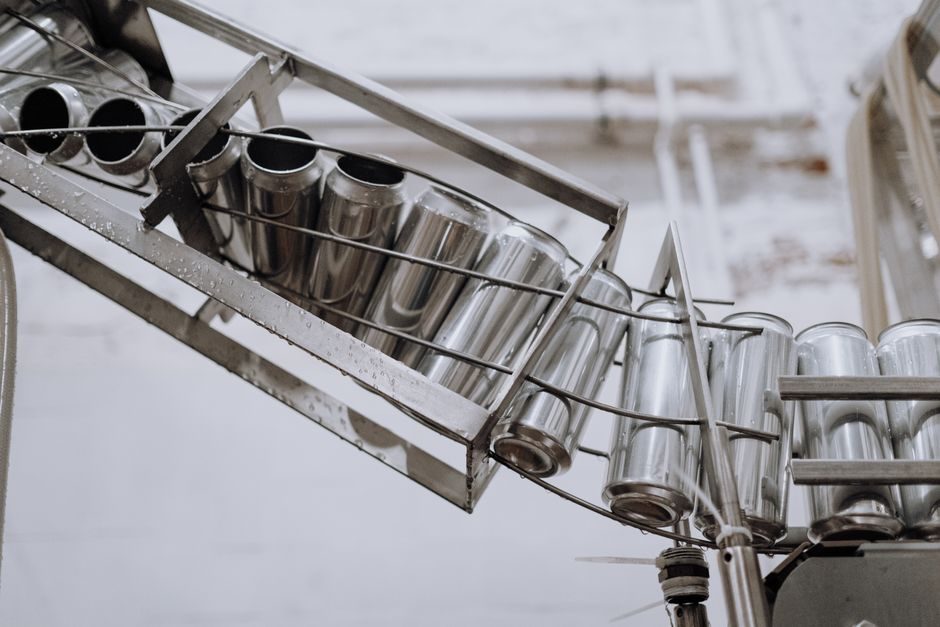
The 2026 cycle for copper mills, refineries and continuous-cast wire-rod lines is defined by three engineering moves: real-time electrowinning current-efficiency monitoring at the cell house, breakout prediction on vertical and horizontal casters, and ISA-95-aligned MES layers that push cathode-grade, residual-resistance-ratio (RRR) and oxygen-content KPIs into the plant ERP [S1][S3].
Polaris Automation markets the Chordata Batch and A-style MES modules that map directly to ISA-95 batch/recipe/procedural models, with explicit copper and smelter process references on its public product brief [S1]. Rockwell Automation's 11th Annual State of Smart Manufacturing report (2026 edition) sets the macro frame: investment priorities and digital-strategy benchmarks for top-performing discrete and process plants, including metals [S3]. On the trade-press side, Manufacturing AUTOMATION (Canada) and the Polaris brief together give a clear picture of how MES and batch control are now being repackaged for non-ferrous metals and continuous casting [S1][S2].
Why Copper Process Lines Are a Special Case for Smart Manufacturing
Copper smelters and refineries combine batch chemistry (converters, anode casting, electrorefining) with continuous casting (rod, billet, strip) and discrete drawing/stranding, so a single site typically needs three automation layers running in parallel: ISA-88 batch control at the cell house, ISA-95 production tracking at the tankhouse, and continuous-control loops with model-predictive setpoints on the casters [S1].
Polaris Automation's Chordata Batch and A modules are pitched specifically at this hybrid profile, where recipe management must coexist with continuous-process historians and where each cathode plate's lot genealogy has to be traced from anode weighing to final shipment [S1]. The 2026 State of Smart Manufacturing report adds a second layer: top-performing metals sites spend the largest share of their automation capex on data-integration and analytics, not on additional PLCs, which is a direct response to the heterogeneity of copper-process equipment vintages [S3]. A practical reference for the material side of this stack is the copper material encyclopedia entry, which lists the grade/CDA/UNS designations that MES recipe definitions typically key off.
Core Sensor and Control Hardware That Actually Gets Specified
On the 2026 copper process floor, four instrument categories dominate new capex: pressure transmitters on electrolyte, steam and acid headers; smart valve positioners on acid-spray, steam-injection and natural-gas manifolds; pH and conductivity loops on electrolyte and spent etch; and machine-vibration sensors plus load cells on casters, rolling mills and drawing machines [S1].
For ISA-95 reporting, the modern stack usually lands on HART and IO-Link for the instrument layer, OPC UA Pub/Sub for the cell-house historian, and an Ethernet-APL backbone on the new greenfield segments, all feeding an MES that mirrors the ISA-95 functional model [S1]. On the caster breakout problem specifically, vendors now combine thermocouples in the mould wall, mould-level radar, and stick-sensor vibration with a soft-sensor inference model; the Rockwell 2026 report lists breakout/quality prediction as one of the top three AI use-cases deployed at top-quartile metals plants [S3]. The manufacturing-press perspective from Manufacturing AUTOMATION is consistent: end-users are buying fewer "stand-alone" instruments and more pre-bundled, OPC UA ready, valve-positioner-and-transmitter packages [S2].
ISA-95 / MES Architecture for a Copper Tankhouse
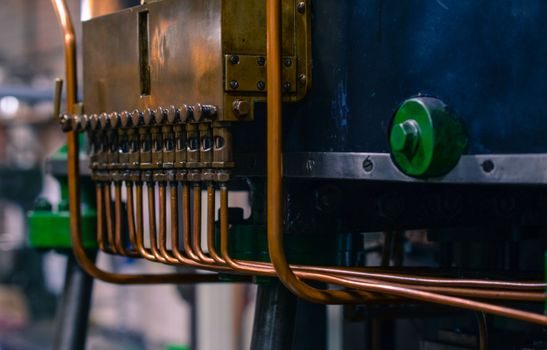
Level 3 in a modern copper refinery follows the ISA-95 functional model with four clearly bounded modules: recipe management (Chordata Batch-style), unit-batch tracking, performance analytics, and exchange with the corporate ERP for lot genealogy and shipment documentation [S1]. Recipe parameters typically include target current density (A/m²), electrolyte copper concentration (g/L), free sulfuric acid (g/L), additive dosing (g/t of cathode), cell temperature (°C), and cycle time per plate — all values that the MES stores per starting-sheet lot and that the L1/L2 control system enforces [S1].
A working 2026 reference stack is: Level 0 field instruments (pressure, temperature, conductivity, level, weight) → Level 1 PLCs and C-series safety PLCs → Level 2 cell-house historian with an OPC UA interface → Level 3 MES (Chordata Batch / A or equivalent) → Level 4 ERP, with ISA-95 B2MML messages for work-order release and lot-status return [S1]. For the analytics layer, the 2026 State of Smart Manufacturing report shows that top-quartile plants are running predictive models for current efficiency, additive consumption, and energy per tonne of cathode on standard on-prem servers, not specialised hardware [S3]. The trade-press echo from Manufacturing AUTOMATION is that this kind of stack has compressed typical copper-tankhouse MES deployment times from 18–24 months to 9–12 months on retrofits and 6–9 months on greenfield tankhouses [S2].
Three Real Use Cases That Show the Pattern
Use case 2 — vertical/horizontal continuous-cast breakout prediction: thermocouples in the copper mould, mould-level radar and a vibration sensor on the oscillator feed an MPC and a classification model that issues a slowdown or stop command before a breakout event, typically reducing unscheduled downtime by an order of magnitude versus purely threshold-based trips [S3]. Use case 3 — wire-rod rolling-mill closed loop: mill exit temperature, gauge and resistivity are tied back to the upstream caster speed and the downstream drawing-machine parameters, with the MES holding the lot genealogy from cathode to rod coil to drawn wire [S1].
The 2026 State of Smart Manufacturing report makes the same point in aggregate: 11 editions of data now show that top-performing metals and process plants deploy analytics in this exact order — energy per tonne first, then quality/breakout prediction, then full ISA-95 ERP integration last — because each layer requires the previous one to be stable [S3]. For a parallel perspective on how a different non-ferrous base metal is being automated, the nickel smart manufacturing 2026 stack article traces a very similar ISA-95/MES trajectory through nickel refining and rolling. For the discrete-end of a copper plant — the wire-drawing and stranding cells — the broader industrial robot market 2026 sizing article gives the capex frame for the robotic cells that increasingly feed finished reels and coils to MES-tracked shipping.
Selection Criteria: What to Specify, What to Skip
For a copper-process greenfield or major retrofit in 2026, four selection criteria consistently separate the working stacks from the marketing ones: (1) ISA-88/95 compliance on the MES, with explicit B2MML or equivalent interfaces; (2) native support for OPC UA Pub/Sub on the historian, not just OPC DA; (3) Ethernet-APL readiness on the field-network segments that handle new builds or major revamps; (4) on-prem-friendly analytics so cell-house data does not have to leave the plant network to feed a predictive model [S1][S3].
A simple comparison of the three main MES/batch-control options a copper-mill engineer will encounter:
Chordata Batch (Polaris) — strengths: explicit ISA-88 batch/recipe model, dedicated copper and smelter references, B2MML and OPC UA interfaces out of the box; weakness: smaller installed base than the global DCS vendors, so integration with brownfield PLCs sometimes needs extra work [S1]. Generic global DCS with MES add-on (e.g. Rockwell, Siemens) — strengths: largest installed base, deep PLC and drive integration, a full 11-year benchmarking dataset on what top plants actually deploy [S3]; weakness: copper-specific batch templates are not always included, and the bolt-on MES layer often has weaker ISA-88 recipe object. Bespoke/hybrid (best-of-breed historian + custom MES) — strengths: lowest licence cost per tag, maximum flexibility on analytics [S2]; weakness: highest integration risk and the longest deployment time, which directly contradicts the 2026 trend toward 6–12-month MES projects [S1][S2][S3].
Limits, Failure Modes and What 2026 Vendors Don't Fix
Three failure modes show up repeatedly when copper plants try to scale a pilot into a plant-wide smart-manufacturing programme, and they are the same ones flagged in the 2026 State of Smart Manufacturing report and on the trade-press side: bad tag-naming conventions on the L1 side that block historian normalisation; MES projects that try to cover every process line at once instead of staging cell-house, caster and mill as separate rollouts; and analytics models trained on a single electrolyte or a single caster and then pushed to lines with different impurity profiles or different machine builders [S2][S3].
Instrumentation-specific failure modes in 2026 are also recognisable: pressure transmitters on hot sulfuric-acid lines that drift when the diaphragm material is not specified for the specific acid concentration and temperature; smart valve positioners on steam-injection manifolds that lose the FSK HART signal when the 4–20 mA loop is poorly grounded; mould-level radar units that mis-read on copper vertical casters when the slag cover is not stable [S1]. The Rockwell 11th-edition report adds a more strategic warning: only a minority of plants in any year have a fully data-integrated stack, and the gap between top-quartile and bottom-quartile metals sites on data-integration maturity is widening, not closing [S3]. For a different but related material angle, the aluminum smart manufacturing 2026 stack article documents the same widening gap on the aluminium side, which is a useful cross-check when arguing the budget case for copper-plant investments.
Closing: the practical next node to watch is the 2026 H2 release of Chordata-style batch modules with native ISA-95 B2MML interface for non-ferrous tankhouses, and the first Ethernet-APL instrument-cluster installations on copper cell houses that bundle smart meters and pressure transmitters on the same APL spur; the smart valve positioner family is the third trackable signal, with new ATEX/IECEx dual-certified SKUs entering copper-acid-service RFQs in late 2026 [S1][S3].