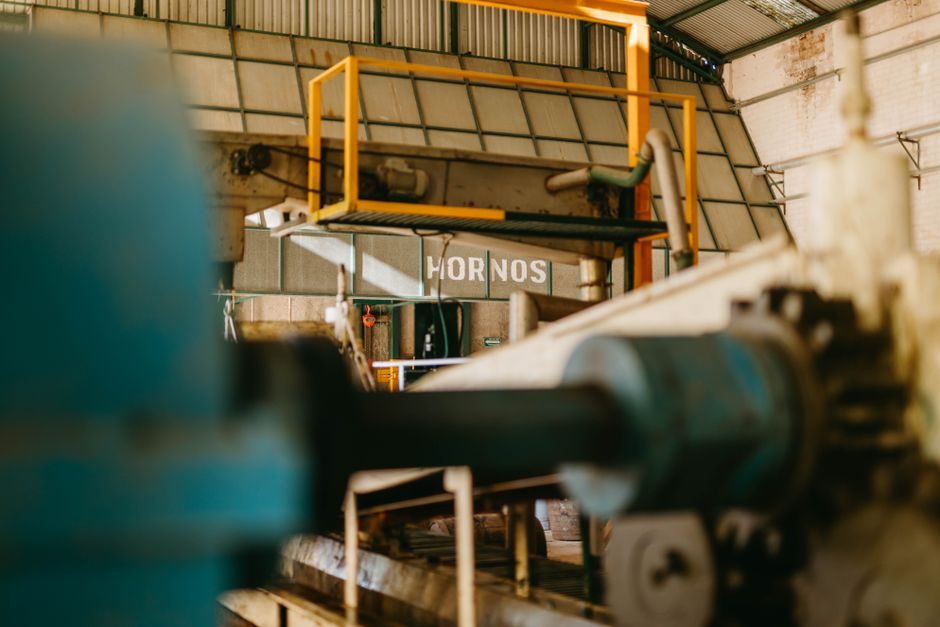
The 2026-06-12 update from the Smart Manufacturing Experience programme at IMTS 2024 positions IoT, AI analytics, cloud MES and industrial automation as the four layer-cake that US and European discrete and process plants are wiring into brownfield lines [S1]. The same "smart manufacturing = industrial automation + information technology" definition EMQ published on 2025-06-13 applies directly to nickel smelters, refineries and rolling mills: physical furnaces, MVR evaporators and reversing-mill stands joined to networked sensors and software that predict, control and improve yield in real time [S3].
Process engineers specifying nickel-side equipment — feedwater heaters, sulfuric-acid coolers, sour-service piping — increasingly find their vendors offer a "smart" tag on the same nickel alloy chemistry. Whether that tag carries real sensor and edge-compute value, or is just a sales overlay, depends on the layer underneath: field instrumentation, network, control, MES, and analytics.
Five layers that define a nickel-line "smart" build
A nickel or nickel-alloy production cell needs all five layers before the smart label is earned. Layer 1 is the field device set: HART 7 / 4-20 mA pressure transmitters on autoclave shells, FOUNDATION Fieldbus valve positioners on acid let-down, RTDs and pyrometers on calciner shells, conductivity pH cells in leach trains. Layer 2 is the network: EtherNet/IP, PROFINET, or the newer APL (Ethernet-APL, IEEE / 802.3 cg) two-wire variant for hazardous-area drops into Zone 1 / Class I Div 1 nickelled tank farms. Layer 3 is the controller: ControlLogix, SIMATIC PCS 7 / PCS neo, Emerson DeltaV, Yokota CENTUM VP, with Rockwell's Lifecycle Services team describing the Smart Manufacturing stack in 2026-06-04 brand material as "connected enterprise" from sensor to ERP [S2]. Layer 4 is MES / historian: OSIsoft PI, AVEVA PI, Inductive Automation Ignition, ABB Ability 800xA. Layer 5 is analytics: ML on time-series historian plus an LLM-augmented operator HMI for alarm-rationalisation.
Skipping layer 1 — bolting cloud analytics onto a 4-wire 4-20 mA greenfield without smart instrumentation — is the failure mode that EMQ flags explicitly: smart manufacturing "transforms traditional factories into intelligent systems" only when sensors and software are both in place [S3]. The same lesson shows up in the MIT Professional Education 2026-06-10 course outline on moving from static to dynamic manufacturing operations: 10 weeks, online, covering the full stack rather than the analytics slice alone [S5].
Where nickel-grade choices meet automation hardware
Nickel 201, Monel 400, Inconel 600 / 625, Incoloy 800 / 825 and Hastelloy C-276 still appear on the P&IDs in the 2026 wave of EV-battery chemical-plant builds. The nickel alloy handbook entry frames these as workhorses for caustic, sulfuric, hydrochloric and hydrofluoric media; on a smart line the chemistry decision is usually taken first, then the field device is sized to that chemistry. The automation kit that lives around it is the variable: smart pressure transmitters with HART 7 + Ethernet-APL output, smart valve positioners with partial-stroke test (PST) and predictive-diagnostics libraries, smart meters for steam and acid mass flow, and machine-vision cameras on the pickling / annealing exit end. The melting shop adds optical emission and XRF for closed-loop melt-correction; the rolling mill adds laser-speed gauges and pin gauges for closed-loop shape control. [S1]
For buyers, the practical 2026 shopping list at the device tier is finite: smart pressure transmitter (HART 7, in-situ health diagnostics), smart valve positioner (partial-stroke test, digital valve controller), mass-flow smart meter (Coriolis for sulfuric acid, vortex for steam), vibration and acoustic-emission sensors on rolling-mill drives, and machine-vision smart cameras on the finishing line. EMQ's 2025-06-13 brief lists IoT sensors, AI-based predictive maintenance, big-data analytics and cloud-platform integration as the four canonical "smart" ingredients — and each maps cleanly onto one of those device slots [S3].
Three stack options a mill engineer can actually buy
Stack A — Rockwell-centric, aligned with what the 2026-06-04 Rockwell Automation site calls the "Connected Enterprise": ControlLogix / CompactLogix + FactoryTalk View + FactoryTalk Analytics + Pavilion8. Best for plants that are already Logix-class, common in North American primary-nickel and stainless operations, with a strong ecosystem of pre-validated add-on profiles for pressure transmitters and valve positioners [S2]. Stack B — Siemens-centric: SIMATIC S7-1500 / PCS neo + WinCC Unified + Opcenter Execution. Strong in European stainless and nickel refineries, native PROFINET, deep process library, native integration to COMOS for the engineering back-bone. Stack C — vendor-neutral / open: Industrial Edge + Inductive Automation Ignition + Node-RED on a Docker/Kubernetes cluster, with MQTT-SN / OPC UA Pub/Sub to the historian. EMQ's 2025-06-13 overview treats the vendor-neutral MQTT broker + EMQX as the publish-subscribe spine that most "smart" architectures are converging on for greenfield brownfield integration [S3].
Stack A is cheapest to retrofit on an existing Allen-Bradley fleet but locks you in to Rockwell's analytics roadmap. Stack B is best for greenfield chemical-grade nickel salt and battery-grade nickel sulfate lines in EMEA where the EPC, COMOS and PCS neo come as one package. Stack C is the lowest-friction retrofit on a mixed DCS / PLC brownfield and is the natural fit where the site already runs an OSIsoft / AVEVA PI historian with EMQX as the south-bound bus.
Standards and protocols that govern the nickel-line smart build
Several published references matter when the nickel or nickel-alloy line is also classified hazardous. ISA-95 / IEC 62264 defines the ERP-to-MES-to-control boundary; NAMUR NE 107 governs the status and diagnostic messages on field instruments ("failure / function-check / out-of-spec / maintenance required / diagnostic in progress"); IEC 62657 (Industrial communication networks — wireless) covers 5G / Wi-Fi 6E deployments on the shop floor; and OPC UA Part 100 / Companion Specifications (e.g. for ADI, for machine vision) define the publish-subscribe transport for cross-vendor smart devices. The 2026-06-04 Rockwell Automation site anchors its 2026 messaging to the Connected Enterprise model that maps directly onto ISA-95 levels 0-3 [S2].
For hazardous-area wiring the 2026 specifier still defaults to intrinsic-safety barriers (IEC 60079 series) or explosion-proof conduit on the legacy side, and to Ethernet-APL Ex ia / Ex ec on the new side. ATEX 2014/34/EU and the IECEx scheme remain the two dominant certification regimes for the European and global nickel-chemical EPCs, with NACE MR0175 / ISO 15156 governing sour-service materials where the line is connected to upstream oil-and-gas nickel-bearing piping. The 2026-06-12 IMTS 2024 Smart Manufacturing Experience programme places the same set of references inside its "Why Attend" curriculum, bundling them into the show-floor demonstrations [S1].
Where Chinese suppliers are visibly pushing the nickel-automation envelope
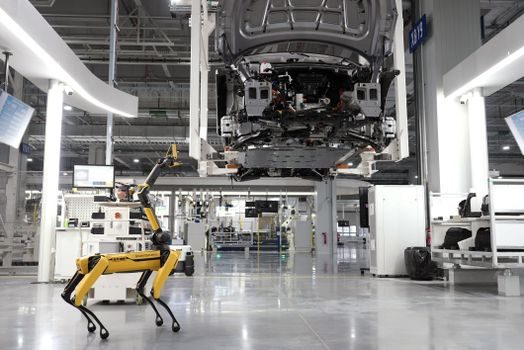
The People's Daily Online 2024-08-27 English dispatch catalogues Chinese AI, cloud, drone, smart-home and NEV products being received in Europe as "smart manufacturing" exports [S4]. On the nickel side, the visible 2026 push from Chinese suppliers is into AI-augmented quality inspection on stainless and nickel strip, MES software layered on top of legacy DCS, and 5G-Advanced campus networks that back-haul data from pickling-line and bright-annealing-line PLCs to a central historian. The buyer-side caution is unchanged: a 2026 spec frame should validate the cybersecurity posture (IEC 62443-3-3 SL-2 minimum), the long-term firmware / patch support, and the data-sovereignty map before any cloud-vendor dual-cits the China-mainland-1 / EU-1 split.
Who this stack is FOR, and who it is not for
It is FOR greenfield battery-grade nickel sulfate / nickel hydroxide precipitation lines with a 4-20 mA / HART 7 / Ethernet-APL instrumentation spec already on the P&ID, and brownfield mills that want to retire manual sampling and operator logbook in favour of historian-driven closed-loop control. It is also FOR EPCs that want a single engineering back-bone (COMOS, PlantSight, AVEVA E3D) and a single controls vendor. It is NOT FOR single-machine retrofits in a job shop, where the 1-machine-1-MES approach is overkill; not for plants that still lack a stable process window (no smart analytics will fix a basic control loop that is mis-tuned); and not for sites with no cybersecurity programme, because every "smart" endpoint is an attack surface. [S2]
Trackable signals for the next 6-12 months: the IMTS 2026 floor plan and Smart Manufacturing Experience 2026 syllabus (annual cadence from the 2024 edition [S1]), the next Rockwell Automation / Siemens / Emerson PLC firmware drops in the Lifecycle Services portal [S2], and the MIT Professional Education 10-week Smart Manufacturing course's 2026-06-10 listing — that course is the leading indicator for what mid-career process engineers are being told to study in 2026 [S5]. For mill-side readers, also see this Industrial Robot Smart Manufacturing Spec and Buyer Guide for 2026 for the robot-arm layer above the field devices, and this Rare Earth Smart Manufacturing and Automation: 2026 Stack for the rare-earth analogue stack on the alloy side. For a chemistry-down comparison, the Nickel Alloy vs Stainless Steel spec frame is the natural companion to layer-1 instrument selection.