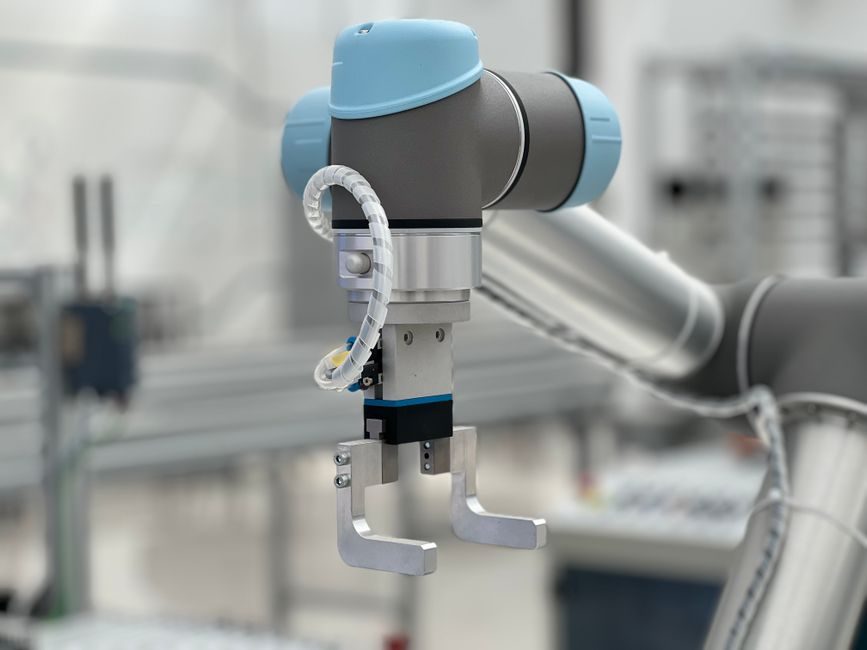
CPU smart manufacturing in 2026 is a stack of three things bolted together: industrial-grade CPUs that can run deterministic control plus on-device AI inference, a sensor and IIoT layer that feeds the line, and MES/ERP software that closes the loop back to the planner [S1][S2][S4].
The biggest shift on the factory floor between 2024 and 2026 was moving AI inference off the cloud and onto the line-side CPU or a co-packaged accelerator; the latency budget for closed-loop control on a typical SMT or wafer-handling cell is now 1-10 ms, which rules out a round trip to a public cloud [S2][S4].
What "CPU smart manufacturing" actually means on a 2026 line
CPU smart manufacturing is not a product - it is a layered reference architecture that the major silicon, networking, and IIoT vendors all publish under that label. Intel, Cisco, and EMQ all describe the same skeleton: edge compute nodes (Intel Core i9 / Emerald Rapids class on a recent product roadmap, and equivalent embedded parts), an IIoT gateway tier, OPC UA over TSN on the deterministic side, MQTT or AMQP for the non-deterministic telemetry, and an MES/ERP layer above [S1][S2][S4]. The "smart" claim rests on two engineering numbers: the control loop period the CPU can sustain deterministically, and the AI model the CPU can serve at the edge without falling over.
For a typical discrete-assembly or process cell, the deterministic control loop runs on a real-time OS (VxWorks, QNX, or a PREEMPT_RT Linux) at 1-10 kHz; the AI inference tier (defect classification, predictive maintenance, vision) runs on a separate process on the same SoC or an attached M.2 accelerator and typically targets 10-30 FPS on 1080p images [S2][S4]. Mixing those two jobs on one CPU without partitioning is a common spec-wash; the credible answers in 2026 use containerised or hypervisor-separated real-time and AI workloads [S2].
Selection criteria: how a process engineer picks a CPU smart-manufacturing stack
The decision gates that actually move the needle in 2026, in the order most spec sheets present them: (1) deterministic latency under load - jitter on the control loop has to stay inside the cell's tolerance, usually sub-100 microseconds on hard-realtime work; (2) edge AI throughput - TOPS at the target quantisation (INT8/FP16), and whether the silicon vendor publishes a sustained figure rather than a peak; (3) industrial I/O and protocol support - OPC UA over TSN, PROFINET, EtherCAT, or EtherNet/IP, plus legacy field-bus tolerance; (4) operating-temperature range and conformal-coating options for the line-side box (commonly -25 to +70 C extended, -40 to +85 C on the rugged SKU); (5) cyber posture - TPM 2.0, secure boot, signed firmware, and a vendor patch cadence of 10 years for OT gear [S1][S4].
Those five map onto three deployment shapes most plants pick between. The cell-level box is a fanless embedded PC with a Core i9 or Ryzen Embedded class CPU, 16-32 GB ECC RAM, NVMe storage, and two isolated Ethernet segments (one for TSN control, one for IT traffic); it runs a small AI model and the PLC runtime. The line-level aggregator is a 1U/2U industrial server aggregating several cells, running the MES, historian, and a larger vision model. The cloud tier is where long-horizon analytics and LLM-assisted troubleshooting live, but it is no longer in the critical path for control [S1][S2][S4].
Who it is for - and which plants should not touch it

CPU smart manufacturing pays back in high-mix, high-variability lines: electronics assembly, semiconductor fab back-end, automotive body-in-white, pharma fill-finish, and food/bev packaging. The ROI case for smart manufacturing is built on changeover-time reduction, scrap reduction from vision-based inspection, and predictive maintenance on rotating equipment, with the EMQ overview highlighting predictive maintenance as a key use case [S2][S4].
It is a bad fit for plants that have not closed the basics: brownfield lines without a clean OT network segmentation, lines still running serial field-bus without a path to Ethernet-APL or TSN, or sites where the operations culture treats the PLC program as untouchable. The hard rule of thumb from the OEMs: you cannot bolt an AI tier on top of a control tier that has not been standardised - the OPC UA companion-spec work and the ISA-95 data-model hygiene have to be done first, otherwise the edge AI is reading garbage [S1][S2][S4]. The natural gas smart manufacturing piece walks the same MES-plus-IIoT pattern in a process industry context; the robotics manufacturing process map covers the cell-level control-tier detail that this stack sits on top of.
Comparison: the three CPU tiers on a 2026 smart-manufacturing line
Side by side, on the decision criteria an engineer actually writes into a requisition: [S1]
Cell-level edge box (embedded PC, Core i9 / Emerald Rapids or equivalent): 8-16 TOPS NPU on newer SKUs, fanless -25 to +70 C, 16-32 GB ECC, OPC UA over TSN + one legacy field-bus, deterministic loop at 1-10 kHz via PREEMPT_RT. Best for closed-loop vision and small defect models; weakest on aggregate throughput and storage. List band on the merchant market in 2026 sits broadly $1,500-$4,500 per unit before I/O cards, depending on ruggedisation.
Line-level industrial server (1U/2U Xeon-SC or Epyc, optional GPU/Intel Habana or NVIDIA L4): 100-300 TOPS with a discrete accelerator, 64-256 GB ECC, NVMe-oF or SATA storage tier, full MES / historian + multi-cell AI. Best for aggregating 4-12 cells and running a mid-size vision or predictive model; weakest on physical footprint and power per cell. Order-of-magnitude $8,000-$25,000 per rack node before accelerators.
Plant-/fleet-level analytics tier (private cloud or colocation, multi-rack): hyperscaler-style CPU pool with H100/H200 or MI300 accelerators, 1-10 PFlops per cluster, capacity for foundation-model fine-tunes on plant telemetry. Best for cross-line optimisation and LLM-assisted troubleshooting; weakest on latency (no use in the control path). This tier is also the one that has shifted most in the past 18 months - Intel's 2026 predictive-maintenance brief now positions on-prem "factory-scale" AI to keep IP and process data on-site, with explicit messaging on lower deployment risk [S1].
Standards, protocols, and the data plumbing that has to be right
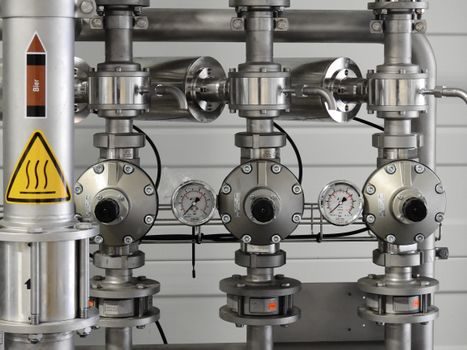
The plumbing is the part most stacks under-spec. OPC UA over Time-Sensitive Networking (IEEE 802.1Qcc / 802.1AS) is the deterministic backbone most 2026 builds converge on; MQTT 5.0 is the telemetry fan-out for the IT tier; the MES layer still speaks the ISA-95 data model [S2][S4]. On the device side, I/O link options split into PROFINET (Profibus International) for European discrete, EtherCAT (Beckhoff, ETG) for high-speed motion, EtherNet/IP (ODVA) for North American discrete, and CC-Link IE TSN for Mitsubishi-heavy lines. None of those talk to OPC UA natively; the spec gate on the CPU box is the OPC UA companion-spec implementation for the relevant I/O family.
EMQ's 2025 reference stack treats MQTT as the IIoT message bus, with an MQTT broker serving both telemetry and command paths; the modern best practice is to use the Sparkplug B payload over MQTT 5.0 for industrial telemetry so that the historian and the edge AI see a self-describing payload and the broker can do state-aware filtering [S2]. The flow meter and pressure transmitter reference pages in this encyclopedia cover the field-instrument side of the same data model; the smart valve positioner page is the typical deterministic-actuator endpoint that an OPC UA over TSN stack addresses.
Real use cases, with numbers the OEMs are willing to put on paper
Predictive maintenance is the most-cited and most-telegenic use case. Intel's 2026 predictive-maintenance brief puts the gain at "reduced total cost of ownership" and "lower deployment risk" by keeping AI on-prem, and pairs it with on-device anomaly detection on rotating equipment (pumps, motors, compressors) [S1]. The EMQ 2025 overview reports similar use cases - vibration and current-signature analysis on motors, with edge models running on a cell-level CPU and a long-horizon model in the cloud [S2].
Vision-based quality inspection is the second high-frequency use case: a 1080p line-scan or area-scan camera on a conveyor, an edge AI model running INT8 quantisation on the cell-level CPU's NPU, and a pass/fail signal back to the PLC over OPC UA over TSN. Throughput numbers on a 2026 line-scan cell are typically 5,000-30,000 parts per hour depending on the defect set and the trigger / settle time the model needs.
Process optimisation on continuous lines (steel, paper, chemicals) is the third, and the one where the smart meter and process-instrument layers carry the data. The closed-loop case here is harder because the line dynamics are slow but the regulatory and quality constraints are tight; the realistic deployment in 2026 is advisory (the AI writes a setpoint recommendation, the operator or a supervisory controller accepts or rejects it) rather than fully autonomous.
Limitations, failure modes, and what bites in the field
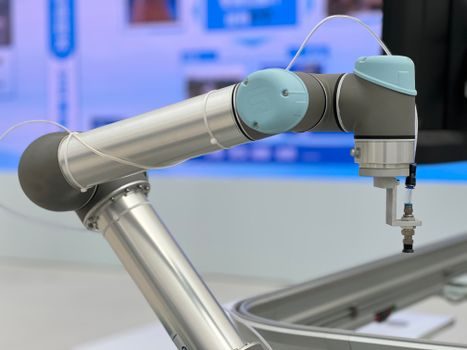
The single biggest failure mode in 2026 deployments is not the AI - it is the network. TSN requires end-to-end configuration (stream reservation, time synchronisation, Qbv gate control) and a misconfigured bridge anywhere in the path will silently turn a deterministic loop into a best-effort one; the symptom is intermittent process variability, not a hard fault, which makes it hard to diagnose [S4].
Second is the real-time / AI mix on a single CPU. Running a vision model at 20-30 FPS on the same SoC that is supposed to deliver sub-100-microsecond control jitter is a known antipattern; the fixes are hardware partitioning (separate cores, containers, or a co-processor) or a separate physical CPU for the AI tier [S2]. The Bitsum process-level CPU affinity and priority tooling is one example of the kind of user-space process-priority / affinity automation that runs on the cell-level box to keep the real-time tasks from being starved by the AI tier - a useful reference for the kind of real-time-process scheduling that an industrial PC has to do without human intervention [S3].
Third is cybersecurity. OT networks are increasingly in scope for IEC 62443 (zone-and-conduit model, security levels, and system security requirements), and a CPU smart-manufacturing box that ships without a TPM, secure boot, signed firmware, and a documented patch cadence will not pass a 2026 plant cyber audit. The fourth is the skills gap: the people who can wire up OPC UA companion-specs and tune a TSN network are not the same people who can fine-tune a vision model, and most plants have one of the two and not both. The AI-chip smart manufacturing stack reference article covers the upstream silicon-side analogue of the same skills problem.
Sourcing, build vs buy, and the question of "do I run the AI on-prem"
The build-vs-buy split in 2026 runs along the same lines as 2023-2024, but with a sharper edge: turnkey stacks from Intel + Cisco + an MES vendor are now credible on the greenfield side, and an internal build is only defensible if the plant has an OT-software team that already speaks OPC UA, TSN, and ISA-95 [S1][S4]. On-prem AI is the more interesting shift. Intel's 2026 messaging is explicit on this: keep the process data and the inference on-prem to cut deployment risk and TCO, and avoid sending operational data off-site [S1]. The same argument drives the nuclear and lithium-battery smart-manufacturing stories; the nuclear power smart manufacturing 2026 piece and the lithium battery smart manufacturing 2026 piece are the natural cross-references for the regulated-industry view of the same on-prem calculus.
For a trackable next signal, watch the OPC Foundation and the IIC (Industrial Internet Consortium) testbeds in 2026 - the published interoperability results from those are the leading indicator for which OPC UA companion-specs will land in vendor SKUs the following quarter. A second signal is the published cell-level TOPS and jitter numbers on the next generation of Intel Core / Xeon-SP and AMD Epyc embedded parts; sustained (not peak) INT8 TOPS at the operating-temperature limit is the spec the engineering team should be writing into the requisition, not the headline peak. EMQ's open-source broker cadence and the Bitsum process-tuning roadmap are the two lower-cost signals worth watching for the cell-level side of the stack [S2][S3].