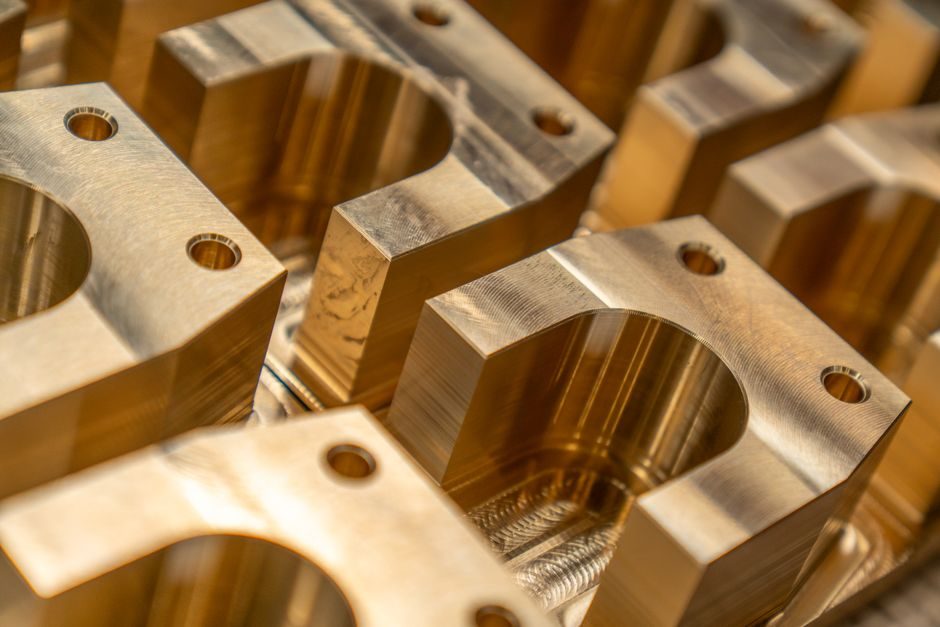
A correct industrial gearbox is the one whose service factor, gear geometry, ratio, shaft arrangement, sealing class and oil specification all match the driven machine's worst-case load, ambient and duty cycle — not the one with the highest catalogue torque rating [S3].
Buyers who lock the wrong service factor or ratio first spend the rest of the project correcting misalignment, bearing failures and thermal trips; the gear encyclopedia entry documents the basic geometry terms used through this article, while related driveline articles (ball bearing pick, pillow block vs slewing ring) sit beside it on the same spec sheet.
Service Factor and AGMA Load Classification
Service factor (SF) is the multiplier applied to the motor nameplate power to absorb shock, starting duty and driven-machine peak torque, and AGMA 2010 / ISO 6336 duty classifications (I-uniform, II-moderate shock, III-heavy shock) drive the default SF in the 1.0-2.0 band for uniform loads, 1.25-1.75 for moderate shock and 1.5-2.5 for heavy shock loads such as crushers, mixers and cranes [S3].
Select the duty class from the driven machine first, then look up the corresponding SF in the gearbox catalogue; doing it in reverse — picking a gearbox by price then stretching SF to fit — is the single most common cause of premature gear pitting and bearing spalling in field feedback [S3]. For variable-speed drives, the additional speed range and thermal dissipation should be confirmed against the gearbox rated power at the lowest continuous output speed, not at the nameplate point.
Gear Type: Helical, Bevel, Worm, Planetary
Planetary gearboxes pack the highest torque density per kilogram and the lowest backlash (typically 1-3 arc-min on precision units), which is why they dominate mobile hydraulics, wind pitch and yaw, and high-ratio servo applications where ball bearing pairing of the planet carrier and output stage has to be reviewed as part of the same spec gate.
Ratio, Output Speed and Backlash
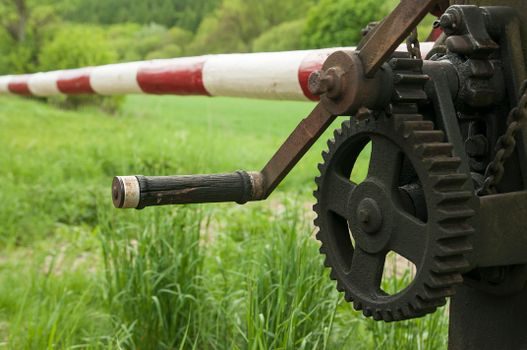
Ratio is the simple input/output division, but the right spec is the actual output speed under load, which must sit inside the driven machine's allowable speed window (e.g. 1450 / 1750 rpm motor in, 30-200 rpm out for an agitator, 1-20 rpm out for a slewing drive). [S1]
Backlash tolerance separates general industrial units (>15 arc-min) from precision servo-rated units (3-10 arc-min) and direct-drive robotic units (<3 arc-min); under-specifying backlash causes hunting and lost positioning accuracy on indexing tables, over-specifying it inflates cost on a standard belt conveyor where backlash is irrelevant. For slewing and track-drive applications, the slewing bearing spec and the gearbox backlash are usually coupled — see slewing bearing selection for the matching radial/axial load and bolt-circle requirements.
Mounting Configuration and Shaft Load
Foot-mounted, flange-mounted, shaft-mounted and torque-arm configurations each carry a different allowable overhung or axial load on the output shaft; overhung load (P) in newtons is the product of chain or belt tension and the sprocket/pulley pitch radius, and must be checked against the gearbox catalogue value at the same operating speed [S3].
Shaft-mounted units with the driven sprocket mounted directly on the output stub remove a coupling and a pillow block from the driveline, but they require the gearbox to carry the full overhung load — a pillow block vs slewing ring comparison is useful here when the driven shaft is short and the radial load approaches the gearbox's catalogue limit. Vertical-shaft mounts (e.g. agitator top-entry) need an additional thrust rating and usually a backstop, and the input shaft must be specified for the actual coupling type (flexible elastomer, gear, disc).
Enclosure, Sealing and Environment

IP rating is the first environmental filter: IP55 is the default indoor/covered outdoor floor-mount, IP65 is required for outdoor washdown or food-grade lines, and IP66/IP67 apply to mining, marine and cement dust environments. [S2]
Seal class (double-lip nitrile, fluorocarbon/Viton, labyrinth with grease purge) is chosen for ambient temperature and chemical exposure; a pressure transmitter on the lube line is sometimes wired to trip on low oil, so seal integrity directly drives the safety-instrumented function. Ambient temperature below -20 °C pushes synthetic PAO or PAG oil and special seals, and above 40 °C typically forces a derate or a fan/heat-exchanger-cooled unit rather than a bigger gearbox.
Lubrication, Cooling and Oil Specification
Oil grade (ISO VG 220, 320, 460 mineral or synthetic) is set by gear type, output speed and thermal dissipation; the maximum permissible oil sump temperature (usually 80-95 °C continuous) and the rated thermal power (P_thermal, kW) define the boundary between a standard unit and a cooled unit [S3].
Cooling options scale in cost roughly as: standard splash → fan-cooled finned housing → water-cooled heat-exchanger → forced-lubrication pump with cooler and filter; the pump circuit is the natural place to fit a lube-pressure pressure sensor for the trip, and the heat-exchanger water side is often metered by a flow meter to detect fouling. For food-grade and pharmaceutical duty, food-grade NSF H1 oil and stainless hardware are specified together, not separately.
Integration: Motor Coupling, PLC Interface and Commissioning

Coupling type is chosen last and locked in with the gearbox model: flexible elastomer couplings (e.g. Lovejoy, KTR Rotex) tolerate up to 0.1-0.3 mm parallel misalignment; gear couplings allow higher torque density; disc couplings deliver near-zero backlash for servo loops. The input-side coupling guard, key and keyway dimensions (ISO 773, metric; ASME B17.1, imperial) must match the motor shaft, otherwise the gearbox-to-motor interface becomes a field rework. [S3]
For digital drivelines, a PLC interlock on oil temperature, oil pressure, vibration and housing-temperature RTD is now standard on any gearbox above 75 kW, and the interlock is wired to a pressure transmitter and/or a vibration probe through a dedicated analogue or fieldbus channel.
Comparison of Main Gearbox Types Across Decision Criteria
[S4]
For continuous-duty, high-efficiency applications (conveyors, mixers, aerators, pumps) helical and bevel-helical dominate; for high-ratio, low-backlash, high-torque-density applications (wind, mobile hydraulics, robotics, slewing) planetary wins despite cost; for intermittent right-angle drives where braking matters and the efficiency loss is acceptable, worm and worm-helical combinations still hold ground.
Lock these gates in this order — driven-machine duty class and SF, gear type, ratio and output speed, mounting and shaft load, enclosure and sealing, lubrication and thermal, motor coupling and PLC interlock — and a ball-bearing stage review becomes the final precision gate rather than an emergency redesign. Track the gearbox vendor's reference list for at least three installations of the same frame size in the same industry, the lead time on a spare helical gear set, and the documented MTTR for seal and bearing change, and the spec sheet is complete enough to ship for bid in 2026.