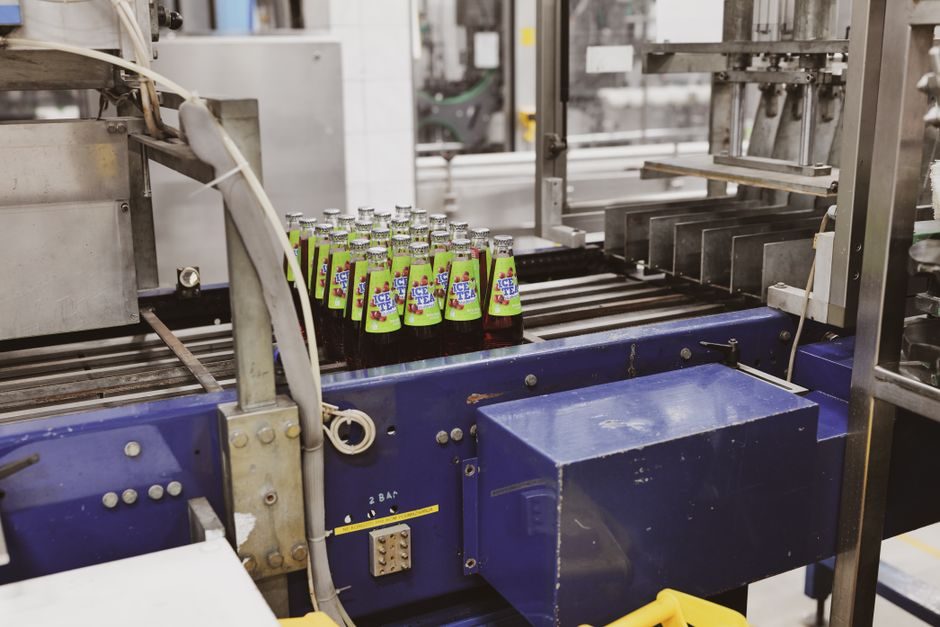
GPU-accelerated smart manufacturing replaces ladder-logic-only line control with edge inferencing on industrial PCs, pairing deterministic PLC scans (IEC 61131-3) with parallel CUDA/OpenCL workloads for machine vision, anomaly detection, and digital-twin simulation on the same plant network [S1].
The shift is driven by three measurable pressure points: sub-50 ms vision cycle times on high-speed packaging and PCB lines, growing data volumes from multi-camera AOI stations, and the need to run physics-based simulation alongside production code on a shared compute substrate [S1][S2].
What "GPU Smart Manufacturing" Actually Means in 2026
Smart manufacturing layers IoT, AI, big-data analytics, and cloud orchestration across every stage of production, from inbound material to dispatch [S1]. Inside that envelope, the GPU tier is the real-time inference and simulation layer that turns raw sensor streams into closed-loop control decisions. A canonical cell pairs a PLC or PAC for deterministic I/O, an industrial PC (IPC) or GPU edge box for vision and model serving, and a plant-level historian or MES for traceability [S1][S2].
The architecture follows the ISA-95 functional hierarchy: Level 0 sensors and drives, Level 1 PLCs, Level 2 SCADA/HMI, Level 3 MES, Level 4 ERP. GPU compute slots primarily at Level 1-2 for line-side inference and at Level 3 for batch analytics. EMQ's reference model treats MQTT brokers and edge gateways as the connective tissue between these tiers, with publish/subscribe decoupling the deterministic control plane from bursty AI workloads [S1].
Decision Criteria: Where a GPU Earns Its Slot vs. Where It Does Not
A GPU is justified when any one of three conditions is met: vision cycle under 100 ms, model parameter count above roughly 10 million (where CPU latency degrades sharply), or a digital twin that must co-simulate with live process data. Discrete-component pick-and-place, SMT AOI, semiconductor wafer inspection, and high-speed bottling are the textbook fits [S1].
A GPU is the wrong tool for slow thermal processes (cure ovens, autoclaves with cycle times in hours), single-loop PID-only flow or pressure control where a flow meter feeds a 4-20 mA loop, or any line where determinism is measured in tens of microseconds and a GPU's task-switch jitter (typically 50-500 microseconds) is unacceptable. There, a PLC with analog I/O and a pressure transmitter is the correct, lower-cost tier.
Comparison: CPU Edge Box vs GPU Edge Box vs Cloud Inference
Three deployment patterns dominate 2026 smart-factory builds, and the trade-off is consistent across vendors. The decision drivers are latency, model size, data-sovereignty, and total cost of ownership over a 7-year depreciation window. [S1]
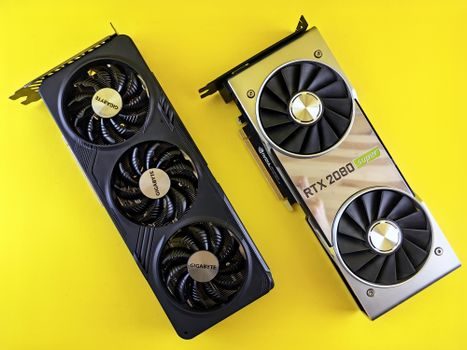
CPU edge IPCs (Intel Core i7/i9, AMD Ryzen embedded) handle models up to roughly 100M parameters at 30-60 fps for classification, with 60-120 W draw and no special cooling. GPU edge boxes (NVIDIA Jetson Orin, T4, L4, or industrial RTX A-class) push 200-1000 fps on the same models, draw 75-300 W, and require conformal-coated thermal solutions in dusty or humid cells. Cloud inference on A100/H100-class hardware offers effectively unlimited model capacity but adds 30-200 ms network round-trip and demands OT/IT segmentation per IEC 62443 zones.
For most line-side vision under 50 ms cycle, a Jetson-class module strikes the best price-performance point; for fab-wide digital twins where the same GPU also serves training, a rack-class L4 or A2 is the conventional answer. Plants with strict data-residency rules (defence, pharma, certain EU sites) keep inferencing on-prem and use cloud only for fleet-level model management.
Standards, Network Protocols, and Security Boundaries
GPU compute on the plant floor does not change the underlying control standards; it changes the cyber-physical attack surface. IEC 61131-3 still governs PLC programming, IEC 62443 defines the security zones and conduit model, and ISA-95 the data hierarchy. On the protocol side, OPC UA over MQTT (the Sparkplug B specification) is the dominant northbound transport for GPU-edge telemetry because it carries both historical and real-time data with a defined payload profile [S1].
For time-sensitive vision loops, TSN (IEEE 802.1Qbv) on PROFINET or EtherNet/IP gives scheduled, bounded-latency Ethernet that a GPU can read from a NIC with hardware time-stamping. Wireless vision cells increasingly run on Wi-Fi 6E or private 5G, with the GPU ingesting RTSP streams from smart camera endpoints. AI model lifecycle (training-to-deployment) is increasingly managed under ISO/IEC 42001 AI management system requirements, though the standard is still rolling out across the discrete-manufacturing sector.
Measured Outcomes and Real Failure Modes
Energy dashboards built on the same stack routinely cut compressed-air and HVAC load 10-20% by feeding production schedules into building-management setpoints. APAC manufacturers have been the fastest adopters, with SME joint ventures and SCM-hub investment cited as the primary enablers of broader roll-out [S4].
Failure modes cluster around three patterns: GPU driver updates breaking deterministic vision loops after a Windows or Linux patch cycle; thermal throttling in sealed control cabinets above 45 °C ambient, which silently drops inference throughput; and network segmentation gaps that let the GPU-side management plane reach into the PLC subnet. The fix in each case is operational, not algorithmic: lock the OS image, derate the GPU at known ambient, and enforce IEC 62443 zone boundaries with stateful firewalls between the AI tier and the control tier.
Selection Checklist: Specifying a GPU Cell in 2026
Specify the GPU tier by the slowest acceptable KPI, not by peak TOPS. For a 25 ms cycle with a 50M-parameter model, a Jetson Orin 64 GB is a defensible baseline. Require ECC or equivalent memory protection for any cell driving automated disposition decisions, and require an IP-classified conformal-coated carrier if the cabinet is not climate-controlled. Demand a documented OTA path for both the model weights and the driver stack, with rollback to a signed prior image. [S2]
For metering tie-ins, route all energy and utilities KPIs through a smart meter layer so the GPU's optimization model has auditable inputs rather than scraped PLC tags. For any cell that drives a final-quality certificate, keep a shadow CPU model running in parallel for the first 90 days and compare dispositions; this catches concept drift before it reaches the customer.
When to Skip GPU and Stay PLC-Native
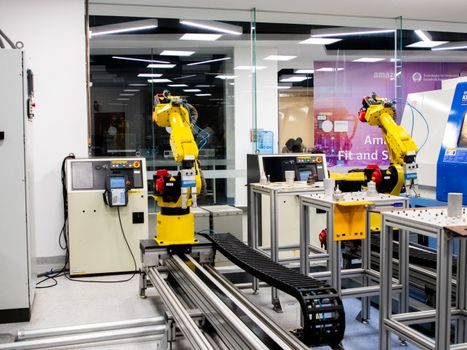
If the line has no high-speed vision, no digital-twin requirement, and cycle times measured in seconds rather than milliseconds, a PLC plus smart valve positioner plus conventional instrumentation remains the right, lower-TCO choice. Adding a GPU to a slow process is pure capex burn. The honest test is the cycle-time KPI: anything above 250 ms almost never justifies edge GPU spend in 2026 dollar terms, given the cost of an industrial IPC, the thermal solution, and the cybersecurity work to bring it onto an IEC 62443-segmented network. [S3]
The 2026 deployment signal worth tracking: APAC SME fab joint-ventures with global majors continue to scale, broadening the addressable market for mid-tier GPU edge boxes rather than rack-class hardware [S4]. Also watch the IEC 62040-3 and ISA-95 alignment work for AI-tiered manufacturing cells, which will set the formal reference architecture that most procurement specs will follow over the next 18-24 months.
For related coverage, see Thickness Gauge Price and Cost Guide: Coating, Sheet Metal, Ultrasonic.