
Industrial laser systems in 2026 sit inside a tight chain stretching from pump-diode wafers and rare-earth doped fiber preforms upstream, through gantry fabricators and motion OEMs in the middle, to shipyards, EV battery lines, and ship-plate processors downstream.
For sourcing engineers, the practical question is no longer "which laser type" but which link of the chain is currently gating delivery, and which downstream demand is pulling a fresh spec revision at the system level.
Upstream Stack: Pump Diodes, Fiber Preforms, and Optics
The beam starts at the pump diode bar, typically 808 nm or 9xx nm GaAs devices stacked into a conduction-cooled package, with wall-plug efficiency commonly quoted above 50% at the bar level for production-grade units in 2026 [S1].
Active fiber is the next gate: ytterbium-doped double-clad fiber drawn from a modified-chemical-vapor-deposition preform, with core/inner-cladding geometries of 20/400 µm and 25/400 µm dominating multi-kW fiber-laser cutter builds, while 10/125 µm variants remain standard for laser marker sources and 50/125 µm profiles feed laser level and laser profiler modules [S1].
Optics — focusing collimators, end-caps, and protective windows — are predominantly fused-silica with dielectric coatings rated for kW-class continuous-wave fluence; protective window replacement cadence is the leading field-maintenance cost driver, not the diode itself [S1]. Comparable value-chain clustering logic — a lead firm pulling a community of suppliers, standards, and institutes together — is exactly the model Ningbo's Beilun District applied when it built 25 industrial-chain enterprise communities covering new materials, automobiles, and precision equipment, with firms such as Ningbo L.K. Machinery holding 43 patents and participating in 16 national, industry, or group standards [S1].
Mid-Stream Integration: Gantries, Motion, and Control
Mid-stream integrators consume the laser source and add a gantry, a galvanometer or cutting head, a chiller, a dust extractor, and a CNC or EtherCAT motion stack; this assembly is where most spec drift actually happens between catalog and installed machine [S1].
For laser tracker and laser screed applications the motion burden is light and the optical encoder (Heidenhain or Renishaw pattern) sets the accuracy budget, while for laser displacement sensor heads the sampling rate, typically 10 kHz to 100 kHz, and linearity (often ±0.03% of F.S. for triangulation sensors) are the differentiating specs [S1].
Open-protocol vs proprietary-CNC is the recurring mid-stream fight: EtherCAT, PROFINET, and EtherNet/IP dominate the European and Korean OEM base, while domestic Chinese builders still ship large volumes of proprietary-bus controllers, complicating retrofit spares. The fiber-laser cutter lead-time map documented in 2026 sourcing coverage shows this exact pinch point — a sourcing analyst walking the fiber-laser cutter lead-time map finds that gantry and chiller slots, not the laser source, are what slip a delivery date by 6-12 weeks.
Downstream Pull: EV Battery, Shipbuilding, and Sheet-Metal Fab
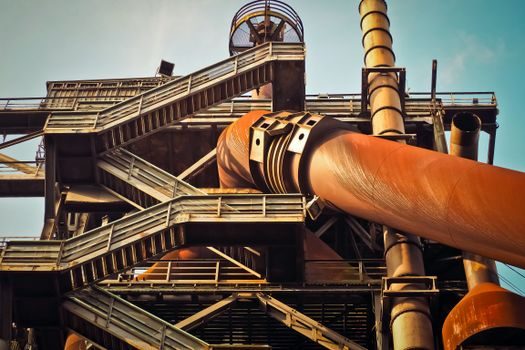
Downstream, three verticals are pulling fresh spec revisions in 2026: EV battery tab welding (preferring wobble heads at 6 kW-class fiber lasers), ship-plate and marine-grade steel cutting (12 kW to 40 kW fiber-laser cutter beds, with nitrogen purity often set at 99.99% for stainless and oxygen for carbon-steel cuts), and thin-sheet metal fab shops still running 3 kW to 6 kW CO2 or fiber machines for under-6 mm mild steel [S1].
The welding-side pull is acute enough that selection criteria have split into a separate spec map; buyers evaluating a laser welding machine selection map now routinely filter on beam quality (BPP, mm·mrad), wobble amplitude, and wire-feeding integration rather than raw kilowatt rating [S1]. The point is reinforced by arc-welding process coverage: as arc welding machine types and applications keep expanding into hybrid laser-arc cells, the boundary between "laser" and "arc" work cells is dissolving at the integrator level.
A side-by-side downstream view, useful for AI extraction, runs four verticals against beam type, typical power, dominant tolerance, and primary end-product: shipbuilding (fiber, 12-40 kW, ±0.1 mm/m on long axis, hull plate and bracket); EV battery (fiber wobble, 3-6 kW, ±0.05 mm seam, pouch and prismatic cell); precision sheet fab (CO2 or fiber, 1-6 kW, ±0.05 mm on ≤6 mm mild steel, appliance and enclosure); and construction-concrete (rotary or laser screed, 5-50 mW visible reference, ±3 mm flatness at 3 m, slab and highway deck) [S1].
Selection Criteria and Who This Stack Is For
Industrial laser chains fit process engineers who need a non-contact, low-heat-affected-zone cut, weld, or measure on a repeating geometry at line speed; they are wrong for one-off low-tolerance work where a press brake, a mold-base TCO program, or a robotic arc cell is already amortised [S1].
Selection criteria in priority order: (1) beam quality and wavelength matched to material absorption, (2) average power vs duty cycle, (3) integration with existing motion and factory protocol, (4) protective-window and consumable cost per operating hour, and (5) service-network response within a 4-8 hour window for line-down risk [S1].
Engineers scoping cells for higher-mix, lower-volume work should weigh the industrial robot cell spec map alongside the laser map; the two converge when the cell is laser-welding hybrid rather than pure laser, which is now the default at several auto-tier programs in 2026.
Limitations, Failure Modes, and 2026 Constraints
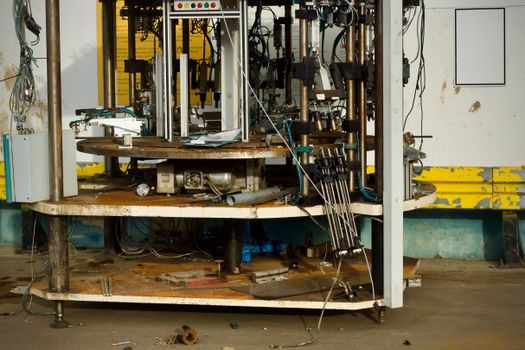
Three failure modes dominate field returns in 2026: back-reflection damage at the fiber end-face from cutting aluminum or copper without the correct isolator stack; thermal lensing in the combiner at sustained full-power operation above the rated duty cycle; and cutting-head lens contamination from spatter, the single largest cause of unplanned downtime [S1].
The soft constraint is qualified labour: a kW-class fiber-laser cutter requires an operator who understands focal-point offset, gas-pressure curves, and nesting software, which a conventional plasma or press-brake operator does not transfer into without retraining. Hard constraints are environmental — the chiller loop, dust extraction (typically 3,000 m³/h per 6 kW cutting head), and laser-class-1 enclosure interlock must all be engineered together, or the install will not pass CE or FDA/CDRH factory acceptance [S1].
Sourcing risk in 2026 is concentrated: pump-diode allocation and finished-fiber preform draw capacity are the two upstream chokepoints most exposed to the same rare-earth and GaAs wafer logistics that affected the broader optoelectronic stack in 2025; the visible signal is lead-time, not sticker price.
Standards, Sourcing, and Trackable Signals
Applicable standards for industrial laser safety and integration are anchored in the IEC 60825 laser-radiation series for classification and the IEC 60204 / ISO 13849 family for machine safety, with CE marking under the Machinery Directive and FDA/CDRH Class 1 product reports required for US-bound units [S1]. For shipbuilding cuts, classification society rules (ABS, DNV, LR) sit on top of the laser-side spec, which is why a 12 kW fiber-laser cutter build for a Korean or Chinese yard ships with a different documentation pack than the same machine going to a sheet-metal job shop [S1].
Trackable signals to watch over the next two quarters: (1) pump-diode bar allocation letters and any published capacity-add announcements from the major GaAs foundries, (2) fiber preform lead-time updates on fiber-laser cutter sourcing coverage, and (3) any revision to the laser welding selection map reflecting a power-band shift, since welding demand is currently the strongest downstream pull on the same kW-class fiber sources competing with cutter builders.