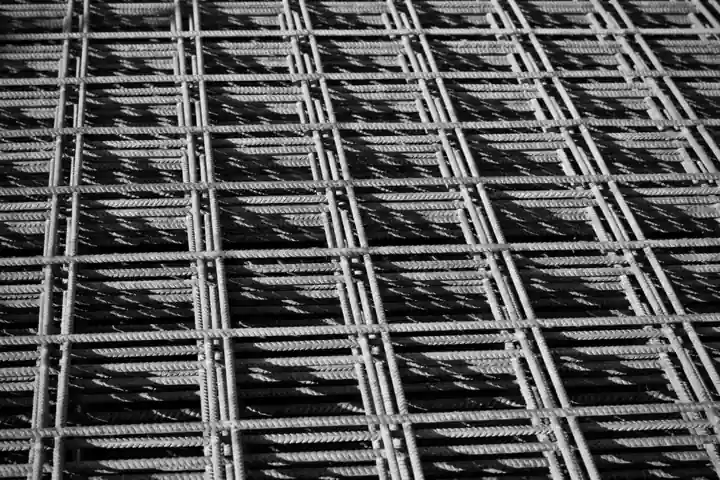
A landscaping straightener that survives edge-restraint coils, tree-anchor cages, and gabion baskets is sized by the bar diameter on the cutting list, not by brand name: D6-D16 mm coil at 30-50 m/min with a 1.5-3.0 kW mandrel drive covers light-gauge work, while D12-D16 mm coil needs a 4.0-5.5 kW motor at 20-35 m/min to keep residual bow under 2 mm/m [S4].
Landscape crews typically cut rebar in the 16-32 mm band (43.0% of 2026 rebar-cutter demand by diameter), with electric machines leading the power-source split at 48.0% and bench-class cutter-straighteners holding 28.0% by machine class [S10]. The same diameter and tonnage logic that drives cutter choice also governs which straightener class fits a garden-yard or nursery site.
What a landscaping rebar straightener must actually do
A rebar straightener feeds coiled or bent bar stock through a high-speed rotor fitted with tungsten-steel or ball-end dies, and the rotor's curved-rotation action removes set, scale, and minor bends without cutting the bar's cross-section [S3]. For a landscape crew, that means taking a 6-12 mm hot-rolled wire-rod coil off the truck and converting it into straight, cut-to-length dowels for tree-anchor cages, pergola post pins, and trellis anchors in one pass.
Output rate is the spec that matters on a real site: 30-55 m/min on the YG family of industrial units, with the 11 kW and 15 kW frames (YG-11, YG-15) holding the upper 35-55 m/min band [S3]. Handheld portable hydro-electric heads top out at 20 mm (3/4 inch, #6 rebar) and run on an 18 V DeWalt battery at 18.5 lb total weight, which is the right size for a one-person crew working inside a finished garden bed where a bench machine will not fit [S1]. For heavier 25-32 mm landscape pins and gabion cage ties, push/pull hydraulic cylinders accept rebar up to 490 N/mm² tensile strength [S5].
Bar diameter and grade: the coupled first decision
Bar grade and diameter move together: ASTM A615 grade 40, 60, 75, and 80 cover most landscape-supply rebar, with grade 60 at ≈414 MPa minimum yield being the workhorse for residential edge restraints and small retaining-footing cages [S4]. A landscape straightener that handles grade 60 stock in the 12-16 mm range will also handle the same diameters in grade 40, but a grade 80 coil (≈552 MPa) shortens die life noticeably and is not a free upgrade.
Selection is driven by three coupled decisions: the bar grade, the diameter range on the cutting list, and the daily throughput the yard must clear, with ≤2 mm/m straightness tolerance as the usual bid floor [S4]. The standard rebar straightener reference page documents the die geometry behind that tolerance, while rebar cutter and rebar bender references cover the matching cut and bend stations that share a yard's PLC bus. For a landscape site, the most common diameter spread is D6-D12 mm for dowels and pins, jumping to D12-D16 mm only when the scope includes small gabion cages or a frost-footing tie beam.
Motor power, mandrel speed, and the heavy-coil jump
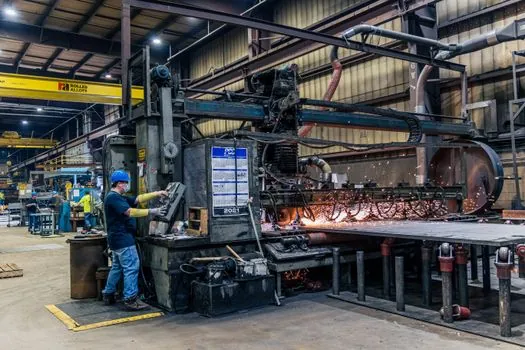
Motor power and mandrel speed are not free choices: a 1.5-3.0 kW servo-drive straightener running the mandrel at 30-50 m/min delivers 0.8-1.5 t/h on D6-D12 mm coil, and the same frame on D12-D16 mm needs 4.0-5.5 kW at a slower 20-35 m/min to keep mandrel slip below the 2 mm/m tolerance [S4]. Pushing the wrong coil through the wrong frame is the fastest way to burn out a 5.5 kW motor [S3].
Heavy fabrication (D16-D25 mm) jumps to 5.5-7.5 kW with 15-25 m/min mandrel speed and typically a two-roller pre-straightener upstream to prevent coil-set memory from surviving the cut-off shear [S4]. For landscaping-only yards that occasionally run a 20 mm pergola post or 25 mm ground-anchor pin, a dual-mandrel machine with swappable 6-16 mm and 16-25 mm cartridges is the standard engineering choice over a single oversized unit, because mandrel wear on a 6 mm bar accelerates sharply when the frame is sized for 25 mm [S4].
Straightness tolerance and the link to landscape splices
Residual bow under 2 mm/m on the stock feeding the threading or coupler equipment is the threshold for mechanical splice systems: position couplers (for bars that cannot be rotated) are the most sensitive, and any helical twist left in the bar after the straightener shows up as thread-runout at the coupler shoulder [S4]. Re-threading a 16 mm grade 60 bar costs 30-45 seconds of bench time that compounds across a 500-piece cage [S4].
Landscape crews that use mechanical splice sleeves on tree-anchor cages or pergola post foundations should specify threading equipment from the same vendor class as the straightener so the cut, straighten, and thread stations share a common PLC bus, since mismatched feed rates are the leading cause of thread overshoot in yards running both coupler and bent-bar assemblies [S4]. For crews using lap splices only, the tolerance can relax toward 1 mm bow over 1 m on the exit die, which is the typical acceptance test target for industrial frames (≤1 mm over 1 m on a 1 m straightedge, post 10-minute no-load trial plus 5 m of known-good scrap feed) [S3].
Class comparison: handheld, bench, and industrial line
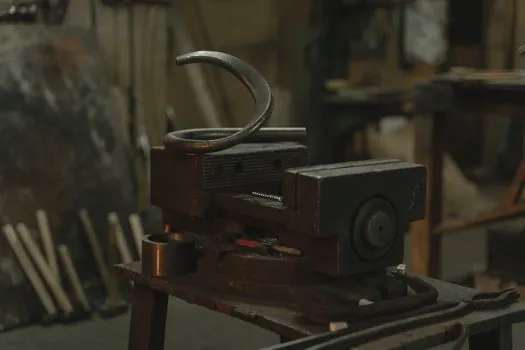
Three straightener classes compete for the landscaping site, and the right pick is a function of bar diameter, tonnage, and footprint: handheld hydro-electric heads cover up to 20 mm at battery power for confined garden beds, bench-class cutter-straightener combos sit at the middle for nursery and small-contractor yards, and industrial multi-roll straighteners with integrated cut-off heads handle coil-to-cut-to-length production at 30-70 m/min for rebar processing plants and large landscape contractors [S1][S6][S7].
Decision criteria line up as: (1) max bar diameter (20 mm handheld vs 25-32 mm bench/hydraulic push-pull), (2) throughput (5-10 m/min handheld vs 30-70 m/min industrial), (3) footprint and power (18 V battery / 18.5 lb vs 4-15 kW mains, 230-550 kg frame), (4) tolerance capability (≥2 mm/m handheld vs ≤1 mm/m industrial) [S1][S3][S6]. A landscape contractor cutting under 200 dowels per shift fits a 4-5 kW bench machine (model ET-6-10 or ET-6-14 with 5 holes × 20 passes of die correction) at 570-730 kg frame weight, while a nursery producing rebar for gabion cages in volume should step up to a 15 kW frame at 980 kg to cover 14-25 mm coil [S2].
Limitations, failure modes, and installation gates
Common failure modes are well documented: a 0.5 mm shim error at the base frame typically shows up as 2-3 mm/m lateral drift at the exit die, so frame leveling to ≤0.2 mm/m on the die-housing reference surface is mandatory before any coil is fed [S3]. Early loading of anchor bolts on green concrete (under 7-day cure) is the leading cause of pad cracking under 500 kg+ units like the YG-15, and the YG-15 footprint of 2050 × 650 × 1100 mm demands at least 800 mm of clearance on the feed side and 1500 mm on the exit side for coil payout and cut-length stacking [S3].
Electrical sizing is non-negotiable: the YG-6 draws 5.5 kW, YG-9 draws 9 kW, and the dual-motor YG-16 combines 9 + 5.5 kW, so a dedicated breaker and a contactor sized at 1.25× full-load current are mandatory [S3]. The rebar coupler reference documents the threading side of a coupler-fed splice, and the rebar tool page covers the hand-tool class that pairs with a straightener on a small landscape job. For crews working on a finished site with no three-phase power, a handheld 18 V hydro-electric head [S1] or a portable cutter-straightener combo is the only practical option, and a generator must be sized for the motor's inrush, not its running wattage.
Standards and sourcing for the landscape yard

For projects served by European fabricators, EN 1090-2 manufacturing qualification (Execution Class 2 or above) governs the welded assembly end of the line, so the straightener output is judged on residual bow and end-cuts clean enough to feed couplers without re-handling [S4]. Mechanical coupler systems demand bar-end straightness within 0.5° over the threading length, which translates to residual bow under 2 mm/m on the stock feeding the threading equipment [S4].
Procurement for a 2026 landscaping yard should anchor on three verifiable nodes: the machine's published bar-diameter range (D6-D16 mm for most garden work, D16-D25 mm for gabion/retaining scope), the motor power band matched to the heaviest coil on the cutting list (1.5-3.0 kW for light, 4.0-5.5 kW for medium, 5.5-7.5 kW for heavy), and the documented straightness tolerance on the exit die (≤1 mm/m on industrial frames, ≤2 mm/m on bench/handheld classes) [S3][S4]. Confirm the nameplate voltage matches site power before the breaker is pulled, and require the vendor to publish a die-life figure in hours-per-ton for the heaviest grade on the cutting list. A landscape contractor who also runs stud welding on planter frames can cross-reference the Stud Welder for Landscaping: CD vs Drawn-Arc Spec Map for the welding side of the same site, while a crew running rebar to support masonry planter walls should match straightener output to the Stud Welder Selection for Masonry: Process, Specs, and Match Rules workflow.
Trackable next signal: vendor publication of die-life curves in hours-per-ton by bar grade (A615 grade 40 vs 60 vs 80) and diameter, since current OEM datasheets publish diameter and motor power but rarely die wear rate, and that gap is the single largest spec missing from a 2026 landscaping-yard straightener purchase decision.