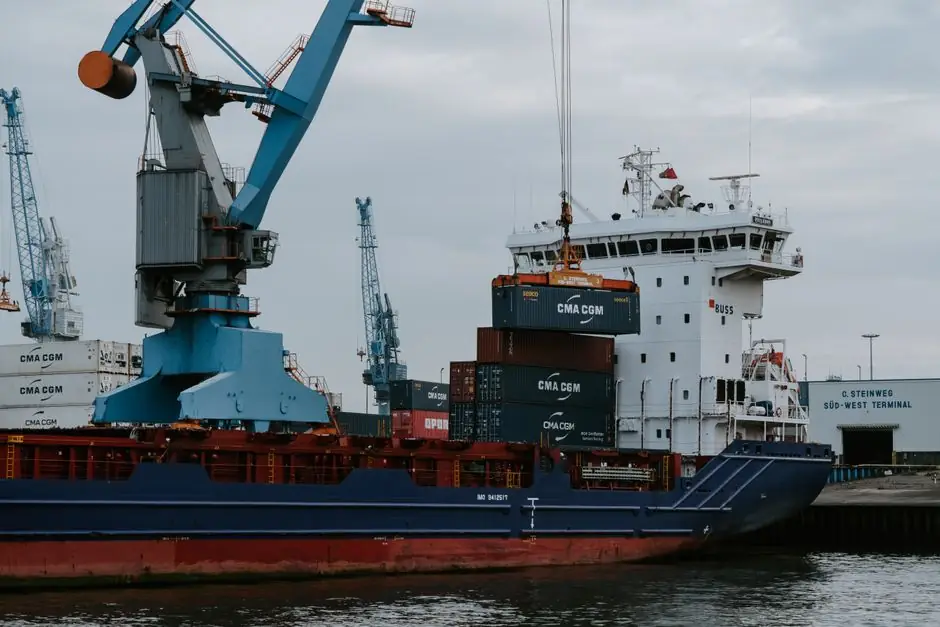
Single-girder overhead cranes cover the 1-15 ton class and slot into port workshops, reefer maintenance bays, container freight stations, and small-parts stores, not the quay where Ship-to-Shore (STS) cranes with 60-70 m outreach rule [S4][S1].
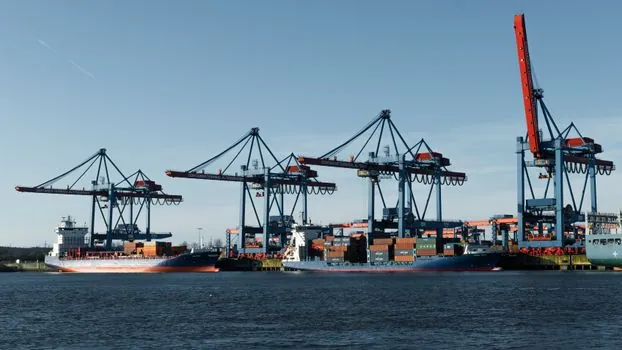
Across ports and terminals the lifting fleet is layered: STS cranes at the berth with 30-75 t capacity, Rubber Tyred Gantry (RTG) cranes up to 70 t for yard stacking, Rail Mounted Gantry (RMG) cranes for automated terminals, and single-girder units inside maintenance buildings and equipment sheds [S3][S1]. Specifying a single-girder unit for quay work is a category error; specifying an STS crane to lift a diesel engine in a workshop wastes capital. The decision below targets the right end of that scale.
Where Single-Girder Cranes Fit Inside a Port
Single-girder overhead cranes have one bridge beam, end trucks on two runways, and a hoist trolley that rides under (under-running) or on top (top-running) of that single beam; this keeps the bridge light and the approach dimension low [S6]. For port-side applications the realistic envelope is 1-15 t for the majority of under-running single-girder units, with low-headroom trolleys available up to 12.5 t and normal-headroom trolleys up to 40 t on premium designs [S2][S7].
Real port-and-terminal use cases: lifting reefer gensets for service, handling spreader pins and twist-lock repair work, moving pump and gearbox assemblies in the marine workshop, hoisting small-boat davits in the tug berth, and stocking spares in the bonded warehouse. Lifting height over 50 m and 40+ moves per hour are STS crane territory; a single-girder unit doing that is misapplied [S3][S4].
Capacity, Span, and Headroom: The Three Hard Numbers
Three figures decide the build: lifting capacity in tonnes, span between runway rails, and the lift/hook approach height you actually have inside the building. A typical under-running single-girder crane carries 10-15 t in the standard product range, with low-headroom variants trading trolley height for reduced building height [S7][S2].
Span for in-port workshop installations usually sits between 10 m and 30 m, well inside the 1-500 t, up to 50 m+ envelope used by general gantry cranes elsewhere in the port [S1]. For corrosive marine air, specify hoist and trolley IP55 or higher, wire rope grade 1960 or 2160 MPa, and a duty class matching the cycles: FEM 2m / ISO M5 for maintenance shops, FEM 1Am / M4 for occasional warehouse duty. Designers who skip duty-class selection end up replacing hoists inside five years on a port that runs two shifts.
Single-Girder vs Double-Girder vs Yard Crane: Decision Map
Selection splits cleanly on three criteria: required capacity, building hook height, and whether the unit is inside a building or exposed to weather on the quay [S2][S6].
Comparison for port and terminal buyers: - Single-girder under-running: 1-15 t typical, lowest headroom, lowest dead weight, lower cost; ideal for workshops and reefer service bays with limited building height [S7][S6]. - Single-girder top-running: 1-25 t, slightly taller but longer spans and easier maintenance access; common in warehouses and CFS stores. - Double-girder (CXT-type): 12.5-40 t with low-headroom trolley, 40-80+ t standard, supports heavier hooks, longer spans, and heavier duty groups; chosen when capacity exceeds the single-girder ceiling [S2]. - RTG / RMG yard cranes: 40-70 t, yard-scale spans, used for container stacking outdoors; not interchangeable with workshop single-girder units [S3][S5]. - STS quay cranes: 30-75 t under hook, 60-72 m outreach, 50+ m lift height, fixed at the berth; serve mega-vessel bays, not workshops [S4][S3].
Rule of thumb used by process engineers: if the load is 15 t or less and the runway is inside a building, default to single-girder under-running; if the load exceeds 15-20 t or the span exceeds 25 m, jump to double-girder [S2][S6].
Selection Criteria Beyond the Datasheet
Five operating filters decide the final model once capacity and span are set: duty cycle (FEM/ISO group), power supply (cable reel vs conductor bar vs festoon), environment (IP rating, marine-grade paint, stainless fittings), control (pendant vs radio vs cabin), and integration with the port's existing runway rail [S1][S6]. For a port, the environment filter is usually the binding constraint, because salt-laden air attacks unprotected electrical gear inside three to five years.
Port procurement teams should also weigh total cost of ownership over a 20-year service life: RTG diesel-electric fleets run on fuel, RMG rail-electric fleets on shore power, and workshop single-girder units on the building's existing busway [S5][S4]. Single-girder cranes are typically the lowest-energy unit in the fleet because they weigh less and have smaller hoist motors, which is why a terminal running two or more reefer workshops will often standardize on one model to share spares.
Common Failure Modes and Misapplications
Three misapplications show up repeatedly in tender documents: a single-girder crane specified for 20-25 t loads that should have been double-girder, a standard-paint crane installed in an uncovered wash-down bay, and a 2m duty unit placed on a port that actually runs 8-12 cycles per shift [S2][S6]. Each is a 3-5 year early-failure path. Designers should match the FEM/ISO group to measured cycles, not nameplate optimism.
Another frequent error: buying a gantry-style single-girder crane to operate outdoors without confirming wind loading, wheel-rail clamping, and lightning protection. The single girder crane configuration is designed for indoor runway service; outdoor exposure without weatherproofing halves service life. Confirm the IP rating, hoist enclosure class, and corrosion-protection spec before signing, not after commissioning.
Standards, Safety, and Trackable Signals
Port and terminal buyers should reference FEM 1.001 / 1.004 for duty classification, ISO 4301 for classification, EN 15011 for crane safety, and the regional electrical standard for the busway (IEC 60204-32 for crane electrical equipment is the common baseline) [S1][S6]. Lifting accessories should comply with relevant sling and chain standards used by the operator's existing fleet.
Trackable next signals: tender-stage confirmation of FEM/ISO duty group from the port's measured cycle data, factory acceptance test (FAT) witness for hoist and trolley at full load plus 1.25x static overload, and a planned load-test schedule aligned to the terminal's annual shutdown. Operators planning new quay equipment should also read the related backhoe loader selection for port and terminal work: spec-first buying map and the excavator selection for port and terminal operations: weight class, grapple spec, and reference to round out the yard fleet specification, with general context in construction machinery and equipment.
Detailed specification references: terminal block.