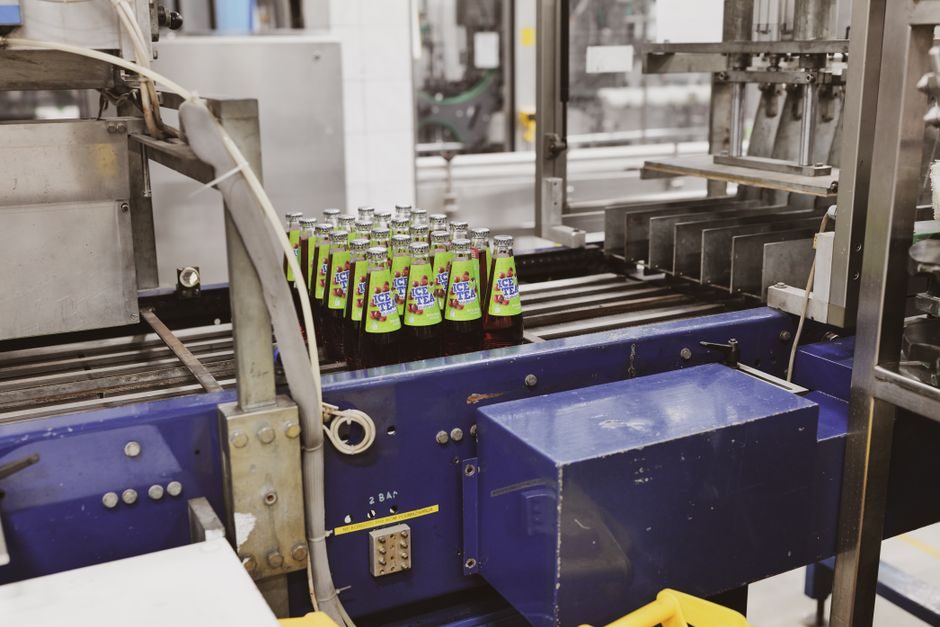
As of mid-2026, industrial filter OEMs and end users are converging on three data layers — cartridge build traceability, in-line ΔP/dP telemetry, and closed-loop machine control — to cut unplanned changeout and raise first-pass yield [S2][S3].
Renishaw Central launched as a smart-manufacturing data platform that aggregates metrology, status, and alarm data from additive manufacturing (AM) systems, on-machine probes, shop-floor gauging, and co-ordinate measuring machines (CMMs), then auto-updates machine-tool variables through its Intelligent Process Control (IPC) module for unattended closed-loop correction [S2]. For a smart camera vision cell or an industrial filter line, that same template — connect device, normalise data, push back to the machine — is the practical blueprint plants are following in 2026.
Closed-Loop Data Platforms Anchor the 2026 Filter Cell
Renishaw's on-premises architecture sends data to a central store for full traceability, then exposes it through dashboards and third-party APIs (including Microsoft Azure) so that metrology drives automated machine variable updates rather than human rework [S2]. On a filter line, the same IPC pattern lets a vision-based pleat-height gauge and a β-ratio test rig write corrections back to the pleater servo, holding media geometry inside ±0.05 mm windows that manual cells routinely miss on the third shift.
For plant-floor teams specifying instrumentation, this implies that any new smart meter or smart valve positioner on a filter skid must support open APIs (OPC UA, MQTT, or REST) so the data plane can talk to MES, historian, and analytics layers without a custom protocol gateway. Rockwell's 2026 portfolio exposes that surface through FactoryTalk Analytics, FactoryTalk Historian, Thingworx IIoT, and DataMosaix under the LifecycleIQ services umbrella, with ThinManager handling thin-client visualisation at the cell [S3].
Selection Criteria: What a 2026 Smart Filter Integration Must Deliver
A modern filter-and-process integration stack needs four capabilities to qualify as "smart" in the 2026 sense: (1) per-cartridge build records traceable to raw-media batch, (2) real-time ΔP, temperature, and flow telemetry with edge-side event detection, (3) closed-loop write-back to actuators or dosing skids, and (4) on-premises data residency with API export for cloud analytics. The Renishaw Central reference design delivers all four out of the box, including remote alarm push to mobile operators when a workstation faults in an unattended shift [S2].
Selection maps against the main platform types look like this on four decision criteria — data residency, legacy device support, closed-loop write-back, and IIoT export:
• On-premises metrology hub (Renishaw Central pattern): strong on legacy + multi-vendor device support, native closed-loop IPC, on-prem archive, API export to Azure [S2].<br>• Vendor control platform (Rockwell FactoryTalk pattern): strong on PLC/HMI integration, FactoryTalk Historian for time-series, ThinManager visualisation, broad LifecycleIQ service network [S3].<br>• Cloud-native IIoT suites: strong on cross-site analytics, weaker on deterministic closed-loop due to network latency.<br>• Bespoke SCADA-only stacks: lowest cost, but no native analytics, no metrology-driven write-back, and limited cross-cell traceability.
Plants that already run a PLC-centric architecture typically anchor on the FactoryTalk pattern; plants that need metrology-driven correction of the manufacturing process itself (including additive manufacturing material flow for porous media) lean toward the on-premises hub [S2][S3].
Workforce and Skills: The Coursera Signal
Skill demand is documented: as of 2025-08, the Coursera course "Industrial Fluid Systems & Smart Factory Automation" had 3,765 enrolled learners, runs ~8 hours across 3 modules, sits at 4.5/5 across 33 reviews, and is taught in English with one additional language, targeting undergraduates in mechanical and mechatronics engineering, robotics specialists, post-graduates in manufacturing engineering, and practising automation engineers [S1]. The listed skill tags — Real Time Data, IoT, Automation Engineering, Control Systems, Hydraulics, Machine Controls — map directly to the competencies a 2026 filter cell needs to commission and maintain [S1].
For process engineers, the practical takeaway is that 8 hours of structured training is enough to onboard a maintenance technician onto a smart-filter cell if it follows the standard fluid-system + drives + automation pattern that Coursera and similar platforms now package, freeing senior engineers to focus on PID tuning and root-cause failure analysis rather than walk-through familiarisation.
Production Process Linkage: From Media to Validated Cartridge
Smart manufacturing does not replace the five-step filter build — media selection, pleating, cage and end-cap assembly, seal installation, and final β-ratio/ΔP validation — it instruments each step. Detailed coverage of those five steps and the OEM capacity map is in Industrial Filter Manufacturing Process: Five Steps from Media to Validated Cartridge, which lines up directly with the metrology checkpoints that Renishaw Central or FactoryTalk Analytics consume in a live cell [S2][S3].
The added value in 2026 is the auto-correction loop: a pleat-height drift on station 2 is detected by an on-machine probe, written to the IPC module, and pushed back to the servo as a position offset before the next cartridge reaches station 3 — replacing the manual "stop the line, call quality" pattern that still dominates brownfield plants without IPC.
Constraints, Failure Modes, and Limits of Smart-Filter Integration
Three failure modes recur in 2026 field reports: (a) data-plane overload when 50+ cartridge stations each push 10 Hz telemetry without edge aggregation, (b) protocol mismatch between OPC UA and legacy PROFIBUS-PA flow meters, and (c) network-dependence creep where the closed-loop write-back stalls on a lost internet link. The on-premises hub pattern explicitly addresses (c) by keeping process control local and using the network only for analytics export, which is the architecture decision that distinguishes a robust 2026 integration from a fragile one [S2].
A second hard constraint is standard discipline: any filter housing rated for hazardous-area service must still carry its original ATEX/IECEx certification independent of the smart retrofit — adding sensors, valves, or actuators to a certified assembly requires re-assessment under the governing standard, not a software update. Engineers specifying industrial adhesive for sensor potting on a retrofit must verify the adhesive's chemical compatibility with the housing media, not just its bond strength.
Trackable Signals for the Next Six Months
Three signals are worth watching through Q4 2026: (1) Renishaw IPC adoption depth on filter and porous-media lines beyond the AM reference installs, (2) FactoryTalk Analytics Guardian rollout for condition-monitoring-based filter changeout, and (3) any ISA-95 / OPC UA companion-specification work that standardises filter data models across vendors [S2][S3]. A practical leading indicator is the number of cartridge SKUs shipped with a machine-readable build record (QR or RFID) attached at end-cap assembly — that single data point tells you whether the smart-manufacturing investment has reached the cell level or stopped at the dashboard.