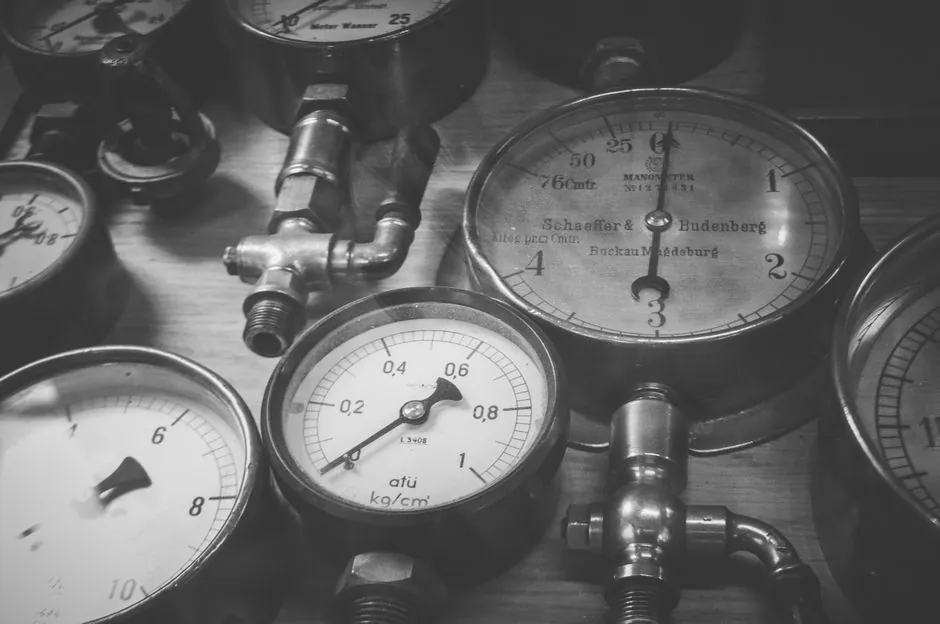
A vacuum gauge is defined as an instrument that indicates negative atmospheric pressure, covering mechanical dial types through to ionization controllers [S3][S5]. Specifying engineers in 2026 face a four-decade spread in unit price between a USD 25 thermocouple gauge amplifier PCB and a USD 700 commercial thermocouple gauge controller with display and serial output [S2].
Selection pivots on pressure range, gas type, accuracy class, and whether the device is a consumable spare-part bundle or a permanently installed process instrument. The relevant sensor families, drawn from public catalogue and technical literature, are thermocouple, Pirani, cold-cathode/magnetron, hot-filament ionization, and capacitance diaphragm [S1][S2].
Sensor Technology Comparison Across the 2026 Vacuum Gauge Market
Thermocouple gauges operate by passing a regulated current (about 16 mA in the documented KJL-1518 design) through a heated filament, then reading the resulting mV thermocouple signal as a function of gas-conduction cooling; a Pirani gauge uses the same thermal-conductivity principle with a higher-impedance Wheatstone-bridge filament, while a hot-filament ionization gauge measures pressure by ionizing residual gas molecules and collecting the ion current, and a cold-cathode magnetron gauge does the same with a high-voltage discharge and no hot filament [S2]. A capacitance diaphragm gauge decouples measurement from gas composition by sensing the deflection of a metal diaphragm against a fixed electrode; this makes it the reference standard for accuracy and gas-type independence, but it also places it at the top of the price stack in OEM catalogues [S1].
Range coverage is the cleanest way to compare these four options: a thermocouple gauge is typically useful from roughly 1 mTorr to atmosphere, a Pirani covers a similar but slightly wider thermal-conductivity band, a hot-filament Bayard-Alpert ionization gauge extends the low end to 10^-9 Torr, and a cold-cathode magnetron overlaps that ultra-high-vacuum region with a more rugged, filament-free construction [S2]. Capacitance diaphragm gauges sit in the 0.001-1000 Torr range with stated accuracy on the order of 0.1-0.25% of reading, and they are the technology of choice when the process gas composition is variable or corrosive [S1].
Vacuum Gauge Price Bands and What Drives the Spread
The widest documented 2026 price gap is internal: a do-it-yourself amplifier board for a KJL-1518 thermocouple gauge (LM317 current regulator, INA128 instrumentation amplifier with gain of 330, ADS1115 ADC, Raspberry Pi logger) totalled under USD 100 in parts, while a commercial thermocouple gauge controller with display and serial output is documented at about USD 700, a 7x markup on functionally similar hardware [S2]. Integrated consumable packs that combine a vacuum gauge with a valve assembly (for example, the Thermo Scientific 60104-261 Vacuum Gauge & Valve, 1/case) are routinely listed as "price on request" through Asian laboratory-instrument distributors rather than at a public number, because the price tracks the OEM service contract and freight terms [S4].
Five cost drivers dominate the quote: (1) sensing technology, where a capacitance diaphragm or hot-filament ionization sensor can be an order of magnitude above a Pirani or thermocouple tube; (2) measurement range, since extending into the 10^-9 Torr band requires exotic materials and UHV-compatible flanges; (3) materials and process sealing, where stainless steel 304L/316L bodies, Viton or Kalrez elastomers, and CF (ConFlat) flanges lift cost versus aluminium-bodied dial gauges with KF (Klein Flansch) connections; (4) output and connectivity, where a 4-20 mA + Hart analogue output is the baseline, Foundation Fieldbus or PROFIBUS PA add a noticeable premium, and Ethernet-APL or IO-Link add further cost but cut installation labour; and (5) certification, with ATEX, IECEx, and CSA hazardous-area ratings each adding a documented percentage to the list price.
Selection Criteria: Who a Vacuum Gauge Is For, and Who Should Avoid It
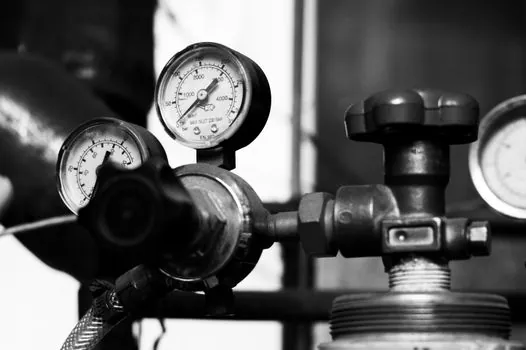
Vacuum gauges are the right instrument for any closed vessel where absolute pressure below 760 Torr must be controlled, logged, or alarmed, including freeze dryers, vacuum ovens, mass-spectrometer inlet chambers, semiconductor load locks, and analytical instruments such as GC-MS and LC-MS [S1][S4]. A thermocouple or Pirani gauge is the correct choice for rough-to-medium vacuum (about 1 mTorr to 760 Torr) where the gas composition is reasonably stable, which covers most laboratory freeze-drying and oven work [S2].
Capacitance diaphragm gauges are the correct choice when accuracy of 0.1-0.25% of reading, gas-type independence, or corrosion resistance to reactive process gases is required, and a cold-cathode or hot-filament ionization gauge is the correct choice when the working pressure drops below 10^-6 Torr. Conversely, a vacuum gauge is the wrong tool for atmospheric or positive-pressure process lines, where a standard pressure transmitter is the appropriate device, and it is overkill for qualitative leak-checking where a hand-held vacuum generator with an inline sight glass will do. The same logic is visible in any modern vacuum pump datasheet, where the pump curve is always paired with a recommended gauge technology for that inlet pressure band.
Total Cost of Ownership Beyond the Sticker Price
Purchase price is the smallest line in a vacuum gauge's life-cycle cost over a 10-year service window. Spare filament cartridges for hot-filament ionization gauges are a recurring operating cost, with replacement typically required after 6,000-10,000 hours of operation at the rated emission current, and a single replacement tube commonly runs 20-40% of the original controller price. Thermocouple and Pirani tubes are also consumable, but their failure mode is gradual drift rather than burnout, so calibration against a reference capacitance diaphragm gauge every 12 months is the dominant maintenance line, not filament replacement [S2].
Installation cost is the second big TCO bucket: a gauge mounted on a CF flange with a metal gasket takes longer to install and to bake out than a KF clamped gauge with a Viton O-ring, and that labour differential is often larger than the hardware price difference on a small system. Calibration gas reference leaks, pirani-vs-capacitance comparison runs, and ISO/IEC 17025-accredited recalibration every 12 months at accredited labs add a recurring fixed cost that does not scale with the number of gauges. Energy use is minor for passive Pirani/thermocouple designs, but hot-filament ionization controllers draw 30-80 W continuously, which over a decade of continuous service becomes a measurable fraction of the gauge's life-cycle cost. For a deeper framework on lifetime cost analysis applied to test and measurement instruments, see the oscilloscope price and TCO breakdown and the insulation resistance tester buying guide, which apply the same driver model to adjacent instrument categories.
Use Cases, Failure Modes, and Standards Anchors

Documented 2026 use cases include Busch vacuum gauges supplied as measurement equipment on rough and fine vacuum systems across the UK and European process industry, with ActivePirani, Piezo, and Capacitance diaphragm variants covering different pressure bands [S1]. On the consumable side, the Thermo Scientific 60104-261 Vacuum Gauge & Valve pack is sold as a 1/case spare bundle through Chinese laboratory distributors, indicating an installed base of analytical instruments (GC, GC-MS, LC-MS) that depend on a serviceable gauge-and-valve module rather than a permanently piped gauge [S4]. The DIY KJL-1518 thermocouple build documented on GitHub demonstrates that a fully functional rough-vacuum readout, with serial logging, is achievable in 2026 for under USD 100 in parts, which sets a useful floor for any cost discussion of a commercial controller at roughly 7x that figure [S2].
The main failure modes a specifier should plan around are: (a) filament burn-out in thermocouple and Pirani tubes caused by sudden venting to atmosphere, which is mitigated by an inline solenoid valve; (b) contamination of cold-cathode gauges by pump oil or process residues, which is mitigated by a 90-degree elbow and a particulate trap; (c) zero drift in capacitance diaphragm gauges from thermal cycling, which is mitigated by a heated or temperature-stabilized head; and (d) calibration drift in any gauge exposed to corrosive gas, which mandates a documented recalibration interval. Reference standards for vacuum measurement include ISO 3567 (vacuum gauges, calibration by direct comparison), AVS R/PROC 1-2019, and the equipment-level hazardous-area frameworks ATEX 2014/34/EU and IEC 60079-x for gauges deployed in flammable or explosive atmospheres. For adjacent process instrumentation, the cost-driver framework is directly comparable to the pressure switch price 2026 breakdown and the level transmitter price 2026 cost analysis.
Trackable signals for the next planning cycle: the 2026 Busch vacuum gauge catalogue revision, the next public price listing of an OEM controller (currently bundled with a display in the USD 700 band, per the thermocouple reference build), and any 2026 release of an Ethernet-APL or IO-Link vacuum gauge module from a major OEM such as Pfeiffer Vacuum or Leybold. For flow-meter and transmitter categories that often pair with a vacuum gauge on the same skid, the thermal mass flow meter price guide and the thermocouple sensor price guide provide the same cost-driver framework. To frame gauge choice against the wider measurement-instrument cost curve, the laser profile scanner price 2026 analysis and the clamp meter buying guide 2026 are useful adjacent references.