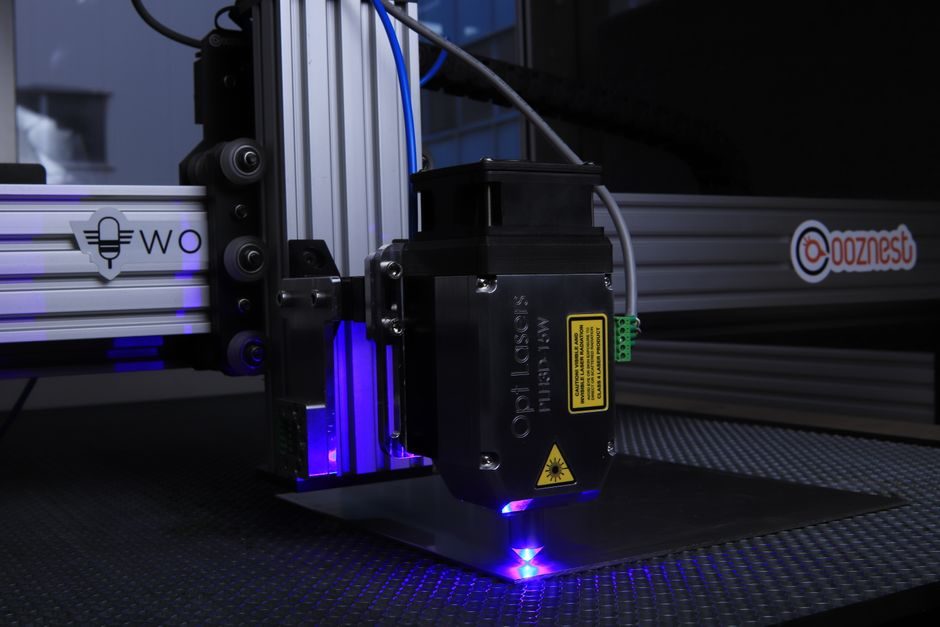
On a 2026 automated packaging line, the coding machine and the vacuum packaging machine sit on opposite sides of the bag: one marks, the other seals under vacuum. They share an electrical cabinet, a PLC and an HMI, but they execute different physical work — deposition of ink or laser energy versus evacuation of air from a chamber to a controlled absolute pressure.
Most process-engineering requests in 2026 are framed as a buying choice, which is the wrong frame. The two devices are complementary, and the design decision is the interface between them — typically a synchronised conveyor with a photo-eye, a reject station, and a shared recipe in the line PLC. Vacuum-packaging throughput is quoted in bags-per-minute and chamber-cycle-time; coding throughput is quoted in marks-per-second and the maximum line speed at which the print remains legible after the vacuum cycle [S1][S2].
Function Boundary: What Each Machine Physically Does
A coding machine deposits a variable code — date, batch, lot, GS1 DataMatrix, 2D barcode — onto the film, pouch, label or product surface. Continuous inkjet (CIJ), thermal inkjet (TIJ), thermal transfer overprint (TTO), large-character drop-on-demand, and CO2/fiber UV laser are the five dominant 2026 technologies; selection is driven by substrate (film, paper, metal, glass), required resolution (typically 0.1–1.0 mm character height for retail barcodes), and line speed (CIJ commonly specified at 1–6 m/s on horizontal form-fill-seal lines). [S1]
A vacuum packaging machine evacuates air from a sealed package, optionally back-flushes with a protective gas mix (N2, N2/CO2 blends), and heat-seals the closed bag. The 2026 vacuum-packaging catalog splits into chamber (single- or double-chamber), tabletop, tray-sealer, thermoform-rollstock, and continuous-belt (skin) types [S2][S4]. Youngsun's YS-ZS-400S is a single-chamber DQ/ZS-series design with electronic pressure-sensor control of the vacuum and gas-flush cycles, marketed for meat, condiment and pharmaceutical products [S1]. KUNBA and Smart Weigh publish full model lines spanning 1.5 kW tabletop units to integrated rollstock thermoform lines [S3][S4].
Selection Criteria: Marking vs Gas-Barrier Engineering
Specifying a coding machine is governed by four hard variables: substrate chemistry, code standard (GS1, ISO/IEC 15415 for 2D, FDA 21 CFR 101 food labelling, EU 1169/2011), line speed, and post-process exposure (vacuum, steam, retort). Ink chemistry has to survive the vacuum chamber's hot seal bar (~150–200 °C) and the gas-flush pressure pulse without smearing, blooming, or losing contrast; UV-curable and MEK-free inks dominate 2026 retrofit bids on chamber-sealed lines. [S2]
Specifying a vacuum packaging machine is governed by chamber volume, ultimate absolute pressure (typical production machines reach 100–500 Pa absolute, or 1–5 mbar residual, with laboratory units pulling below 10 Pa), pump type (oil-sealed rotary vane vs dry rotary claw vs dry screw vs water-ring), seal-bar length, and hygiene standard (304/316 stainless contact parts, IP65 control cabinets for washdown zones) [S1][S2][S3]. Promarksvac publishes a commercial/industrial dual-portfolio emphasising food and non-food duty cycles [S5]. Cable and wire plants using thermoform-rollstock film for jacketed-cable bundling reference a comparable spec ladder, covered in this recent cable-and-wire inline coding spec cut.
Who It Is For — And Who Should Not Mix Them
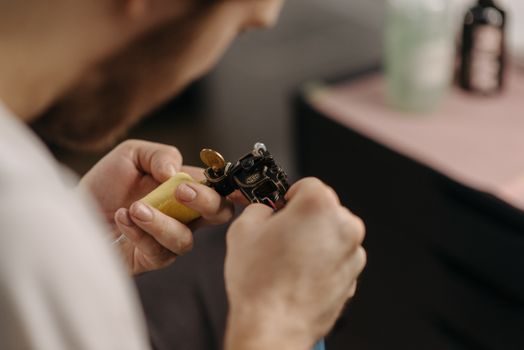
A coding machine is the right tool when the deliverable is information: traceability, regulatory labelling, brand date code, anticounterfeit. A vacuum packaging machine is the right tool when the deliverable is shelf life, modified atmosphere, or protection against oxidation and microbial growth. Lines that need both — fresh meat, cheese, medical disposables, sterilised cable kits, and vacuum-bagged industrial parts — must run them in series with a controlled handoff, not as a single combined unit. [S3]
Buyers looking for a single device that both vacuum-seals and prints in one cycle typically end up with a thermoform-rollstock line fitted with an integrated TTO printer on the top film — that is two machines, one OEM contract. Conversely, buyers who only need a printed code on a manually bagged retail pack do not need a vacuum packaging machine at all; a tabletop sealer without vacuum is cheaper and avoids pump maintenance. Foundries, casting lines, and metal-packaging plants sometimes search for "vacuum packaging machine" when they actually want a vacuum die-casting machine — a different category entirely, covered in lost-foam foundry guides such as this buying spec on foam, vacuum and coating throughput.
Comparison: Decision Criteria Across the Two Categories
Against four practical engineering axes, the two machine types land at opposite corners rather than the same scale: [S4]
• <b>Primary KPI:</b> coding machines are scored on marks-per-second, print-resolution (dpi), and contrast-ratio after downstream processing; vacuum packaging machines are scored on cycle-time (seconds per chamber cycle), residual absolute pressure, and seal-bar temperature uniformity (±5 °C across the bar is a typical published spec) [S1].<br>• <b>Critical consumable:</b> coding — ink, ribbon, or laser gas; vacuum — seal wire, gasket set, pump oil (rotary vane) or filter elements (dry claw/screw).<br>• <b>Utility demand:</b> coding — typically 100–500 W per printhead and compressed air for CIJ (~6 bar clean dry air, 1–3 L/s per head); vacuum — a 5.5–11 kW three-phase vacuum pump plus 0.5–0.7 MPa shop air for the seal-bar pneumatic actuators on most 2026 production models [S1][S3].<br>• <b>Maintenance window:</b> coding — printhead flush cycle, ink-line filter, laser tube/galvo service at 8 000–20 000 hours; vacuum — pump oil change at 500–1 000 hours, seal-bar teflon replacement at ~2 million cycles, chamber-gasket replacement annually in food plants.
This comparison makes the design point visible: the two machines have no overlapping KPIs, so they cannot be benchmarked against each other on a single decision matrix.
Integration on a 2026 Form-Fill-Seal Line
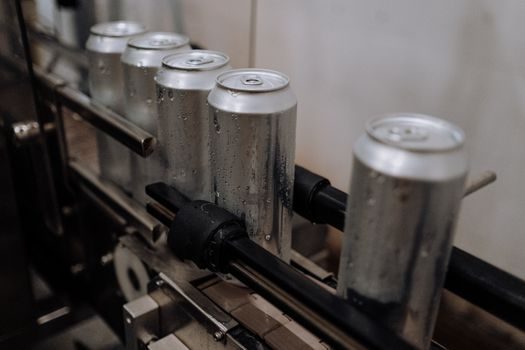
On a horizontal form-fill-seal (HFFS) line, the vacuum packaging machine forms the pouch, fills it, gas-flushes if specified, and seals it; the coding machine prints date/lot/2D code on the top film just before the seal bar fires, with a typical jet-to-seal distance of 80–250 mm. A photo-eye on the film triggers one print per bag, the PLC holds the conveyor in index mode if the coder faults, and the line-side vacuum gauge provides the chamber-side feedback for CIP (clean-in-place) validation. On thermoform-rollstock lines, the coding station is on the top web upstream of the forming station so the code is on the finished tray lid [S2][S4].
Integration of a vacuum generator (ejector-driven) is increasingly used in the indexing and reject stations of coding-machine conveyors, where the holding force is small (a few newtons per cup) but must be controlled independently of the main packaging pump circuit. This avoids over-sizing the chamber pump and gives cleaner line-stop behaviour [S3][S4].
Failure Modes, Constraints and Common Spec Mistakes
Coding-machine failure modes in 2026 audits are dominated by ink adhesion on poorly corona-treated film, missed triggers from belt-slip, and 2D-code grading failures under GS1 ISO/IEC 15415 due to printhead mis-alignment at >3 m/s. Vacuum packaging failure modes are dominated by micro-leak seals (often traceable to seal-bar Teflon wear or product contamination of the wire), pump oil ingestion in food lines (a reason dry claw or dry screw pumps are replacing rotary-vane pumps on EU food contracts), and chamber-gasket fatigue leading to inability to hold the target absolute pressure. [S5]
The single most common spec mistake on integrated lines is choosing the coder on a stand-alone throughput rating, then discovering in FAT that the print degrades after the gas-flush step — typically because the chosen ink chemistry is not rated for the residual moisture and the CO2 partial pressure inside the bag. A second common mistake is specifying a chamber-machine on bags-per-minute rating without converting to single-chamber cycle-time, which on double-chamber units effectively halves the rated throughput but is often missed in purchasing documents [S1][S2][S5].
Standards, Compliance and Sourcing Notes
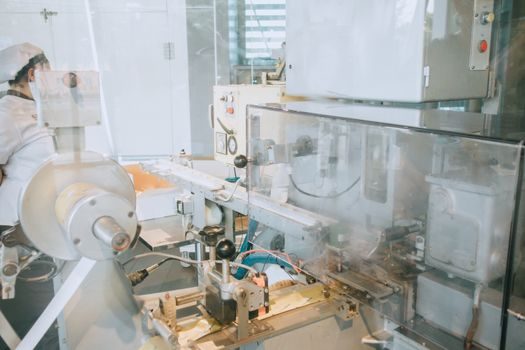
Vacuum-packaging machines for food contact in the EU are built to food-grade stainless requirements (304/316), with seals meeting food-grade rubber and Teflon specifications, and many EU food-plant buyers now require oil-mist filters or fully dry pumps to protect the food contact zone. The vacuum-packaging category is also adjacent to retort and pasteurisation lines, where seal-bar temperature control and the use of a vacuum pump suited to condensate-vapour handling are core engineering topics. Coding machines in regulated industries must support the relevant barcode/label standards (GS1 General Specifications, ISO/IEC 15415/15416 for 2D/linear verification, FDA 21 CFR 101.105 for US food labelling, EU Regulation 1169/2011 for EU food information to consumers) — these are public industry standards and form the basis of the print-quality acceptance criteria. [S1]
Sourcing-side note: in June 2026 the largest concentration of new model launches in vacuum packaging continues to come from Chinese OEM catalogues — Youngsun, KUNBA, Smart Weigh and Shandong Xiaokang all published refreshed model lines in the past 30 days, covering chamber, tabletop, thermoform and rollstock variants [S1][S2][S3][S4]. Promarksvac, a US-based commercial-grade supplier, published a refreshed food/non-food line emphasising 304 stainless and 5–10 mbar ultimate pressure [S5]. Buyers should request FAT data — cycle time, ultimate pressure, seal-bar temperature profile, MTBF on the pump, and print-grade verification — before accepting any 2026 build slot.
For a multi-machine packaging-line review, the related spec cuts on wrapping vs case packing and strapping vs shrink wrapping are useful adjacent reads, since vacuum-packed products almost always need a secondary bundling cell downstream. Final selection signal: if your bottleneck is information density on the pack, the coder is the long-pole; if it is shelf life, the vacuum packager is. Spec them as two independent workcells, and the line will run. Watch for the 2026 H2 release of EU food-contact ink directives and the gradual migration from rotary-vane to dry pumps in 2027 OEM lineups as the two market-shaping signals for the next four quarters.