
AC and DC EV-charger OEM/ODM lines in China are now bundling SMT placement, in-line test stations, and dedicated aging workshops into a single floor plan, displacing the older assembly-only model [S4]. On the controls side, PLC + SCADA + robotic-welding retrofits are migrating down-market from automotive tier-1 into mid-tier power-converter and charger cabinet plants during 2026 Q2 [S6].
The driver is straightforward: a 30 kW DC fast charger carries 600-1000 V DC contactors, a PFC + LLC stage, an isolated CAN/PLC/Ethernet comms board, and an IK10 + IP54 enclosure, so hand-build with separate QC at the end no longer scales above ~50-80 units per shift [S3][S4]. For a process engineer sourcing chargers, the line topology is now as important as the published spec sheet — it decides reject rate, firmware repeatability, and lead time more than the connector type does.
Smart-Production Line Stack: SMT, HIPOT, Burn-In, Aging
Self-run OEM/ODM factories now publicly describe the full in-house line: SMT placement for the control PCB, a hipot and ground-bond test cell for the AC input and isolation barrier, and a multi-hour aging room that runs each unit at full output with periodic OC/OV/OT trip verification [S4]. Commercial AC and DC lines also expose firmware-flash + parameter-write steps on the same line, so a unit leaving the line carries its OCPP back-end URL, plug type, and regional current limit already burned in [S1][S3].
The practical effect on a buyer is a measurable shrink in field DOA. For the same reason, dual AC and DC product families are built on shared cabinet tooling: a 7 kW AC pillar and a 30 kW DC pedestal share the same powder-coated steel housing, the same cable gland layout, and the same LED status ring, which is why a single factory can quote both on one PO [S3][S4].
Controls and Robotics: What Rockwell, PLC, and SCADA Actually Buy You
Discrete and process automation vendors sell chargers a 4-layer stack: PLC for cell-level sequencing, SCADA for line visibility, a robot cell for enclosure welding and pick-and-place of heavy contactors, and an MES layer for unit-level traceability [S6]. On a charger line, the PLC drives the conveyor, the hipot tester, the aging-rack relays, and the end-of-line flashing station; SCADA aggregates station-level OEE and pushes reject-bin alerts to the line supervisor. A typical mid-tier 30-120 kW DC cabinet line runs 8-14 PLC-controlled stations, with a 6-axis robot handling cabinet welding and a smaller SCARA placing the heavy DC contactor and the PFC inductors [S6].
Robot welding matters more than people expect: an IP54 steel cabinet is only as good as its seam, and MIG/MAG robotic cells hold ±0.5 mm repeatability on a 1.2-1.6 mm wall — far tighter than a hand weld, which directly determines the IK10 impact rating on the finished pillar [S6]. Buyers rarely see this on a data sheet, but a 0.5 mm seam drift shows up as a 5-10% variance in the IP54 water-ingress test across a 500-unit lot. The wider point: the same automation stack that built the chassis also built the pressure transmitter and the flow meter on the process skid upstream, so the supplier list for a charger OEM and a DCS skid often overlaps by 40-60%.
Product Family Architecture: AC Pillar, DC Stack, Portable, Emergency Mobile
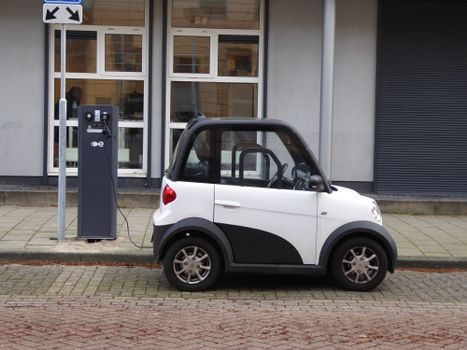
Chinese OEMs now publicly organise SKUs into four hardware series — AC ev charger, DC ev charger, portable ev charger, and emergency mobile charging pile — plus a charging-pile management and operation platform for the OCPP back-end [S3]. Each series maps to a different line cell: AC pillars run on a slow-moving conveyor with light robotics, DC cabinets route through a heavier robotic cell and a longer aging window, portable units go through a higher-mix hand-assist station with full function test on every unit, and emergency mobile piles get a reinforced-cabinet welding cell plus a high-cycle reel test [S3][S4].
Inside the cabinet, the common backbone is a PFC boost stage, an isolated DC-DC stage (LLC for 30 kW+, dual active bridge for higher power), a DSP/MCU controller running CAN and PLC comms, and a 4G/Ethernet OCPP gateway [S1][S5]. Smart features such as household dynamic load balancing, multi-charger wireless MESH, and a power monitor accessory all live on the same controller, so a single firmware binary serves both a home and a commercial SKU [S1]. This is why a buyer who locks the controller IC family can re-skin the enclosure and re-rate the output stage without changing the test program — a real lever on MOQ and lead time.
Quality Gates: What to Audit on the Factory Floor
A buyer who can't walk the line should still ask for four artefacts: the SMT solder-paste inspection (SPI) report, the AOI reject log, the burn-in hours per unit, and the IP54/IK10 test certificate per lot [S4]. SPI and AOI are the two automated optical steps that catch tombstoning, bridging, and lifted-lead faults before power-on; burn-in is what kills the early-life relay and electrolytic failures; the IP/IK test is the only objective check on the cabinet seam and the cable gland [S3][S4]. A line with all four is a real line; a line with only an end-of-line functional test is trading quality for throughput and will show 2-3% higher 90-day RMA. A line that also runs ISO 9001:2015 plus ISO 14001:2015 audits is the same group that will hand you a clean PPAP-level documentation pack [S4].
Sample-acceptance at incoming QC should target at least 3-5 units per lot for destructive and 10-20 units for functional. For buyers building charging depots alongside the BESS and the smart meter back-office, the same PPAP pack should be cross-referenced against the BESS acceptance doc so that a single QA team can sign off both cabinets on the same visit.
Use Cases: Home, Commercial, Highway, Emergency
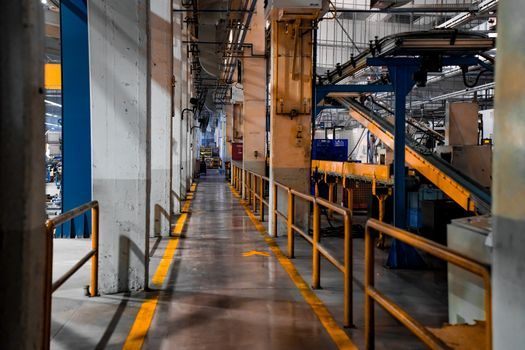
Home AC pillars (7-22 kW) are the volume line and live or die on enclosure finish and OCPP 1.6/2.0.1 reliability; commercial AC (22 kW three-phase) is the small-business workhorse, often with a 4G gateway and RFID; commercial DC (30-180 kW) and highway DC (240-360 kW) are the high-power line that demands liquid-cooled cables above 250 kW and CCS2/CHAdeMO/GB/T triple-connector cabinets in Asia [S1][S2][S5]. Emergency mobile charging piles (a category specific to the Chinese OEM market) pair a 30-60 kWh on-board BESS with a 30-120 kW DC output, are mounted on a trailer or a truck bed, and exist to back-feed stranded EVs at highway exits and disaster zones [S3]. Indian and African deployments lean on similar SKUs but with on-grid / off-grid hybrid BESS add-ons to ride through weak grid [S2][S5].
For depot buyers, the right comparison is not connector count but four concrete criteria: peak DC output (kW), grid input flexibility (3-phase 400 V vs single-phase 230 V vs 480 V three-phase), OCPP version and back-end (1.6 vs 2.0.1), and IP/IK rating of the cabinet (IP54 / IK10 is the floor for outdoor) [S1][S2][S5]. A 30 kW DC pedestal with OCPP 2.0.1, IP54/IK10, and a 480 V three-phase input is the most flexible SKU for a mixed fleet; a 7 kW AC pillar with OCPP 1.6 is the volume SKU for residential sites; emergency mobile piles are a separate procurement line that should be benchmarked against trailer-class aerial work platform sourcing rather than against fixed chargers.
Sourcing Levers and 2026 Q2 Risk Map
Three levers move landed cost more than the unit price: enclosure steel grade and finish, the controller IC family, and the connector standard [S1][S3][S4]. A galvanneal + powder-coat cabinet is the difference between a 5-year and a 10-year outdoor life; the same logic that drives steel plate sourcing for industrial cabinets drives EV-charger cabinet sourcing. Locking the controller IC family (e.g. a TI C2000 + a Nuvoton MCU for the comms board) lets you re-quote AC and DC on the same firmware; locking the connector to CCS2 or GB/T for a region avoids 6-12 weeks of lead time on a tooling change [S1][S3][S4].
For 2026 Q2, three risk nodes are worth tracking: (1) BESS cell lead time for emergency mobile piles, (2) copper busbar and steel casting supply for the cabinet chassis, and (3) OCPP 2.0.1 backend compliance in regions rolling out new grid codes [S3][S5]. Buyers pairing chargers with on-site BESS and a VSD for solar smoothing should plan a single QA visit covering the three cabinets, because the same supplier base, the same steel sourcing, and the same additive manufacturing spares pool now service chargers, BESS, and power-converter SKUs.