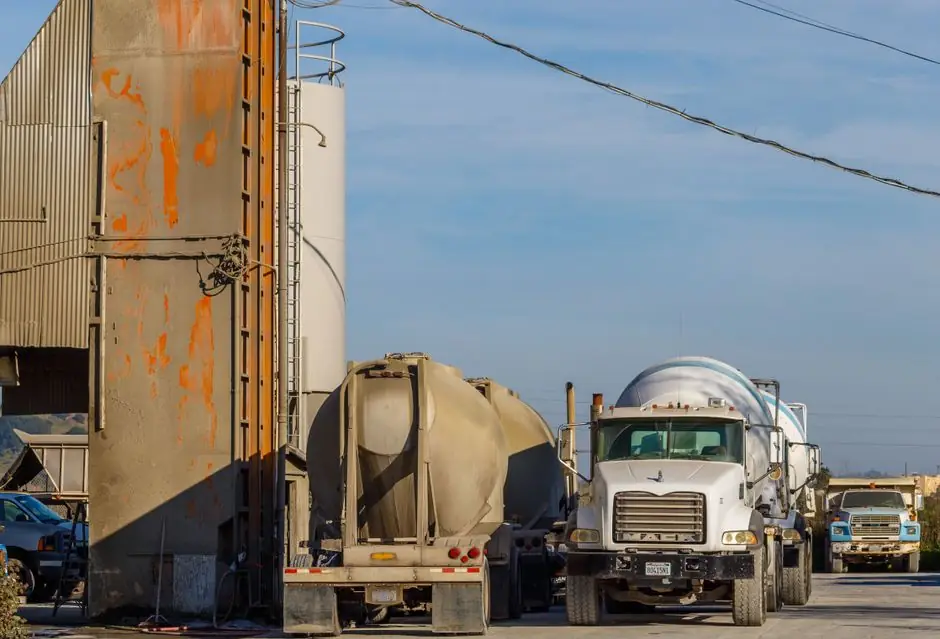
Pipeline construction typically demands 40–100 m³/h of structural-grade wet concrete with low-slump, pumpable mixes, which lines up with the HZS60–HZS100 output band (45–100 m³/h) and twin-shaft JS1000/JS1500/JS2000 mixers most pipeline EPC contractors specify in 2026 [S1][S3].
Pipeline jobs are linear, mobile, and shift site every 2–4 months, so the spec gate is wet-mix output, a 3.8 m discharge for transit-mixer truck loading, an 80 mm max aggregate size to protect pump pipelines, and 3–4 aggregate bins to switch between bedding, encasement, and structural surround pours without re-tendering supply [S1][S4].
Why pipeline work almost never sits on the HZS180 frame
Stationary HZS180 plants deliver 150–180 m³/h from a JS3000 mixer at 280 kW with a 700 t/h inclined-belt conveyor, but they need engineered foundations, four-aggregate-bin aggregate pre-bin pits, and a sustained 2–5 year pour programme to amortise the USD 17,500–285,000 ex-works price tag [S3]. Pipeline spreads are short-duration and route-linear, so an HZS180 typically sits idle between valve-station pours and burns capex.
Foundation-free quick-install plants in the 25–90 m³/h range are sold at roughly USD 12,450–40,000 per set ex-works and can be moved in days on a flat hardstand, which fits pipeline ROW camps that get demobilised as the spread advances [S1]. For trench work, a 24-hour modular install like the AJQ70 fast-install frame cuts the setup premium that normally pushes pipeline contractors to a mobile or rental unit.
Selection criteria locked before RFQ on a pipeline spread
Engineers should lock four vectors before shortlisting: rated m³/h vs the pour-rate peak, project duration, site civil-work tolerance, and the pumping train that sits downstream. HZS60 pulls 130 kW with a JS1000 mixer at 1 m³ per cycle, HZS75 pulls 165 kW on a JS1500, and HZS100 baseline is 140 kW excluding the screw conveyor and cement silo, so the genset spec falls out of the plant class directly [S1][S3].
Aggregate bin count is a real spec line, not a marketing bullet: HZS100 ships with 4 aggregate types across 3×15 m³ bins at ±2% weighing tolerance, and HZS60 supports 3 aggregate types with 80 mm max aggregate size at HZS75, which is the upper bound a concrete pump can swallow without hose hammering [S1]. Powder silo capacity on HZS100 is selectable at 50, 100, or 200 t, a 4× swing that drives both footprint and truck-fill cycle, so the silo spec must be chosen against truck logistics, not against plant nameplate.
Wet-mix vs dry-mix: which one a pipeline spread actually buys
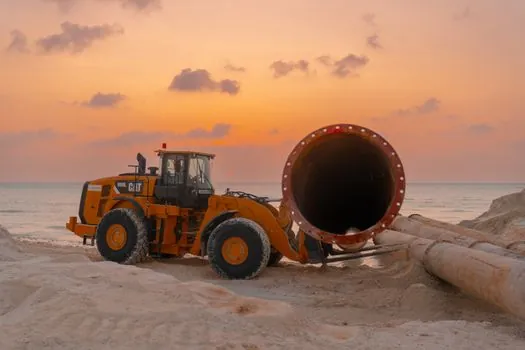
Wet-mix plants blend all inputs, including water, inside the central mixer before discharge, which gives PLC-driven per-batch weigh control and a ready-to-pump slump that holds while the agitator truck is in transit [S4]. This is the standard for pipeline structural surround, thrust blocks, and valve chambers where compressive-strength uniformity is a spec line.
Dry-mix plants weigh cement, aggregate, and additives separately and add water on site, which is a fit for small-to-medium and road projects, not for the high-pressure concrete-pump trains used on long pipeline pulls [S5]. A dry-mix unit only pays back on a pipeline if the contractor runs many small spread-out sites and wants to keep transit-mixer spoil risk low.
Mixer family: twin-shaft rules, planetary and single-shaft are the wrong tool
JS-series twin-shaft mixers (JS1000, JS1500, JS2000, JS3000) are non-gravity, high-intensity, and dominate plastic and structural wet mixes from 60 m³/h upward, which is the entire pipeline operating window [S1]. HZS100 pairs a JS2000 (2,000 L nominal, 2×37 kW motors) with a PL3200 aggregate batcher as the reference mid-tier build.
Planetary (vertical-shaft) and single-shaft paddle mixers belong to dry-mix, mortar, and low-slump architectural pours, and Qingdao Elite's single-axis blade slurry dry-powder mortar unit is sized for compact equipment-retrofit installation rather than for high-output wet structural concrete [S1]. Specifying a planetary mixer for a pipeline pumping train is a common procurement error that limits output and forces longer cycle times.
Stationary, mobile, foundation-free: the HLS/HZS trade
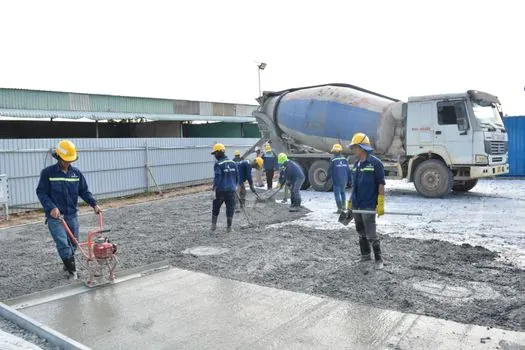
Stationary HZS belt-conveyor plants take the throughput and quality crown but capex, foundation, and permitting drag come attached; mobile plants split the difference with HZS60–HZS90 output bands and lower mobilisation cost than a full stationary rebuild [S3]. Foundation-free skip-hoist quick-install plants sit at the entry of the band, 25–60 m³/h, and win on relocation speed rather than throughput [S1].
The HLS-series tower plants remove four intermediate transfer steps versus HZS stands and lift productivity by roughly one third at equivalent model size, so an HLS90 floor plant matches an HZS120 stand, and an HLS180 floor plant equals an HZS240; pipeline spreads that can fix a plant for a full year near a pipe lay-down yard can harvest that productivity delta [S1]. For a moving spread the answer stays HZS mobile or foundation-free, not HLS tower.
Pump pairing: the integration that actually controls pour rate
A pipeline spread runs a pipeline pump downstream of the plant, and a stand-alone batching plant without an integrated pump is a throughput bottleneck, because truck turnaround gates the whole chain. The AJP40 integrated pumping-and-batching frame is built for small and medium sites that need concrete production and placement in one footprint, which mirrors the way pipeline camps actually run. [S1]
For trench bedding and structural surround on long pulls, the matched answer is a wet-mix HZS60–HZS100 mobile plant feeding a concrete pump trailer, with discharge height fixed at 3.8 m for standard transit-mixer loading and 80 mm max aggregate to keep the pump hoses alive [S1][S4]. Where the contractor runs only short, intermittent pours, a foundation-free 25 m³/h unit tied to a small construction tools placer is often the cheaper end-state.
Comparison: which plant class fits which pipeline scenario
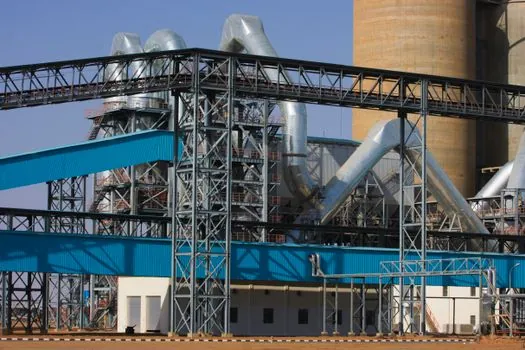
Three procurement lanes show up on real pipeline tenders. Lane A is a 2–5 month valve-station and tie-in job: foundation-free HZS25–HZS50, 25–50 m³/h, 3 aggregate types, 3.8 m discharge, 1×37 kW-class mixer, USD 12,450–25,000 ex-works, and zero permanent civils [S1][S5]. Lane B is a 6–18 month transmission main: mobile HZS60–HZS75, 60–75 m³/h on a JS1500 mixer at 165 kW, 80 mm aggregate ceiling, 3–4 bins, and a matched pump trailer [S1][S3]. Lane C is a multi-year network or terminal build: stationary HZS120–HZS180, 120–180 m³/h on a JS3000 mixer, 4 bins, 700 t/h inclined-belt feed, with a 2–5 year pour programme needed to recover the capex [S1][S3].
Most pipeline projects sit in Lane B and treat Lane A or Lane C only as edge cases. The classic mismatch is buying Lane C output to chase a Lane B work profile, which locks capex into an underused plant and burns the operating margin that justified the spec in the first place [S3].
Use cases and failure modes seen on pipeline spreads
Working envelopes for pipeline batching plants: 25–50 m³/h on small spread-out valve and tie-in works, 60–100 m³/h on transmission main pours that need pump-fed continuous placement, and 120–180 m³/h only on multi-year network or terminal builds with fixed camp [S1][S3]. The dominant failure modes on pipeline work are aggregate size above pump tolerance, under-spec powder silos that force cement-truck queueing, and 4.1 m discharge-height foundations that block standard 3.8 m transit-mixer loading [S1].
Spec engineers working on a comparable quarry or fixed-yard project can cross-read concrete batching plant selection for quarrying sites, and a demolition contractor mapping the same mobile-versus-stationary gate can pull concrete batching plant selection for demolition projects: mobile vs stationary spec gate for the matching decision tree.
Track the next two signals before locking the RFQ: confirm whether the local grid can supply 130–280 kW at the proposed camp load centre, and confirm the pipeline pump train's max aggregate ceiling, because that single number overrides the plant's nameplate output band. Also worth cross-reading is the wider construction machinery and equipment envelope if the spread also runs trenching, lifting, and genset packages off the same logistics plan.