
Capacitor-discharge (CD) stud welders are the dominant choice for electrical-installation work on thin stainless or mild-steel enclosure panels, because CD welds complete in roughly 6-12 milliseconds with minimal heat input and no through-hole marking on the visible face [S2]. Drawn-arc (ARC) units take over once stud diameter climbs past what CD can reliably fuse, or when the cabinetry uses thicker structural steel framing that demands deeper weld penetration [S1].
Selection in this segment is governed less by raw power than by stud material compatibility (mild steel, stainless steel, sometimes aluminum), access constraints on the finished enclosure, and the throughput required on a panel build line. For a typical NEMA-style electrical cabinet, the stud is hidden inside, so one-sided welding and clean exterior cosmetics carry the same weight as weld strength [S2]. A practical baseline: a flanged mild-steel or stainless-steel CD stud in the 10-12 gauge range, copper-coated for arc stability, paired with a portable CD power source in the sub-15 kg class for shop or field panel work [S2][S1].
CD vs Drawn-Arc: Process Boundaries on Enclosure Work
CD stud welding limits heat input so low that warping and HAZ (heat-affected zone) discoloration on the cosmetic face of an electrical cabinet are essentially eliminated, which is why enclosure builders prefer it for 16-20 gauge stainless and mild-steel skins [S2]. Weld time on CD is measured in milliseconds (commonly cited as single-digit to low-double-digit ms), so a single stud can be set, welded, and released inside a second, which is the throughput argument that beats MIG/TIG on repetitive panel builds [S3]. Drawn-arc stud welding runs longer (typical arc time on the order of 100-500 ms depending on stud diameter), reaches much higher fusion energy, and is the right process for structural fastenings, larger shear connectors, and refractory-anchored hardware where the panel itself is not the limiting factor [S1].
For electrical-installation work, the practical rule is: choose CD for studs up to roughly 6-8 mm diameter on sheet steel under about 2-3 mm thick, and move to drawn-arc for larger-diameter cabinet-frame studs, bus-bar mounts, or any stud welded to plate above ~3 mm [S1][S3]. The two processes are not interchangeable; pushing a CD unit into a thick-plate job delivers cold laps, while using drawn-arc on cosmetic stainless skin burns through the panel. Stud welding is generally performed on all electrically conductive base metals, including carbon steel, stainless steel, and aluminum, but the process parameters, ferrule choice, and shielding-gas regime shift with each [S3].
Stud Material and Ferrule Choices for Cabinet and Panel Builds
Mild steel and stainless steel are the two stud materials that dominate electrical-installation use, and the supplier base in the U.S. (e.g., Delta Stud Weld, Northland Fastening Systems) standardizes on domestically sourced mild-steel and stainless-steel CD studs with a flanged geometry for arc stability [S1][S2]. The copper coating called out on flanged CD studs is functional, not cosmetic: it improves electrical conductivity at the stud tip, which shortens weld time and stabilises the arc on low-power portable CD units commonly used in enclosure shops [S2].
For seismic-rated electrical cabinets and enclosures, the reason stud welding is preferred over resistance welding is that the stud weld holds the entire face of the fastener, not just its edges, which is what gives seismic cabinetry its tested shear and tension margin [S2]. This full-face fusion behaviour is a real engineering differentiator, and it is one of the reasons stud welding has displaced older tack-and-bolt cabinet assembly on North American panel lines [S2].
Power-Source, Gun, and Portability Match-Up
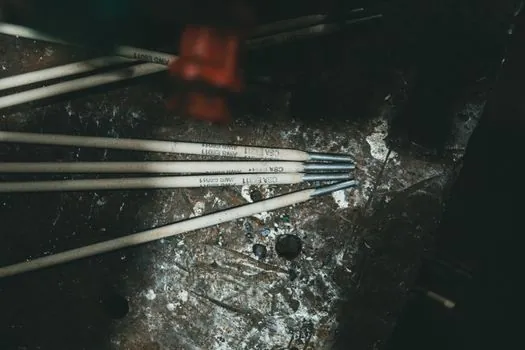
Compact CD welders for enclosure work typically weigh in the handheld to backpack range, run on 110-230 V single-phase mains, and store enough capacitance to fire a 3-6 mm stud on 1-2 mm stainless with repeatable results [S1][S2]. Drawn-arc units are heavier, often trolley- or skid-mounted, and need a more substantial mains feed plus a shielding-gas supply (typically argon-based mixes) for stainless and aluminum work [S1]. Field installation on a retrofit electrical room, a switchgear upgrade, or a remote MCC (motor control center) line favours the CD unit because it can be carried up a ladder and operated in tight cabinets where bringing a drawn-arc cart is impractical [S1].
Weld controls (the timing/energy module that drives the stud gun) and gun geometry (handheld pistol vs bench-mounted automatic head) are separate purchase decisions. For shop-built enclosure volume, an automatic-feed bench gun on a CD welder delivers hundreds of consistent studs per shift with one operator; for service trucks and field retrofits, a handheld CD gun with a foot-pedal trigger is the standard configuration [S1][S2]. Drawn-arc stud welding on refractory or high-temperature alloy cabinet hardware requires a heavier-duty gun and is rarely done handheld; expect a bench or gantry-mounted configuration with engineered stud-feed [S1].
Selection Criteria: A Side-by-Side Match for Electrical-Installation Use
Lining the two main options against four decision criteria makes the choice mechanical: (1) Stud diameter / base-metal thickness, where CD handles small studs on thin sheet and drawn-arc handles larger studs on thicker plate; (2) Cosmetic face of the cabinet, where CD leaves no burn-through and a clean exterior, drawn-arc needs access from the back or will mark the visible face; (3) Throughput, where CD welds in milliseconds and drawn-arc takes longer per stud but fuses larger cross-sections; (4) Portability and field deployment, where compact CD units win on weight and single-phase power, drawn-arc wins on raw fusion energy but loses on mobility [S1][S2][S3].
Material compatibility sits above the table: for stainless-steel enclosure work, both processes are usable, but the shielding-gas requirement on drawn-arc adds a consumables line that CD avoids; for aluminum cabinetry (common in some outdoor enclosure skins), drawn-arc is generally required because CD on aluminum is parameter-sensitive and harder to qualify, while stud welding is documented as compatible with carbon steel, stainless steel, and aluminum base metals [S3].
Use Cases: Where Each Process Earns Its Place
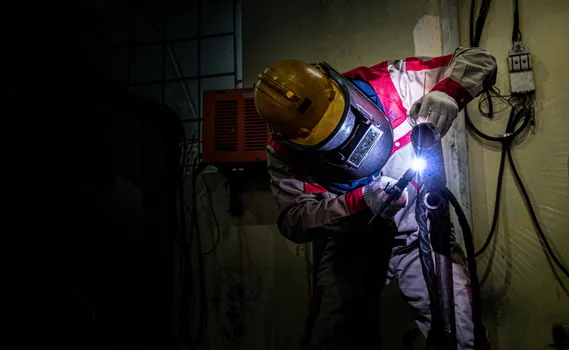
CD stud welding is the right answer for: NEMA-style electrical enclosures and server cabinets built from 16-20 gauge stainless or mild-steel sheet; internal mounting studs for DIN rails, back panels, and component brackets where the visible face must remain unmarked; seismic-rated cabinetry where full-face fusion is required; and field retrofit work where portability and one-sided access are non-negotiable [S2][S3]. Drawn-arc is the right answer for: structural fastenings inside the cabinet frame, bus-bar support studs, larger grounding lugs, switchgear base studs welded to thick steel plate, and any stud where the cosmetic face is not the controlling concern [S1][S3].
Concrete-embedded and masonry-anchored electrical work (e.g., conduit supports, heavy equipment bases) is a different selection problem from cabinet stud welding, and the appropriate drawn-arc versus CD trade-off there follows the structural-anchoring rules rather than the cosmetic-cabinet rules. For readers cross-referencing structural and concrete stud-welder decisions, the principles for drawn-arc versus CD sizing on concrete and the masonry stud-welder spec match extend the same process logic into heavier base materials.
Limitations, Failure Modes, and When to Escalate
CD stud welding on thick plate produces cold laps and weak fusion; pushing a CD unit past its stud-diameter rating is a common field failure that shows up as studs popping off under light impact or failing a simple hammer-test [S3]. Drawn-arc on thin cosmetic sheet burns through the panel; the visible defect is obvious, but the underlying problem is that the wrong process was specified for the substrate thickness [S1]. Ferrule and shielding-gas mismatches produce porosity that pull-testing or dye-penetrant inspection will catch; a stud weld that fails a 45-degree bend test or a torque test is not a stud-welder fault, it is a parameter or consumable mismatch and the weld should be ground out and re-attempted, not accepted [S3].
When a stud welder is being used on aluminum, in a hazardous (classified) area near energized equipment, or on a cabinet that must meet a specific seismic or IEEE switchgear qualification, the application is no longer a commodity stud-welder selection and should be escalated to a process engineer who can qualify the weld procedure spec (WPS) and the procedure qualification record (PQR) against the governing standard rather than left to a generic CD or drawn-arc purchase decision. For readers weighing stud welding against other fastening methods on structural steel enclosures, the process, size, and power-source map for steel construction gives the heavier-frame end of the same decision tree.
For readers evaluating the broader fastening-toolset around electrical installation work, stud welder picks for demolition and heavy steel cutting jobs and the sander spec map for steel construction finishing cover the adjacent tooling decisions on the same site.
The underlying component specifications are covered under stud welder, arc welder, and tig welder.