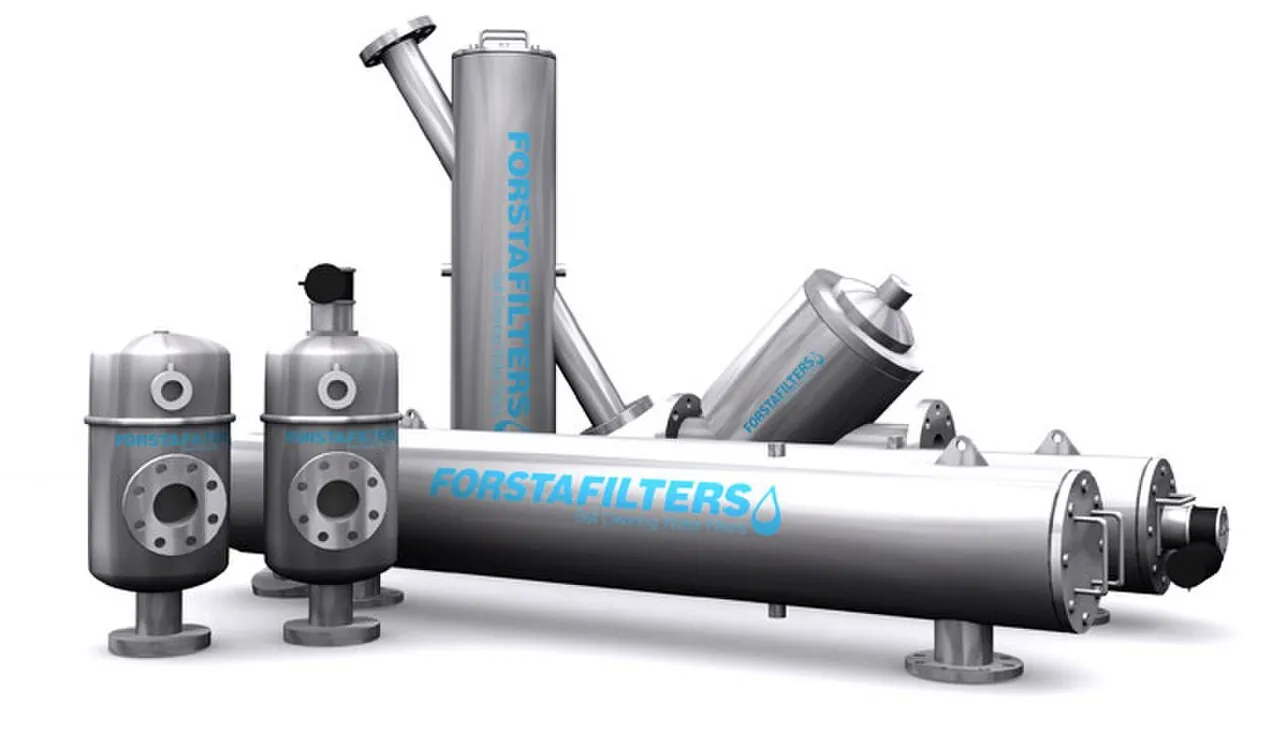
A condensate polisher is the ion exchange system that treats the huge, continuously recycled flow of condensate in a power or process steam cycle, removing the trace dissolved ions and suspended corrosion products, iron and copper oxides collectively called crud, that a condenser leak, makeup water excursion, or simply years of metal contact introduce. Deep-bed polishers pass condensate downward through mixed or cation ion exchange resin beds in pressure vessels, regenerating the resin externally on exhaustion; powdered-resin precoat polishers coat a filter substrate with finely ground resin and both filter and exchange on a disposable precoat. DuPont AmberLite polisher recommendations and Graver condensate polishing practice are representative of the industry, and this page treats the complete system, vessels, resin, regeneration, and control, as the purchasing object.
This page is written for the engineer specifying a condensate polisher for a fossil drum cycle, a once-through or supercritical steam generator, a nuclear unit, or a large process condensate loop. It works through what the machine does and what is actually being bought, how the resin and the bed do the work, which design choices such as deep-bed against powdered-resin and cation against mixed beds separate one offering from another, the parameters that recur on vendor data sheets, and the selection factors and RFQ language that decide whether the cycle chemistry stays inside its limits when a condenser leaks or the plant ages.
The decision concentrates in five places: the cycle type, drum, once-through, or nuclear, because it sets how clean the condensate must be and which polisher architectures are even acceptable; the condensate flow and its temperature, which size the vessels and rule resin forms; the ionic and particulate load, routine crud plus the condenser-leak case the system must survive; the polisher architecture, deep-bed or powdered-resin precoat, with cation or mixed resin; and the regeneration or precoat logistics, on site or outsourced, that set the operating reality. Get those right and the chemistry limits follow with margin.
Chapter 1 / 06
What a Condensate Polisher Is and What Is Being Decided
The machine this page describes is a train of pressure vessels, typically spherical or cylindrical, arranged in parallel service lines with valving that lets vessels cycle between service, exhaustion, and regeneration or recoating while the condensate flow continues. Deep-bed vessels hold a meter or more of ion exchange resin, mixed cation and anion beads, or cation alone in high-temperature service; condensate enters above the bed, percolates through, and leaves polished to sub-microsiemens conductivity and part-per-billion dissolved ions. Powdered-resin systems hold far less resin, a thin precoat of powdered resin on candle or leaf elements inside the vessel, exchanging and filtering until the precoat loads and is sloughed, washed to waste, and replaced. Around the vessels: influent and effluent headers, a crossover to bypass, sample points with a conductivity meter and silica analyzer on every line, and the regeneration or precoat skid that renews the media.
What is being decided when a condensate polisher is purchased is a cycle-chemistry protection guarantee with a leak-response statement. The buyer is purchasing the ability to hold condensate conductivity, sodium, silica, and iron inside the cycle's limits at full flow, to ride through a condenser tube leak of stated cooling-water ingress for a stated time while the unit stays on line, and to remove the daily load of corrosion products the cycle's own metals shed. Everything on the vendor data sheet, flow per vessel, resin volume and form, service run length, pressure drop, exists to support that statement, and honest vendors size from the cycle's chemistry data and the cooling water's salinity rather than by copying the last project.
The condensate polisher sits in the water-treatment family with well-defined neighbors that this encyclopedia treats separately. It is not the mixed bed polisher of ultrapure water makeup, the demineralizer train that polishes fresh makeup water to UPW quality; that machine has its own page and its own duty, and it holds no opinion about condensate. It is not a water softener, which removes hardness from raw water at the front of a treatment train, and not an electrodeionization module, which polishes makeup continuously without chemical regeneration. Its position in the cycle is unique: downstream of the surface condenser hotwell and the condensate pumps, upstream of the deaerator and the feedwater heaters, where it cleans everything the cycle recycles and stands guard over the steam generator, the boiler or heat recovery steam generator whose tube integrity and the turbine whose blade deposits depend on its work.
Different buyers buy the same machine for different cycles. A fossil drum boiler plant tolerates the least polish, its boiler can blow down impurities, so many drum plants run polishers only part-loaded or dispense with them and treat makeup carefully; where they polish, cation beds in the ammonia form often suffice. A once-through or supercritical plant has no drum and no blowdown, every impurity that passes the polisher deposits in the steam generator or the turbine, so full-flow polishing to the tightest limits is the norm and mixed beds in the hydrogen form are standard. A nuclear pressurized water plant polishes to protect the steam generators from the strictest chemistry of all, and boiling water reactor plants run full-flow deep beds or precoat filters as their primary water duty. Industrial steam hosts polish process condensate to keep contamination out of returned condensate.
The economics deserve their own paragraph because the polisher is insurance priced against its payout. The insured assets, the steam generator's tubes and the turbine's blading, cost orders of magnitude more than the polisher; a single condenser leak event carried by a polisher avoids a unit trip or a chemistry-limited run, and the avoided deposition pays the resin, chemicals, and labor for years. The operating cost is real, regeneration chemicals and waste handling for deep beds, precoating powder and disposal for powdered systems, and the selection trade between them is largely an operating-philosophy choice, which is why both architectures persist side by side in the industry.
A short tour of named duties makes the machine concrete. At a supercritical coal unit, full condensate flow passes mixed-bed deep polishers in hydrogen form, cation conductivity held below tight part-per-billion limits, with ammonia added downstream and the condensate feeding the deaerator and feedwater heater train toward the steam boiler, whose superheater and economizer surfaces see only what the polisher passes. At a gas-fired combined cycle, a smaller powdered-resin or deep-bed train polishes the heat recovery steam generator cycle, often with cation resin run in the amine form to pass treatment amine while removing hardness and iron. At a nuclear PWR, deep beds in the ammonium form polish steam generator secondary water, positioned to catch a condenser leak's cooling water before it reaches the generators. Each duty names the same knobs, flow, resin form, run length, and chemistry limits, with numbers that tighten while the ion exchange physics never changes.
Chapter 2 / 06
How Resin and Bed Do the Work
Ion exchange is the dissolved-work half of the polisher. Resin beads carry fixed charge sites with mobile counterions; as condensate percolates through, cation resin trades its hydrogen or ammonium ions for cations in the water, sodium above all, and anion resin trades hydroxide for anions, chloride and sulfate, the condenser-leak signature. Mixed beds, both resins intimately mixed, act as infinite-stage separation and polish to the sub-microsiemens conductivities UPW chemistry demands; cation beds alone swap cations and pass the treatment amine, which suits cycles run with high ammine dosing. Capacity is finite, beads hold a fixed exchange inventory, and when it exhausts the bed is regenerated, acid for cation resin, caustic for anion, or the precoat is replaced.
Filtration is the particulate half. The cycle's own metals shed iron oxide, and copper alloys in older plants shed copper, as colloidal and particulate crud that carries through condensate and deposits where velocity and temperature drop it; deep beds filter this crud in the top centimeters of resin, and powdered-resin precoats are primarily filters that also exchange. Crud loading, not ionic exhaustion, ends many service runs in once-through service, which is why iron in, iron out, and pressure drop are the run-monitoring variables and why precoat systems, which shed their loaded coating wholesale, earn their operating nuisance on crud-heavy cycles.
Resin form is the cycle-chemistry decision. Hydrogen-form cation and mixed beds polish to the lowest conductivity and suit cycles dosing little amine, but they strip the ammonia or amines the plant adds for pH control, so the plant re-doses downstream and pays the capacity the amine consumes. Ammonium or amine-form beds, preloaded with the treatment chemical, pass the amine while exchanging the harmful ions, running longer between regenerations on amine-dosed cycles at a slightly higher effluent conductivity. The form choice belongs to the plant's chemistry program, and the RFQ should state the program, amine species and dose, rather than letting a vendor guess it.
Flow and temperature set the vessel engineering. Polishing service flows are high, deep beds commonly run around one hundred vessel volumes per hour or more, far above ordinary demineralizer rates, because the condensate stream is huge and the polisher must carry full flow with modest pressure drop; distribution and collection internals, upper and lower, must hold bed integrity at those rates without channeling. Temperature rules the resin: anion resin degrades above roughly sixty degrees Celsius in continuous service, so cycles running hot condensate either position the polisher on the cooler side of the train, ahead of feedwater heaters that raise temperature, or choose cation-only beds whose resins tolerate more heat. The cycle's heat balance and the polisher's temperature limit negotiate the placement.
Regeneration and recoating are the operating ritual. Deep-bed systems exhaust a vessel, valving swaps it out of service, and the regeneration skid backwashes, class-separates the mixed resins hydraulically, regenerates each with acid and caustic, rinses, remixes, and returns the vessel, all with chemical storage, neutralization, and waste handling on site; done remotely or in-plant, it is a chemical plant in miniature. Powdered-resin systems slurry a fresh precoat of powdered resin, sometimes with filter aid, coat the elements in a recirculating burst, run to load or differential limit, then slough and recoat. The choice between the rituals is staffed-chemistry-plant versus consumable-precoat, and plants pick by operating philosophy as much as by economics.
Leak response is the drama the system exists for. When a condenser tube fails, cooling water, from a cooling tower circuit or a raw source, pours its salts into the condensate; the polisher's exchange inventory absorbs the ingress, its effluent chemistry barely moves while the bed consumes capacity, and the plant has hours to locate and isolate the leak instead of tripping. The sizing question that matters is how much ingress for how long, a function of cooling-water salinity and leak size the plant postulates, and the vendor's duty-run projection under the postulated leak is the number that separates a polisher from a gesture. Monitoring closes the loop: cation conductivity on every vessel effluent, sodium and silica analyzers, particulate breakthrough watched on a turbidity meter where precoat duty demands it, and flow-proportional sampling through the plant's PLC control system catch the exhaustion that follows, so the desuperheater sprays and the turbine blading downstream see only polished water.
Chapter 3 / 06
Polisher Types, Cycle Duties, and Machine Boundaries
Deep-bed mixed-resin polishers are the full-capability class. Spherical or cylindrical vessels, often three to six in parallel lines, hold meter-deep mixed cation and anion beds running at high specific flow; regeneration is external, at the vessels or at a remote facility, and the chemistry reached is the tightest available, mixed-bed sub-microsiemens polish. They suit once-through and supercritical cycles, nuclear secondaries, and any plant whose chemistry program demands the lowest dissolved limits. Their costs are the regeneration infrastructure and the discipline of resin separation, and the anion resin's temperature limit caps where in the cycle they can live.
Cation-bed polishers trade anion exchange for temperature and amine tolerance. A bed of cation resin alone, in the hydrogen form for maximum polish or the ammonium or amine form for amine-passing duty, removes sodium and other cations and filters crud while running hotter than mixed beds and without stripping cycle amines when preloaded; chloride and sulfate pass, which the boiler's blowdown or the once-through cycle's tolerance must absorb. Drum boiler plants with moderate cooling-water risk often find cation polishers the honest fit, and hot-condensate positions that would cook anion resin accept them where nothing else fits.
Powdered-resin precoat polishers are the filter-first class. Elements, candles or leaves, inside the vessel carry a thin precoat of powdered ion exchange resin; the coat filters crud and exchanges ions until loaded, then sloughs to waste and a fresh coat forms in minutes. Capacity per vessel is small compared with deep beds, so they lead with particulate capture, and plants often pair them, precoat filters upstream of deep beds on crud-heavy cycles, or rely on them alone where ionic load is modest. Their costs are precoat powder and disposal; their virtues are simplicity, speed, and no regeneration chemistry on site.
Cycle duties name the polisher's contract. On a once-through fossil cycle the polisher is the only barrier between the condenser and the steam generator, full flow, mixed bed, tightest limits, because no drum exists to blow down. On a drum cycle the boiler itself is a chemical vessel, blowdown sheds impurities, and the polisher ranges from full-flow mixed bed through part-flow cation to none, a chemistry-program decision. On a nuclear PWR secondary, the steam generators' integrity governs and polishers run full flow in whatever form the owner's chemistry allows. On a combined-cycle site, the heat recovery steam generator behind the gas turbine cycles with load, and polishing sized for its modest inventory keeps the HRSG's tight-tube surfaces clean. On industrial hosts, polishers guard returned process condensate against contamination, deciding what returns to the cycle and what goes to waste.
Adjacent machines mark the boundary. The condensate polisher is not the makeup-water train it works beside: the water softener guarding the front of a treatment plant, the mixed bed polisher finishing demineralized makeup, the electrodeionization module polishing RO permeate, and the activated carbon filter removing oxidants upstream all serve the makeup path and have their own pages; this machine serves the recycled condensate path and nothing else. It is not the surface condenser whose leaks it answers, not the deaerator that strips dissolved oxygen from the flow it discharges, not the boiler feed pump that moves the polished condensate forward, and not the steam boiler or turbine it protects. Instrumentation neighbors, the conductivity meter, silica analyzer, and online water analyzer hardware, are its senses; a ph-meter and flow-meter on sample and service lines are its meters; all are separate purchases with their own leaves.
Chapter 4 / 06
Key Specification Parameters
The vendor data sheet for a condensate polisher centers on flow, resin, run length, and chemistry reached, and each number carries a duty consequence. The table below lists the parameters that recur across manufacturers' catalogs for deep-bed and powdered-resin classes, with typical ranges a buyer will see. Values for a specific project come from the cycle's flow, temperature, and chemistry and the postulated condenser leak, and the ranges here are orientation, not a substitute for that engineering.
Parameter
Typical catalog range
What it decides
Design condensate flow
hundreds to 4,000+ m3/h by plant
Vessel count and size; full or part flow
Specific flow, deep bed
roughly 80 to 150 BV/h
Vessel sizing; pressure drop; bed stability
Resin form
H, NH4, amine; mixed or cation
Chemistry reached; amine handling; temperature fit
Service run length
days to weeks, load dependent
Regeneration or recoat cadence; operating cost
Effluent cation conductivity
to below 0.1 uS/cm class
Chemistry compliance; cycle limits met
Sodium and silica leakage
part-per-billion class targets
Steam generator and turbine protection
Inlet temperature limit
anion resin to roughly 60 C
Train placement; resin choice
Pressure drop, clean to loaded
fraction to a few bar
Pump head; run-end criterion
Crud filtration rating
precoat classes finest
Iron and copper removal; run length on particulates
Leak response capacity
postulated ingress kg as ions
Ride-through time on a condenser leak
Three of these numbers deserve the buyer's suspicion when they arrive without a basis. Run length quoted without the assumed inlet chemistry is a number from someone else's cycle. Leak response quoted without the postulated leak size and cooling-water salinity is a hope. Effluent conductivity quoted as a lab single rather than a service guarantee over the run misses the exhaustion curve that ends every run. An RFQ that demands the duty-cycle projection, run length against the stated load and leak case, separates engineered offers from assembled ones.
Materials and construction follow the duty. Vessels are lined steel or stainless in the polish classes, with internals, distributors and collectors, engineered for high specific flow without media escape; valve manifolds are chemically resistant, often with a control-valve lineup that sequences service, swing, and regeneration automatically; sample systems carry condensate to the analyzers at representative flow; and regeneration skids or precoat systems complete the package with their own chemical storage, neutralization, and waste interfaces. Resin is a named product, type, crosslinkage, and form, and its certificate belongs with the commissioning records, because the entire guarantee rides on the media.
Chapter 5 / 06
Selection Decision Factors and RFQ Language
Selection starts with the cycle, not the catalog. The plant type, drum, once-through, nuclear, or industrial host, decides the chemistry limits and whether polishing is full-flow protection or part-flow optimization; the condensate flow and temperature size the vessels and rule the resin forms; and the cooling water's salinity with the postulated leak size sets the capacity the system must carry. Chemistry program data, amine species and dose, pH target, and current iron and copper levels, turn a generic offer into a sized one, and plants without that data should gather it before they buy.
The architecture decision follows operations as much as chemistry. Deep-bed mixed polishers reach the tightest limits and want regeneration infrastructure, chemical storage, neutralization, and a trained chemistry staff; cation beds buy temperature and amine tolerance at the cost of anion passage; powdered-resin systems buy simplicity and crud filtration at the cost of exchange capacity and precoat logistics. Hybrid layouts, precoat filters ahead of deep beds, capture the best of both on crud-heavy once-through duty. The choice is honest only against the plant's staffing reality, which the buyer should state in the RFQ rather than discover in operation.
The table below organizes the decision into the factors that recur across projects, with the questions the buyer should be able to answer before the RFQ goes out. Each row is a place where an incomplete answer becomes an underspecified system and a chemistry excursion later.
Decision factor
What the buyer must state
Consequence if left open
Cycle and limits
Plant type, full or part flow, chemistry limits to hold
Protection mismatched to cycle; limits drift
Flow and temperature
Design condensate flow, temperature at polisher
Vessels oversized or resin cooked
Load and leak case
Routine ionic and crud load; postulated leak and salinity
Run length and ride-through unknown
Resin form
Amine program and dose; H, NH4, amine, mixed intent
Amine stripped or anions passed unnoticed
Architecture
Deep bed, cation, precoat, or hybrid; regeneration scope
Operating philosophy mismatched to staff
Monitoring
Instrument scope, sample points, alarm limits
Exhaustion found by excursion, not by trend
Waste and interfaces
Regeneration waste, precoat disposal, hotwell and pump ties
Late chemical-handling and piping disputes
RFQ language for a condensate polisher should name the cycle and the case it must survive. A workable specification states: cycle type and polisher position, full or part flow; design and maximum condensate flow with temperature at the polisher; the chemistry program, amine species and dose, pH, and the limits to hold, cation conductivity, sodium, silica, and iron; the routine load basis and the postulated condenser leak, cooling-water salinity and required ride-through; architecture intent, deep bed, cation, or precoat, with vendor free to propose within it; resin specification with form and expected capacity and leakage basis; vessel and internals design with specific flow and pressure drop; regeneration or precoat scope with chemical storage, neutralization, and waste interfaces; instrumentation and sampling scope with conductivity, sodium, and silica analysis per line; control scope for sequencing and swings; and the acceptance basis, service demonstration against the stated load and a witnessed leak-response projection. Naming the interface equipment, the surface condenser hotwell and condensate pumps upstream, the deaerator and boiler feed pump downstream, lets vendors bid the connections correctly.
Chapter 6 / 06
Installation, Standards, Failure Modes, and Maintenance
Installation is a piping and chemistry commissioning project. Vessels set with their valve manifolds, headers tie to the condensate train with the bypass the cycle needs, regeneration or precoat skids connect with their chemical and waste interfaces, and the sample system runs to the analyzers. Commissioning proves hydraulics first, flow at design without channeling or media escape, then chemistry: resin certificates, regeneration or precoating to specification, and service runs demonstrating effluent against the limits before the system is trusted with the cycle. The plant's chemistry staff should own the acceptance, because the polisher's language is their language.
Standards for polishers are water-treatment and pressure-equipment practice rather than a single machine standard. Vessels follow the pressure equipment code of the jurisdiction with lining practice for chemical service; water treatment chemistry follows the industry guidance bodies' cycle-chemistry recommendations, whose current editions the plant's chemist will cite; resins carry product specifications; and waste handling follows the site's discharge permits. There is no single international condensate polisher standard governing the system end to end, so the RFQ must name the applicable pressure, chemical-handling, and discharge codes and the vendor's manufacturing standards for vessels and internals. Edition references should be verified current at purchase rather than copied from an old specification, and chemistry guidance in particular moves.
The recurring failure modes are chemistry and media patterns with honest symptoms. Resin fouling by organics or oil, and crud burial at the bed top, show as pressure drop and shortened runs; resin degradation, thermal or oxidative, shows as capacity loss and fines leakage, caught by resin sampling and sieve analysis; separation failures in mixed-bed regeneration show as resin crossover and conductivity floor rise; and precoat systems crack or bleed coats under flow swings, showing as turbidity or particulate breakthrough. The systemic failure is quieter: monitoring gaps that let a bed exhaust unnoticed, which is why instrument proof-testing belongs to this machine's maintenance and not just the laboratory's calendar.
Maintenance planning is run-driven and chemistry-audited. The table below lists the recurring items with the typical cadence a plant will schedule, assembled from common practice; the real schedule follows the run lengths the load actually produces and the resin analysis the lab actually reads.
Item
Typical action
Typical cadence
Service runs
Monitor conductivity and chemistry trend, swap at limit
Continuous per run
Resin sampling
Sample beds, sieve and capacity analysis, screen for fouling
Semi-annual to annual
Regeneration quality
Audit acid and caustic dosing, separation, rinse endpoints
Proof-test swing and isolation valves, logic checks
Quarterly
Long-term care keeps the protection honest as the plant ages. Cooling-water chemistry shifts, condensers age into more frequent leaks, and cycle metal sources change as components are replaced; periodic re-projection of run lengths and leak response against the current cycle, resin analysis in hand, retires the polisher's assumptions before they retire its guarantee. Resin technology also moves, and replacement media with better kinetics or capacity can extend runs on existing vessels. The plant that treats the polisher as the cycle's immune system, audited annually and exercised by drills, is the plant whose steam generator never meets the cooling water it was protected from.
FAQ
What is the difference between a condensate polisher and a mixed bed polisher?
They are the same ion exchange physics in different duties. The mixed bed polisher this encyclopedia treats separately finishes makeup water in an ultrapure water train: modest flow, tight polish, regeneration between demineralizer stages, no opinion about the cycle. The condensate polisher treats the recycled condensate stream itself: very high specific flows, vessels sized to carry full cycle flow, resin forms chosen to coexist with treatment amines and condensate temperature, and a duty defined by condenser-leak response and crud removal. Same beads, different machines, which is why they have separate pages.
When does a plant need full-flow condensate polishing?
When impurities have nowhere else to go. Once-through and supercritical steam generators have no drum and no blowdown, so anything passing the polisher deposits in the boiler or the turbine, and full-flow polishing to the tightest limits is standard. Nuclear PWR secondaries protect steam generators whose integrity governs plant life, and they polish full flow. Drum boiler plants can blow impurities down, so polishing ranges from full flow to part flow to none by cooling-water risk and economics. The honest sizing question is what the cycle does with what the polisher passes.
What is a powdered-resin precoat polisher?
A polisher whose working medium is a thin coat of finely powdered ion exchange resin pre-coated onto candle or leaf elements inside the vessel. The coat filters crud and exchanges ions until loaded, then sloughs to waste and recoats in minutes, with no on-site acid or caustic regeneration at all. Exchange capacity per vessel is small against a deep bed, so precoat systems lead with particulate capture and suit modest ionic loads or hybrid duty ahead of deep beds. Their virtues are simplicity and speed; their costs are precoat powder and disposal, paid per run.
Why does resin form matter in condensate polishing?
Because the resin must coexist with the cycle's chemistry program. Hydrogen-form beds polish to the lowest conductivity but strip the ammonia or ammine amines the plant doses for pH control, consuming capacity and forcing re-dosing downstream. Ammonium or amine-form beds, preloaded with the treatment chemical, pass the amine while exchanging sodium and other harmful ions, running longer on amine-dosed cycles at slightly higher conductivity. The form choice is a chemistry-program decision, and the RFQ should state the program, amine species and dose, so the vendor's duty projections are honest.
How does a condensate polisher respond to a condenser leak?
By absorbing the ingress and buying time. When a condenser tube fails, cooling water salts pour into the condensate; the polisher's resin exchanges the leak's cations and anions, effluent chemistry barely moves while the bed consumes its capacity, and the plant has hours, set by the leak size, the cooling water's salinity, and the bed's inventory, to find and isolate the leak instead of tripping. Sizing that response, a stated ingress for a stated time, is the polisher's defining duty case, and the vendor's duty-run projection under the postulated leak is the number to demand in an offer.
What limits condensate polishing temperature?
The anion resin. Continuous service above roughly sixty degrees Celsius degrades strong-base anion resin, so mixed-bed polishers live on the cool side of the condensate train, ahead of the feedwater heater stages that raise temperature toward the deaerator, or they are not offered at all on hot positions. Cation resin tolerates more heat, which is one reason cation-only polishers appear on cycles whose temperature or amine program rules mixed beds out. The cycle's heat balance and the resin's limit negotiate the polisher's placement, and the RFQ should state the temperature at the proposed position.
What should a condensate polisher RFQ include?
State the cycle type and the polisher's position and duty, full or part flow; design and maximum condensate flow with temperature at the polisher; the chemistry program, amine species and dose and pH target, and the limits to hold, cation conductivity, sodium, silica, iron; the routine load basis and the postulated condenser leak with cooling-water salinity and required ride-through; architecture intent, deep bed, cation, or precoat, with vendor free to propose; resin specification with form, capacity, and leakage basis; vessel internals with specific flow and pressure drop; regeneration or precoat scope with chemical and waste interfaces; per-line instrumentation, conductivity, sodium, silica; control and sequencing scope; and the acceptance basis, service demonstration against the stated load and a witnessed leak-response projection. Naming the surface condenser upstream and the deaerator and boiler feed pump downstream lets vendors bid the connections correctly.