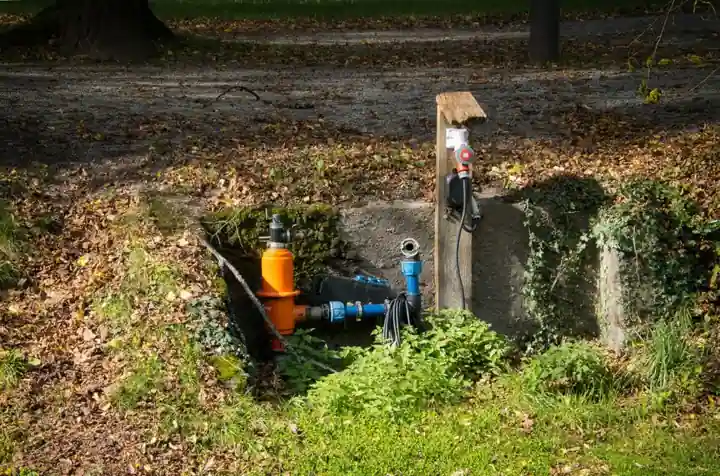
An electroslag pressure welder is the wrong primary tool for plumbing-pipe installation, because the process is engineered to forge vertical reinforcing bars 16-40 mm end-to-end inside a flux-filled mold, not to fuse 0.065-0.25 in (1.65-6.35 mm) wall tube carrying potable or process water [S1][S3].
Plumbing-installation welding lives in a separate operating envelope: shop-fabricated stainless and copper-nickel tubing is dominated by TIG (GTAW) for slag-free, oxide-controlled beads, and field tie-ins on carbon-steel risers above 4 in (101.6 mm) are dominated by MMA (SMAW) with E6010/E7018, with 130-250 A output typical [S2]. EPW belongs on the column-cage line, not the pipe truck.
Process Boundaries: Why EPW Cannot Be Retrofitted to Pipe
EPW runs an arc that converts granular flux into a conductive molten slag pool at roughly 1900 degrees C, then drives the upper bar downward under upset pressure to forge a bar-to-bar joint and expel a visible weld collar [S3]. The system needs gravity, a flux-filled mold, bar diameters in the 16-40 mm band, and a vertical or near-vertical gradient within roughly 4:1, all preconditions a copper or stainless water line cannot meet [S1].
Thin-wall tube in the 0.065-0.25 in (1.65-6.35 mm) range cannot hold a slag bath: plate below roughly 25 mm is documented as the lower bound where the slag pool can be reliably established, and welding thinner stock on standard ESW equipment is mechanically impractical [S4]. The slag-bath heating principle that makes EPW fast on column steel is exactly what disqualifies it on 1.65-6.35 mm pipe walls.
Where the Family Mistake Originates
Procurement confusion usually starts with the name: electroslag pressure welding (rebar) and electroslag welding (plate, ESW) share a slag-bath heating principle, but EPW adds axial upset pressure to forge a bar-to-bar joint while ESW deposits consumable wire between water-cooled copper shoes [S1][S3]. Neither variant is a pipe-welding process, and both are restricted to low-carbon steel in a narrow structural-grade band rather than the stainless, copper-nickel, and thin-wall carbon-steel grades a plumbing scope draws on [S4].
The two rebar/structural codes that govern EPW and ESW also signal the wrong application: JGJ 18-2012 and AWS D1.4/D1.4M for rebar, AWS D1.5 Bridge Welding Code for plate, all built around structural member acceptance, not ASME B31.3 process-piping or ASME B31.9 building-services hydrostatic-test criteria [S1]. Specifying an EPW head to make up a stainless potable line would fail inspection on the first joint for reasons unrelated to operator skill.
Criteria-Based Comparison: EPW vs TIG vs MMA for Plumbing Tie-Ins
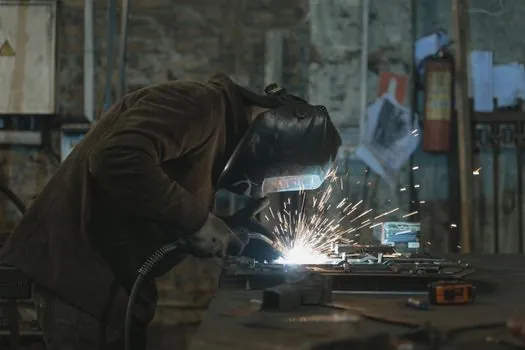
A spec-driven comparison on the four criteria that decide a plumbing-welder purchase makes the fit explicit.
EPW (rebar electroslag pressure welder): bar diameter 16-40 mm, wall thickness not applicable (solid bar), orientation vertical only within 4:1 gradient, codes JGJ 18-2012 and AWS D1.4/D1.4M, primary use vertical column rebar splicing in cast-in-place piers and pile caps [S1][S3].
TIG (GTAW) for plumbing: pipe diameter 0.5-4 in (12.7-101.6 mm), wall thickness 0.065-0.25 in (1.65-6.35 mm) for residential and light-commercial, orientation all-position, DCEN on steel, output 130-200 A on stainless tube, primary use shop-fabricated stainless and copper-nickel potable lines [S2].
MMA (SMAW) for plumbing: pipe diameter above 4 in (101.6 mm) for carbon-steel risers, wall thickness 3.2-5.0 mm electrodes at 60-240 A, DCEP on cellulosic 6010 or low-hydrogen 7018, primary use field tie-ins and wet-trench work where shielding gas is unavailable [S2].
MIG (GMAW): generally rejected for sanitary stainless plumbing because the spray-transfer arc and argon-CO2 shielding mixture are not approved for clean-service lines, even though the same platform works on structural carbon steel [S2].
Acceptable Plumbing-Welder Specifications
Any candidate machine for a plumbing truck should clear four numeric floors before purchase, all drawn from the 2026-09-01 pipe-fitter reference: amp envelope 130-250 A, thickness capability at or above the 0.25 in (6.35 mm) pipeline reference floor, 200 A at 60 percent duty cycle or higher, and dual-voltage 110/220 V input to cover basement 120 V outlets and rooftop 240 V three-phase or single-phase [S2]. Inverter-based MMA platforms under 25 lb (11.3 kg) are the practical service-truck default because they pair with a 3-4 kW portable genset and add hot-start plus arc-force, the two features that most directly reduce re-work on rusty black-steel pipe.
For a truck running TIG on stainless, the spec also has to include a flowmeter and a purge dam for backing gas: oxygen ingress above 50 ppm inside the root pass tints the bead and fails the hydrostatic test, which is a much tighter cleanliness gate than any structural rebar code imposes [S2].
When EPW or Stud-Type Processes Can Show Up on a Plumbing Job
There is one place in a plumbing scope where a welder from the EPW/ESW family is genuinely useful, and it is not on the pipe itself: embedding shear studs, pipe-rail anchors, or equipment-base plates into structural steel before the pipe hangers are hung. For that task a stud welder is the correct tool, and the same spec discipline that rejects EPW on tube applies to stud selection, as detailed in the stud-welder guidance for plumbing tie-in work Stud Welder Selection for Plumbing Installation and the CD-versus-drawn-arc decision map for interior finishing Stud Welder Selection for Interior Finishing. [S1]
If a procurement engineer is staring at a column cage going up beside the mechanical room, EPW is the right call for the column, but the rebar welder and the plumbing welder live on two separate trucks with two separate spec sheets. Splitting them keeps the electroslag pressure welder inside its JGJ 18-2012 / AWS D1.4 envelope, and keeps the TIG welder on stainless and the arc welder platform on carbon-steel risers where their amp and polarity limits actually match the wall thicknesses being joined.
Selection Decision: Reject EPW, Specify 130-250 A TIG or MMA
Engineers specifying a plumbing-installation welder should reject any EPW or ESW platform at the quotation stage: its operating envelope (16-40 mm solid bar, vertical orientation, 25-300 mm plate) and its code path (JGJ 18-2012, AWS D1.4, AWS D1.5) do not match ASME B31.3 or B31.9 service conditions on 0.065-0.25 in (1.65-6.35 mm) wall tube [S1][S2][S4]. The acceptance criteria are simple, a 200 A inverter at 60 percent duty cycle with 110/220 V dual input for general plumbing, a TIG add-on with flowmeter and purge dam if stainless is in the scope, and a 200-250 A stick envelope with DCEP and low-hydrogen rod capacity for carbon-steel risers above 4 in (101.6 mm) [S2].
The replacement trigger is just as simple: any unit that cannot sustain 200 A at 60 percent duty cycle, or that lacks dual-voltage input, fails the plumbing-truck spec before the first joint is attempted. Polarity reversal is a hard fault on either process, and any candidate that does not label DCEN for TIG and DCEP for SMAW should be returned to the vendor.
Trackable signal for the next procurement cycle: watch whether dual-voltage 110/220 V inverter MMA platforms under 25 lb (11.3 kg) retain their 200 A / 60 percent duty-cycle rating in the 2026-2027 catalog updates, and whether any compact EPW head under 20 kg is ever offered with a pipe-clamp head and an ASME B31.3 weld-procedure qualification. The first would lock in the current service-truck default, the second would change the recommendation in this article. Until either happens, an electroslag pressure welder belongs on the column-cage line, not the pipe truck.