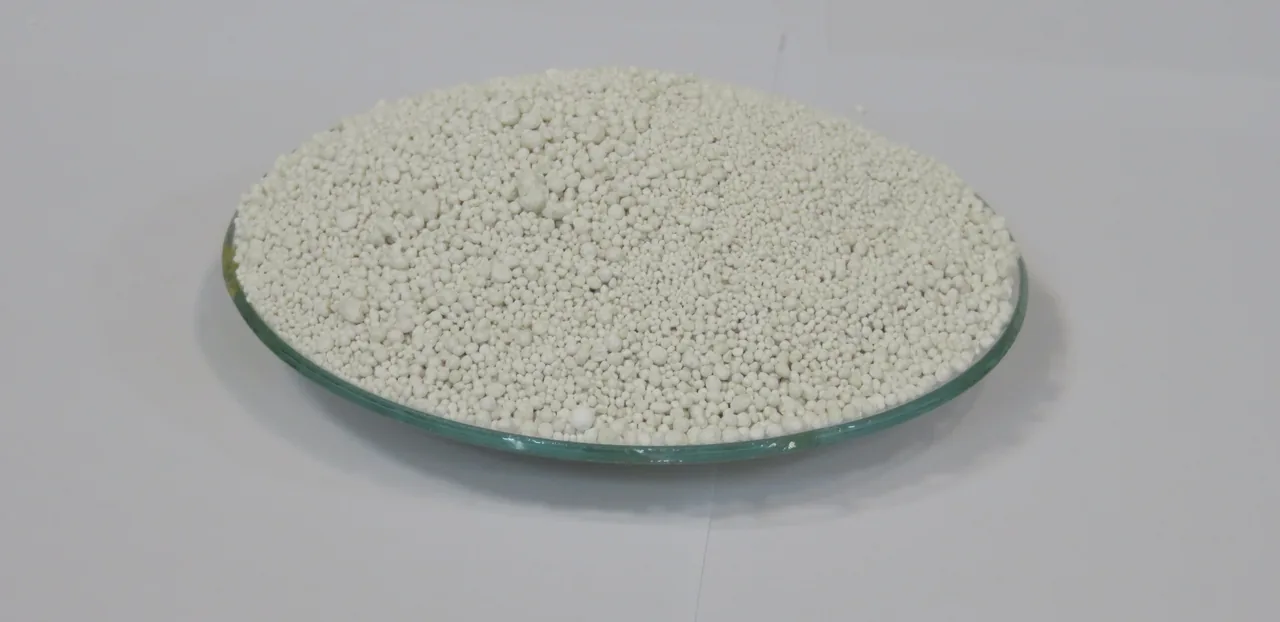
A disinfectant is a chemical agent or preparation that destroys, inactivates or removes pathogenic microorganisms on inanimate surfaces, equipment and water, so that they no longer transmit infection. It is bought as a concentrated or ready-to-use liquid, a powder, a tablet or granules, and it is used after cleaning, because soil consumes the active ingredient before it reaches the organism. The active ingredients come from a few chemical families: oxidising agents such as chlorine compounds, chlorine dioxide, hydrogen peroxide and peracetic acid, and non-oxidising agents such as alcohols, aldehydes, quaternary ammonium compounds, biguanides, iodine compounds, acids and alkalis. Each family has its own spectrum, speed and price in corrosion, residues and worker exposure.
The engineer who specifies a disinfectant settles five questions at once. Which organisms must be killed, and what proof is there that they are, at the dilution and contact time that will actually be used. What the product does to the plant it touches: steel, seals, plastics and membranes. How the use solution is made, dosed, applied and measured so that the same concentration reaches the surface every time. What it does to the people who handle it and to the effluent it enters. Which registrations and test reports the plant, its customers and its auditors will ask to see. The answers differ between a brewery, a water works, a hospital ward and a pharmaceutical plant.
A disinfectant purchase is settled by five things. The first is the claim with its test behind it: the organism groups named, the standard passed, and the dilution and contact time at which it passed. The second is the active class against the soil, the surface and the residue limit: oxidising or non-oxidising, rinse or no rinse. The third is the materials of the plant the product will touch and the dosing equipment that will carry it. The fourth is the exposure of the workers and the fate of the effluent. The fifth is the registration for the exact use. All five answered, disinfection becomes a repeatable step.
Chapter 1 / 06
What a Disinfectant Is and How It Works
Disinfection brings the number of viable microorganisms on a surface, a piece of equipment or a volume of water down to a level that no longer transmits infection, and a disinfectant is the chemical that does it. The word says inanimate: the same chemistry applied to skin or a wound is an antiseptic, an antibiotic works inside the patient, and a chemical built into a food or a medicine to stop it spoiling is a preservative; both lie outside this page. Disinfection is also a step after cleaning, not a substitute for it. Grease, protein and biofilm shield bacteria and react with the active ingredient, so the surface is washed, rinsed and drained before the disinfectant acts, in the concentration and for the time that its test reports cover.
Every disinfectant kills by attacking structures a microorganism cannot live without: its wall and membrane, its proteins and its nucleic acids. Oxidising agents, the chlorine compounds, chlorine dioxide, hydrogen peroxide, peracetic acid and ozone, take electrons from the lipids and proteins of the cell envelope and the cell content; the stronger the oxidiser, the faster the electrons transfer and the faster the cell is inactivated. Non-oxidising agents act in other ways: alcohols and quaternary ammonium compounds disrupt the cell membrane, aldehydes react with the proteins of the cell, biguanides damage the membrane of sensitive bacteria, and iodine compounds oxidize cell constituents and bind to proteins. The route an agent takes decides which organisms survive it, and that is the origin of the spectrum.
A spectrum claim names the organism groups a product has been shown to kill, and every claim is proven separately. Bactericidal means vegetative bacteria are killed; fungicidal and yeasticidal mean molds and yeasts are killed and not merely held in check; virucidal means viruses are inactivated; sporicidal means bacterial spores are killed; a tuberculocidal claim covers the mycobacteria, which resist many agents that kill ordinary bacteria, and it is proven on its own. EN 14885 lists the groups a European claim can cover: vegetative bacteria including mycobacteria and Legionella, bacterial spores, yeasts, fungal spores and viruses including bacteriophages. The activity level of a product is the sum of the claims it holds, and a sporicidal claim is usually bought with a higher concentration, a longer contact time or a more corrosive chemistry.
Six conditions decide whether a disinfectant performs. Concentration and contact time work as a pair: a weaker solution needs longer, and a dose doubled to save time attacks the plant and the operator too. Temperature speeds up most disinfectant reactions. pH decides which chemical species is present, and with it how fast the product reacts and how much it corrodes. Organic load is the factor most often underestimated: proteins, sugars and biofilm consume the active ingredient before it reaches the organism, and where the soil is heavy a hot caustic wash is the correct routine, not a stronger disinfectant. Hard dilution water changes the activity of surfactant-based products and leaves scale, so water quality belongs in the specification.
A disinfectant is a formulation, not a drum of active ingredient. It arrives as a concentrate or ready to use, as a liquid, a powder, a tablet or granules, and the rest of the recipe decides whether the active ingredient survives storage and reaches the surface. Peracetic acid products are a stabilized equilibrium mixture of peracetic acid, water, acetic acid and hydrogen peroxide, and commercial preparations carry a stabiliser such as a diphosphonic acid or dipicolinic acid to slow decomposition. Surfactants carry the solution across a surface and help it wet a biofilm. The safety data sheet lists every ingredient the operator will breathe, spill and dilute, and the expiry date is the date by which the stated assay still holds. A product used past that date is under-dosed without anyone noticing.
In a plant the disinfectant is the last chemical step of a cleaning and disinfection cycle. A tank, a pipe circuit or a filler is rinsed, washed with an alkaline or acidic cleaner, rinsed again until the return water runs clear, and only then is the disinfectant solution introduced. It is circulated, sprayed, fogged, filled, wiped or used to soak for a measured time, at a measured concentration and often at a measured temperature, then drained and rinsed off or left to drain dry, as its residue limits require. In a food plant the step is a control point in the hazard analysis, and in a pharmaceutical plant it is a validated step, so the record of concentration, time and temperature of each cycle is the evidence that the disinfection took place.
Chapter 2 / 06
Disinfectant Types and Active Classes
The first split is between oxidising and non-oxidising agents. Oxidising agents take electrons from the cell, so they act fast, leave little residue and corrode or bleach what they touch. Chlorine-releasing compounds are the long-standing choice: sodium hypochlorite as a solution, calcium hypochlorite as a solid, and hypochlorite made on site from brine by an electrochlorinator. Their oxidation capacity, as tabulated by USDA in 2000, is 1.36 electron-volts for sodium hypochlorite and 1.57 electron-volts for chlorine dioxide. Chlorine dioxide is a gas dissolved in water at the point of use, because it cannot be stored or transported as a solution of useful strength, so a chlorine dioxide generator makes it on site from chlorite or chlorate precursors.
Hydrogen peroxide and the peracids form the second oxidising family. Hydrogen peroxide alone is the milder of the two, and peracetic acid is rated above it in antimicrobial activity by the 2000 USDA review, which places its oxidation capacity at 1.81 electron-volts. Peracetic acid products are non-foaming and non-tainting, break down to acetic acid and oxygen, and are used where a rinse is unwelcome: cleaning-in-place circuits, spray-balls and soak tanks. The equilibrium mixture made directly from its two raw materials reaches up to 15% peracetic acid with up to 25% hydrogen peroxide and up to 35% acetic acid. Ozone, at 2.07 electron-volts, is made where it is used, by an ozone generator, and leaves no lasting residual in the water.
Non-oxidising agents are chosen when the plant cannot tolerate an oxidiser or when a lasting film of activity is wanted. Alcohol-based products, ethanol or isopropanol with water, act within seconds on vegetative bacteria and many viruses, evaporate without residue and are used on wipes and small parts; they do not kill spores and the vapor is flammable. Aldehyde-based products, glutaraldehyde and formaldehyde releasers, have the widest spectrum, spores included, at the price of slow action, a sensitising hazard and tight control of the air the operator breathes. Quaternary ammonium compounds are cationic surfactants that kill vegetative bacteria and leave the longest residual activity of the common sanitizers, as the 2000 USDA review notes; foam, soil and hard water limit them to cleaned surfaces.
Three smaller classes complete the non-oxidising side. Biguanide products are membrane-active polymers, polyhexamethylene biguanide among them, that attach to the bacterial cell membrane and disrupt it; they appear in low-foam surface disinfectants and in some process water systems, and anionic soaps and hard water neutralise them. Iodine-based products are iodophors, iodine held by a carrier that releases it in acid solution; they act on vegetative bacteria, yeasts and many viruses, and they stain the surface amber. Acids and alkalis sit at the two ends of the pH scale, and some acid products are sold as a combined descaler and disinfectant for plants that alternate caustic and acid cleaning.
The boundaries of the product are worth drawing exactly. A chemical reagent such as ammonium chloride is a single compound bought to an assay for a laboratory, with no use dilution, no contact time and no microbicidal claim, and it is not a disinfectant; ammonium salts put into a hypochlorite tank react to form chloramines. A UV sterilizer is equipment, not chemistry: ultraviolet light inactivates organisms by physical means and leaves no residual, and the European definition of a biocidal product excludes action by mere physical or mechanical means. A disinfectant sits between the cleaning step that removes the soil and the rinse, drain or neutralisation that follows it, and between the dosing system that makes its solution and the effluent plant that receives the run-off.
Chapter 3 / 06
Key Specification Parameters and Standards
The datasheet and the label of a disinfectant carry fewer lines than a machine's, and most sit in the table below. The first block states what the product is: the active ingredient and its content, the form, the shelf life and the storage temperature. The second block states what it does: the organism groups it is claimed against, the standard each claim was tested to, and the dilution, contact time and temperature at which the test passed. The third block states what it may touch: the approved uses, the residue limits and the materials of construction. A 5% equilibrium peracetic acid product is the worked example, and its figures are typical of that class.
In Europe EN 14885 is the umbrella: it names the European standards a product has to conform to in support of each microbicidal claim, it lets a user assess the maker's information against the intended use, and it is updated as new test standards appear. Beneath it sit the suspension tests for the food, industrial, domestic and institutional areas, where disinfection that is medically indicated is excluded: EN 1276 for bactericidal activity and EN 1650 for fungicidal or yeasticidal activity, both phase 2, step 1, in which the product, at 80% or less of its use concentration because the test organisms and the interfering substance dilute it further, meets a standard suspension of organisms in hard water. EN 13697 is the surface or carrier test of the same family for the same areas, a quantitative non-porous surface test without mechanical action, phase 2, step 2.
Approvals come in three layers. In the European Union a disinfectant is a biocidal product, authorised only if its active substances are approved for the product type: product-type 2 for surfaces, equipment and water not used for food, feed or drinking, product-type 3 for animal housing and transport, product-type 4 for equipment, pipework and surfaces touching food or feed, and product-type 5 for drinking water; it must also be sufficiently effective and free of unacceptable effects itself or through its residues on health, via drinking water, food, feed or air. In the United States peracetic acid is registered as an EPA Section 3 pesticide; a 2000 USDA review records this and quoted 80 ppm of peracetic acid in produce wash water and 200 ppm on a food-contact surface. The third layer is purity: EN 901 sets the characteristics, requirements and test methods for sodium hypochlorite used to treat drinking water.
Parameter
Typical value
What it decides
Active content, peracetic acid concentrate
5% in an equilibrium mixture
Volume of product per liter of use solution
Use dilution, pipes and hoses, 5% product
3 to 5 mL per liter
Strength that fills cleaned mains for several hours
Use dilution, spray-ball, 5% product
10 to 20 mL per liter
Strength sprayed on large vessels; no residual afterwards
Ceilings never exceeded; other limits 8-hour time weighted averages
Ventilation, detection and respiratory protection in the dosing area
Chapter 4 / 06
Selection and Duty Calculations
Selecting a disinfectant is a sequence of eliminations. The organism and the residue limit remove some classes, the materials of the plant remove others, and what is left is ranked by contact time, cost per cubic meter of use solution and worker exposure. The arithmetic below turns a label rate into a dose and a pump size.
Selection starts with the claim and the conditions attached to it. The organism groups named on the label must include the ones the plant's hazard analysis names, and the test report must have run at the dilution, contact time and temperature the plant can hold, in water of the hardness the plant has. A report earned in soft, warm water says little about a plant that runs cold, hard well water. The approval must cover the use as well: a product authorised for surfaces in public areas is not by that fact authorised for a tank that holds milk, and a drinking water use needs a product approved for drinking water and a chemical of the purity that use demands.
Oxidising agents are the default where soil is light and the plant is stainless steel. A peracetic acid product can be left to drain without a rinse, and it foams not at all, which matters in a cleaning-in-place circuit. Non-oxidising agents earn their place on surfaces an oxidiser would ruin, where a residual film is wanted between cleanings, or where the effluent plant cannot take an oxidiser. Spore control narrows the field to peracetic acid, chlorine at high strength, chlorine dioxide, ozone or an aldehyde, and the aldehyde is chosen only where the air can be controlled. The last filter is the residue: a product that must be rinsed off a food-contact surface is the wrong choice for a plant with no rinse stage.
Use directions issued in 2018 for one 5% equilibrium product give the rates worked through here: 3 to 5 mL per liter to fill cleaned mains and hoses, 10 to 20 mL per liter through a spray-ball on large vessels, and 3 to 10 mL per liter in a steeping tank for small items. The active concentration is the rate multiplied by the strength. One mL per liter is one part in a thousand, so 3 to 5 mL of a 5% product per liter is 150 to 250 ppm of peracetic acid; the spray-ball rate gives 500 to 1,000 ppm and the soak rate 150 to 500 ppm. A batch follows the same way: a 5,000 liter (1,321 US gallon) vessel filled at 3 to 5 mL per liter takes 15 to 25 liters of product.
Getting that quantity into the water is the dosing decision. Manual dosing by measuring jug suits a single tank filled by hand. A dilution station, fed by a metering pump or a diaphragm pump drawing from an IBC tank, draws concentrate and water in a set ratio and delivers a use solution to hose stations; a peristaltic pump suits small flows and liquids that off-gas. In-line injection doses into a flowing main through a static mixer, with the pump paced by the flow meter so that the dose holds when the flow changes. For a stream of 20 cubic meters per hour (88 gallons per minute) dosed at 3 mL per liter, the pump must deliver 60 liters per hour (about 16 gallons per hour).
Contact time is the other half of the dose. A rate quoted for several hours of contact cannot be met by a spray that runs off in seconds; the spray-ball owes its higher rate to its shorter time. The cycle is planned backwards from the production schedule, so that fill, hold and drain all fit. The concentration at the far end of the circuit is what proves the dose arrived, so a sampling valve there feeds a test strip or a titration, an ORP meter or a pH meter gives a continuous signal for oxidising or acid products, and a residual chlorine analyzer does the same for hypochlorite in water. Cost is compared per cubic meter of use solution at the label rate, with rinse water and effluent load counted in.
Duty
Choice and typical rate
What to check
Cleaned pipe circuit, overnight hold
Peracetic acid, 5% product at 3 to 5 mL per liter
Full draining and venting; several hours of contact
Large vessel, short cycle
Peracetic acid by spray-ball at 10 to 20 mL per liter
No residual protection: treat before use or keep sealed
Small parts and fittings
Peracetic acid soak at 3 to 10 mL per liter
Full submersion; drain well; no rinse needed
Drinking water and potable water tanks
Sodium hypochlorite conforming to EN 901
Purity, safe handling, residual and byproduct limits
Application, Storage, Maintenance and Typical Failure Modes
A disinfectant has no moving parts of its own, and almost everything that goes wrong with it goes wrong in the equipment around it: the store, the dilution station, the dosing line and the surface it has to reach. The life of a batch runs from the delivery bay to the drain.
Storage and handling decide whether a 5% peracetic acid product is still strong when it is used. Its 2018 directions keep it cool, out of direct sunlight, in the original container and sealed when not in use, with a maximum storage temperature of 30 degrees Celsius (86 degrees Fahrenheit) and a recommended 15 degrees Celsius (59 degrees Fahrenheit); its shelf life is 12 months from the date of manufacture at that temperature. The store segregates disinfectants from acids, bases, other oxidising and reducing agents and combustible material, and products are never mixed. The concentrate irritates skin, eyes, mucous membranes and respiratory tract, so it is decanted only with ventilation equipment running, a face shield over safety glasses, safety gloves and protective clothing, a respirator where mist forms, and an eye wash station within reach of the dilution station.
The dilution station is built from the materials the chemistry allows. For peracetic acid the recommended materials in contact are stainless steel 304L and 316L, PTFE, PVDF and glass; soft PVC and polythene serve for short periods only, and brass, bronze, copper, iron, lead, manganese, nickel, silver and zinc are excluded from transfer pumps and pipes, because these catalytic metals accelerate decomposition to oxygen, gas and heat. A PTFE gasket seals each joint, and contact of the concentrate with natural and synthetic rubbers, EPDM rubber and fluororubber included, is avoided. The line rises from the pump to the injection point so that gas cannot collect there, and a low level in the day tank is an alarm condition, not a detail.
Application follows the label. A terminal disinfectant such as peracetic acid needs no rinse when the items are well drained, because what remains breaks down to acetic acid and oxygen; a spray treatment works almost immediately and affords no residual protection against later contamination, so a vessel is disinfected directly before use or kept tightly sealed; and the solutions are made up freshly. Fogging is the application that needs the most care, because the operator must avoid all eye and skin contact and must not inhale the fog. What runs to the effluent plant is neutralized, because a residual oxidant kills the biomass of a membrane bioreactor and attacks reverse osmosis stages, which is why an activated carbon filter often stands in front of them.
What is measured in a disinfection cycle is concentration, time and temperature. A test strip or a photometric reading at a sample point confirms the concentration of the use solution at the far end of the circuit; an ORP meter gives a continuous signal for an oxidising product, a pH meter for an acid product, and a residual chlorine analyzer the residual in a water main. A temperature sensor in the return line holds the third condition, and the three are logged for the cycle record. The dosing station is maintained like any chemical feed: the metering pump is calibrated by a draw-down test, the injection fitting is inspected for crystallised product, and the suction strainer and the tube are replaced on a schedule, because a pump that has lost its prime delivers water and reports nothing.
Symptom
Likely cause
Action
Solution tests below the label rate
Stored above 30 degrees Celsius (86 degrees Fahrenheit) or past its shelf life
Store at 15 degrees Celsius (59 degrees Fahrenheit); rotate stock by manufacture date
Day tank swells, gas at the pump
Catalytic metal in a wetted part: decomposition to oxygen, gas and heat
Replace with 316L steel, PTFE or PVDF; vent the tank
No active at the far end of the circuit
Solution made up the day before, or the pump has lost its prime
Make up freshly; calibrate the metering pump by draw-down
Vessel fails a swab after spraying
Recontamination after treatment; spray leaves no residual
Disinfect directly before use or keep the vessel sealed
Dose vanishes although the pump runs
Soil or biofilm consuming the active ingredient
Clean with hot caustic, then disinfect a clean surface
Irritation or mist during fogging
Fog reaching eyes, skin or lungs
Ventilate, stop, wear respirator, face shield and protective clothing
Auditor rejects the disinfection step
No test report at the dilution and time used, or no authorisation
Obtain EN 1276 or EN 13697 reports at the stated rate; check the product type
Effluent biomass dies after a discharge
Residual oxidant reaching the biological stage
Neutralise or dilute; hold and batch the discharge
Weak action and scale under a quaternary product
Hard dilution water
Softened water; acid wash to remove scale
Chapter 6 / 06
Industry Applications and Procurement Checks
Food and beverage plants are the home ground of peracetic acid and chlorine products. A brewery, a dairy or a soft-drink plant fills cleaned mains, hoses and tanks with peracetic acid solution; a meat or salad plant sprays it on conveyor frames, tables and a crate washer, or doses it into recirculated flume water, where the 2000 USDA review noted its use as a disinfectant for fruits, vegetables, meat and eggs and as a stripper of biofilms; a canning line soaks small parts in a steeping tank overnight. Agriculture and livestock farming use the same products on animal housing, which is product-type 3 in the European rules, the materials and surfaces associated with the housing or transport of animals, disinfected between batches by spraying or fogging after cleaning.
Pharmaceutical plants, hospitals and water works use the same chemistry for different reasons. A pharmaceutical plant sanitises its purified water loop between batches and validates the step with records of concentration, time and temperature. Hospitals disinfect floors, walls, benches and equipment with products approved for public areas, which is product-type 2. Water works dose sodium hypochlorite conforming to EN 901, and some use chlorine dioxide or ozone; in the United States the disinfectants and disinfection byproducts rules apply to community and non-transient non-community systems that add a disinfectant, including those serving fewer than 10,000 people, and limit the byproducts the disinfectant forms with naturally occurring materials: trihalomethanes, haloacetic acids, chlorite and bromate. Cooling water systems, swimming pools and the ballast water treatment systems of ships are further users.
Documentation turns a disinfectant from a purchase into a controlled step. The file for each product holds the safety data sheet, the directions for use with the registration, the test reports for every claimed organism group at the use dilution, the certificate of conformity to a purity standard, and, in the European Union, the authorisation for the product type. The effluent side is documented as well: a disinfectant that reaches the biological stage unneutralised kills the biomass that treats the plant's waste. Under the OSHA air contaminants standard a limit marked as a ceiling may at no time be exceeded and any other limit is an 8-hour time weighted average in a 40-hour working week.
The purchase order for a disinfectant states the use, the claim, the rate and the conditions, and it asks for the documents that prove them. State the surface or water to be treated, the soil that precedes it, the organism groups that must be covered and whether spores or mycobacteria are among them, the water hardness and the temperature the plant can hold. Ask for the test reports behind each claim, EN 1276, EN 1650 or EN 13697, at the dilution and contact time to be used, and for the registration or authorisation of the product for that use: the European product type, the United States registration, and a conformity certificate to EN 901 for any hypochlorite that treats drinking water. State the active content and the form, concentrate or ready to use, the pack size that suits the dosing station, the shelf life and the storage the plant can provide. Ask for the safety data sheet, the occupational exposure limits, the list of materials in contact that are approved and excluded, and the residue limit and rinse requirement of the product in food-contact service.
FAQ
How does a disinfectant kill microorganisms?
A disinfectant attacks structures a cell cannot live without: its wall and membrane, its proteins and its nucleic acids. Oxidising agents, the chlorine compounds, peracetic acid and ozone among them, take electrons from the lipids and proteins of the cell, and the stronger the oxidiser, the faster the cell dies. Non-oxidising agents act in other ways: alcohols and quaternary ammonium compounds disrupt the cell membrane, aldehydes react with cell proteins, biguanides damage the membrane and iodine compounds oxidize cell constituents. Spores and mycobacteria resist many agents, which is why every claim needs its own test.
What do bactericidal, virucidal, fungicidal and sporicidal mean?
Each word names a group of organisms a product has been shown to kill, and each is proven by its own test. Bactericidal covers vegetative bacteria, fungicidal and yeasticidal cover molds and yeasts, virucidal covers viruses and sporicidal covers bacterial spores; a tuberculocidal claim covers mycobacteria. EN 14885 lists the groups a European claim can cover: vegetative bacteria including Legionella, bacterial spores, yeasts, fungal spores and viruses including bacteriophages. A product labeled bactericidal has proven nothing about spores, and a sporicidal claim usually needs a higher concentration or a longer contact time.
Which standards apply to disinfectants?
In Europe EN 14885 is the umbrella that names the standards behind each microbicidal claim. EN 1276 tests bactericidal activity and EN 1650 fungicidal or yeasticidal activity in a suspension test for the food, industrial, domestic and institutional areas, phase 2, step 1, in which the product may be tested at 80% or less of its use concentration; EN 13697 is the surface test without mechanical action, phase 2, step 2. Approvals too: in the European Union a product is authorised by product type, 2 for surfaces, 3 for animal housing, 4 for food and feed areas and 5 for drinking water.
How is a disinfectant diluted and dosed?
The active concentration is the label rate multiplied by the strength. Use directions issued in 2018 for one 5% peracetic acid product give 3 to 5 mL per liter to fill cleaned mains and hoses for several hours, 10 to 20 mL per liter through a spray-ball on large vessels and 3 to 10 mL per liter for soaking small items; 3 to 5 mL of a 5% product per liter is 150 to 250 ppm. Dosing is by hand into one tank, by a dilution station with a metering pump, or by in-line injection through a static mixer paced by the flow meter.
How should a disinfectant be stored and handled safely?
Storage decides whether the product works. Directions issued in 2018 for one 5% peracetic acid product keep it cool and out of direct sunlight, in its original container and sealed, with a maximum storage temperature of 30 degrees Celsius (86 degrees Fahrenheit) and a recommended 15 degrees Celsius (59 degrees Fahrenheit), and its shelf life is 12 months from the date of manufacture. Concentrate is decanted only with ventilation running, wearing a face shield over safety glasses, safety gloves and protective clothing, and with a respirator where mist forms; an eye wash station and a first aid kit stand within reach. Brass, copper and iron are kept out of the pumps and pipes, because they speed its decomposition.
Which disinfectants are used in food plants and drinking water?
Peracetic acid serves cleaned circuits, tanks and soak tanks because it is non-foaming, non-tainting, needs no rinse when items drain well and breaks down to acetic acid and oxygen; the 2000 USDA review noted it as a sanitizer for food-contact surfaces, a disinfectant for produce, meat and eggs, and quoted residue limits of 80 ppm in produce wash water and 200 ppm on a food-contact surface. Drinking water is disinfected with sodium hypochlorite, chlorine dioxide or ozone, and the United States rules limit the byproducts formed: trihalomethanes, haloacetic acids, chlorite and bromate.
What drives the cost and lead time of a disinfectant?
Cost is driven less by the price of the active ingredient than by the rate at which it is used. A product dosed at 3 to 5 mL per liter to fill a circuit uses at most half of what the same product uses through a spray-ball at 10 to 20 mL per liter. Concentrates cost less per cubic meter of use solution than ready-to-use products but need a metering pump and a dilution station; tablets are cheap to ship and easy to dose. Lead time is driven by the registration for the use, by shelf life, by pack size and by delivery.