Industry News

Industry News · Page 247

Switching Power Supply Selection: A Spec-First Buyer's Map

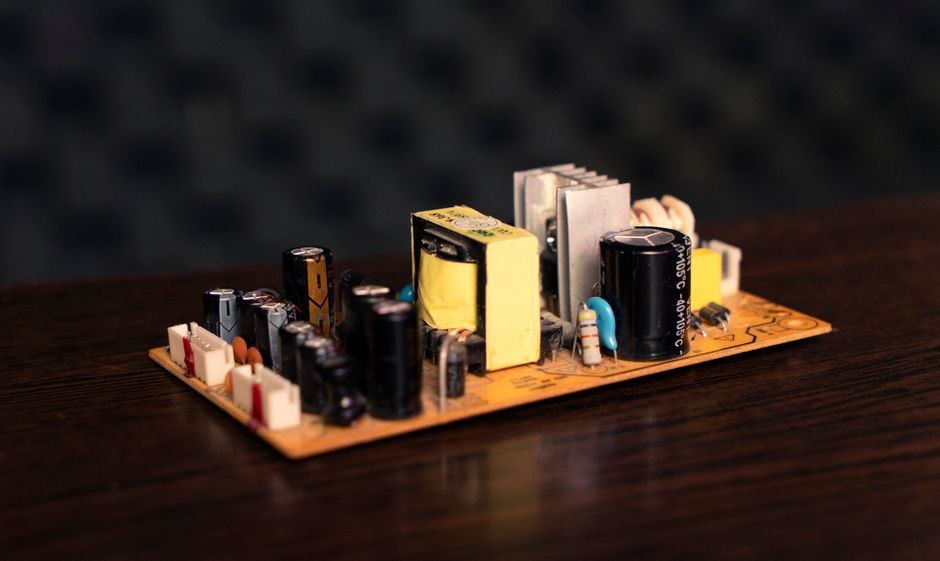
Switching power supply selection hinges on load wattage, output voltage, form factor, certification scope, and derating headroom. Match the converter topology to the duty cycle, then validate isolation, efficiency, and inrush before committing to a vendor.

· ELECTRICAL & AUTOMATION · 43 min read

Proximity Sensor Selection Criteria: Spec-First Decision Map for 2026

Proximity sensor selection hinges on four hard gates: target material (ferrous, non-ferrous, plastic, liquid), sensing range in mm, output protocol (PNP/NPN, IO-Link), and IP/Ex rating for the duty environment. Pick wrong on any one and you get false triggers, missed counts, or a dead unit within a

· ELECTRICAL & AUTOMATION · 27 min read

Switch-Disconnector vs Circuit Breaker: Spec-Driven Selection Map

Switch-disconnectors carry, make and break rated load current and withstand fault current for a limited duration, while circuit breakers actively interrupt overcurrent and short-circuit events. Choose switch-disconnectors for isolation and load switching under normal service; specify circuit breaker

· ELECTRICAL & AUTOMATION · 44 min read

Switch-Disconnector Selection: Spec Gates, Utilization Category, and Coordination Logic

Switch-disconnector selection in 2026 hinges on four gates: rated operating voltage (Ue up to 690 V typical for LV), uninterrupted current Iu, utilization category (AC-22/AC-23), and short-time withstand (Icw). Match Iu to feeder load with 25% headroom, then validate Icw against the upstream protect

· ELECTRICAL & AUTOMATION · 40 min read

Surge Protective Device Price and Cost Guide 2026

Surge Protective Device (SPD) prices span roughly US $2.40 to US $120 per piece on 2026-08-04, with Type 1+2 DIN-rail units at US $6-13, Class I T1 at US $25.50-29, and signal-line RJ45 SPDs at US $22-120. Cost drivers are discharge capacity (kA), Type class, certification tier, and MOQ volume.

· ELECTRICAL & AUTOMATION · 42 min read

SPD vs Switch-Disconnector: Function, Spec, Decision

Surge Protective Devices (SPDs) clamp transient overvoltages like lightning-induced spikes; switch-disconnectors isolate loads for safe maintenance. Use SPDs at service entrances and sensitive equipment, and switch-disconnectors as visible-break isolation — they are complementary, not interchangeabl

· ELECTRICAL & AUTOMATION · 56 min read

Terminal Block Selection: Six Spec Gates That Decide Fit

Terminal block selection hinges on six hard spec gates: rated voltage/current, wire cross-section range, pitch, connection technology, and matching accessories — with DIN-rail screw clamps covering 95% of cabinet wiring. For panel builders, matching the CLIPLINE-style accessory ecosystem (jumpers, t

· ELECTRICAL & AUTOMATION · 41 min read

Circuit Breaker vs Contactor: Spec-First Selection Map

A circuit breaker and a contactor are NOT interchangeable. A circuit breaker is a protective device that opens automatically on overload or short-circuit, while a contactor is a switching device designed for frequent load make/break under normal operating current. Use a circuit breaker for protectio

· ELECTRICAL & AUTOMATION · 41 min read

Remote I/O Module vs Industrial Ethernet Switch: Spec-Driven Selection

Remote I/O modules convert field I/O into a network protocol, while industrial Ethernet switches simply forward Ethernet frames between devices; a remote I/O module is chosen when you need to expose discrete/analog signals to a PLC, and an industrial switch is chosen when you already have Ethernet d

· ELECTRICAL & AUTOMATION · 57 min read

Remote I/O Module Selection Guide 2026: Variant, Protocol, and Duty-Cycle Spec Map

Remote I/O modules in 2026 split into four practical variants — backplane-style block I/O, IP67 distributed I/O, fiber-mirrored teleprotection I/O, and safety-rated interlock I/O — priced from roughly $130 for a 16-channel brick to $754+ for utility-grade fiber units. Pick by field environment, bus

· ELECTRICAL & AUTOMATION · 45 min read

Fieldbus Gateway vs Remote I/O Module: Protocol-Bridge or I/O-Density Decision

Fieldbus gateway and remote I/O module both bridge field devices to a higher-level network, but a gateway translates between different industrial protocols while a remote I/O module maps discrete/analog I/O onto one fieldbus. Choose a gateway when protocols or sub-bus systems must coexist; choose a

· ELECTRICAL & AUTOMATION · 49 min read

Fieldbus Gateway Buying Guide 2026: Protocol, Zone, and Segment Match

Pick a fieldbus gateway by mapping the host protocol (PROFINET, PROFIBUS DP, EtherNet/IP) to the segment protocol (PROFIBUS PA or FOUNDATION Fieldbus H1), confirming hazardous-area ratings, and matching segment count, device-per-segment limits, and redundancy to plant scale.

· ELECTRICAL & AUTOMATION · 40 min read

Fieldbus Gateway Spec-Map 2026: Protocol Pair, Zone Rating, Segment Count

Fieldbus gateway selection in 2026-08 hinges on protocol-pair fit, hazardous-area rating, and segment count. Bürkert ME43 büS↔Industrial Ethernet and Pepperl+Fuchs HD2-GTR-4PA PROFINET/PROFIBUS bracket the duty map, with IECEx Zone 2/Class I Div. 2 and up to 32 devices per PA segment as the leading

· ELECTRICAL & AUTOMATION · 42 min read

Industrial Ethernet Switch Price & Cost Guide 2026

Industrial Ethernet switches range from roughly $100 unmanaged 5-port DIN-rail units to $5,000+ managed layer-3 models; cost drivers are port count, PoE/PoE+ power budget, temperature rating, and IEC 61850-3 or EN 50155 certification.

· ELECTRICAL & AUTOMATION · 35 min read

Industrial Ethernet Switch vs Fieldbus Gateway: Spec-Driven Selection Map

An industrial Ethernet switch is a Layer-2/3 network node for IP traffic, while a fieldbus gateway bridges a non-IP fieldbus (PROFIBUS, CANopen, Modbus RTU) to Ethernet. Spec the switch when all devices already speak TCP/IP; spec a gateway when legacy serial or deterministic fieldbus segments must c

· ELECTRICAL & AUTOMATION · 32 min read

SCADA Software Selection Criteria: 2026 Spec-Map for Plant Engineers

SCADA software selection in 2026 hinges on six engineering-grade criteria: open-protocol driver coverage (Modbus/OPC UA), HMI screen-tag counts, PLC/RTU tag licensing, historian retention in days, redundancy topology, and IEC 62443 zone segmentation. Match them to plant scale and threat model before

· ELECTRICAL & AUTOMATION · 43 min read

HMI Touch Panel vs Industrial Display: Spec-First Selection for 2026 Builds

HMI touch panels and industrial displays serve different layers of the same machine: HMI panels run the GUI and talk to the PLC, while industrial displays are rugged monitors fed by an external PC. Spec the panel when the host is a controller, the monitor when the host is a PC.

· ELECTRICAL & AUTOMATION · 45 min read

Stepper Drive Price and Cost Guide: 2026 Buyer's Breakdown

Stepper drive pricing in 2026 spans roughly $10 for a bare open-loop breakout board to $400+ for closed-loop microstepping units, with the dominant cost drivers being current rating, bus voltage, microstep resolution, and feedback option.

· ELECTRICAL & AUTOMATION · 36 min read

Servo Drive Buying Guide 2026: Spec-First Match for Industrial Buyers

A 2026 servo drive buy should be matched to bus voltage, continuous/peak current, encoder feedback and safe-stop type, not to nameplate brand. Low-voltage 220/230 VAC 3-phase units suit stand-alone machines under 3 kW, while 380/480 VAC 3-phase drives fit multi-axis lines above 5 kW with EtherCAT or

· ELECTRICAL & AUTOMATION · 51 min read

PLC price and cost guide: what drives the bill in 2026

Programmable Logic Controller total cost of ownership is dominated by I/O count, safety/safety-integrity certification tier, programming software licence and motion or process-control capability rather than the bare CPU price. A micro/smart-relay PLC typically lands in the low hundreds of USD per un

· ELECTRICAL & AUTOMATION · 48 min read

Surge Protective Device Selection Criteria for Packaging Line Retrofit

Surge protective device selection for packaging line retrofits hinges on Type 1/2/3 EN 61643-11 zoning, Uc voltage matching, In/Imax kA ratings, and signal-line insertion loss. Data and control lines need sub-ns response, while power feeders need 10/20 kA discharge handling. Retrofit scope drives th

· ELECTRICAL & AUTOMATION · 46 min read

Crossed Roller Guide vs Linear Module: Picking by Positioning Accuracy

Crossed-roller guides deliver sub-micron repeatability for short-stroke precision stages, while linear modules (actuator-integrated) win on stroke length, speed and integrated drive above ~100 mm. Pick crossed-roller for measurement, optics and semiconductor handling; choose a linear module for gant

· ELECTRICAL & AUTOMATION · 37 min read

Industrial Modem Selection Map for Conveyor-Cell SCADA Links

For conveyor-cell SCADA links, a 4G LTE Cat 4 or Cat 1 industrial modem is the mainstream pick; choose LTE-M for sub-1 s solar-powered polling, and NB-IoT only for ≤100-byte hourly metering. Specify RS-485 (≤1,200 m) over RS-232, 7-30 VDC input, and UL Class I Div 2 Groups A-D with T4/T5 temperature

· ELECTRICAL & AUTOMATION · 45 min read

Planetary vs Cycloidal Reducer: Backlash Specs Compared

Planetary reducers typically achieve 3-15 arc-min backlash with spur teeth and 1-5 arc-min with helical gears, while cycloidal (RV) drives sit at 1-3 arc-min and harmonic drives push below 1 arc-min. Choose RV or harmonic when positioning accuracy is critical; choose planetary for higher torque dens

· ELECTRICAL & AUTOMATION · 40 min read

Cycloidal Reducer Selection Criteria for Conveyor Drive Trains

Cycloidal reducers fit conveyor drive trains when single-stage ratios above 30:1, shock-load tolerance, and compact footprint matter more than absolute efficiency. Selection hinges on ratio, torque, TKN/TKM derating, AGMA service factor, and ambient duty.

· ELECTRICAL & AUTOMATION · 31 min read

Magnetic vs Inductive Sensor: Protocol Compatibility Decision Map

Magnetic sensors read H-field flux, magnetoresistance, or GMI; inductive sensors read eddy-current losses on an LC tank. They use different physical principles, different target variables, and only partially overlap on industrial protocol stacks. Below is a side-by-side spec and IO-Link / IO-Link Wi

· ELECTRICAL & AUTOMATION · 36 min read

Fiber-Optic vs Flow Sensor for Pressure-Drop Measurement: Spec-Level Selection Map

Fiber-optic pressure sensors based on MEMS reflective intensity modulation deliver sub-kPa resolution with intrinsic EMI immunity, while thermal-mass flow sensors dominate compressed-air pressure-drop mapping at 0.75 MPa working pressure. Choice hinges on whether the measurement is a single-point pr

· ELECTRICAL & AUTOMATION · 48 min read

Capacitive Sensor Selection Criteria for Brownfield PLC Upgrades

Brownfield PLC upgrades typically spec capacitive proximity sensors in three roles: tank/hopper level through non-metallic walls, lubricant and coolant point-detection on machine tools, and label/splice detection on packaging lines. The dominant upgrade hurdles are NOT electrical — they are mechanic

· ELECTRICAL & AUTOMATION · 43 min read

Brownfield PLC Upgrade: Ex Control Station Selection Criteria

Brownfield PLC upgrades in Zone 1/Class I Div 1 areas require Ex e or Ex de control stations rated to the gas group (IIA/IIB/IIC) and T-class matching the process fluid, with stainless or GRP housings preferred for corrosion service. Selection hinges on existing conduit entry pattern, contact block

· ELECTRICAL & AUTOMATION · 50 min read

Servo vs AC Motor for Gear-Backlash Loads: Spec-Driven Selection Map

For gear-backlash applications, servo motors are specified over standard AC induction motors whenever repeat position error below 1 arc-min matters; the 2.017J MIT model uses k=10,000 Nm/rad tooth stiffness and h=0.02 rad half-width to size the trade-off.

· ELECTRICAL & AUTOMATION · 39 min read

Servo Drive vs AC Motor: Duty-Cycle Decision Map

Servo drives with PWM switching at 10-20 kHz and AC induction motors driven by VFDs are two distinct motion-control paths; servo excels in high-duty-cycle positioning, while VFD-driven AC motors win for continuous, constant-torque loads.

· ELECTRICAL & AUTOMATION · 40 min read

Universal Joint Selection Criteria for Conveyor Drive Trains

For conveyor drive trains, select a U-joint by matching torque × rpm × working-angle to the manufacturer's derating curve, choosing double-joint (constant-velocity) pairs when shaft offset exceeds pure angular misalignment, and confirming bore/keyway, material grade, and bearing style against the du

· ELECTRICAL & AUTOMATION · 35 min read

Industrial Buzzer Selection Criteria for Packaging Line Retrofit

For a packaging-line retrofit, an IP54-rated 24 VDC panel-mount buzzer at 80–85 dB @ 60 cm covers most non-hazardous stations; specify 95 dB + IP65 for washdown, and Ex d IIC T6 flameproof units for Zone 1 areas.

· ELECTRICAL & AUTOMATION · 37 min read

Drag Chain Cable Selection Criteria for Packaging Line Retrofit

Retrofitting packaging lines with drag chain cable systems requires matching IEC 60228 Class 6 conductors, minimum bend radius of 10x OD, and ≥5 million flex cycles to the carrier's travel, speed, and fill ratio. Specify TRVV or chain-conveyor-rated PUR/TPE jackets over PVC for any line exceeding 1.

· ELECTRICAL & AUTOMATION · 36 min read

Truck Scale vs Filling Scale: Operator Visibility Spec Map

Truck scales and filling-weighing scales are built for opposite jobs, so operator visibility requirements diverge sharply: truck scales prioritize remote driver displays and axle-by-axle traffic flow, while filling scales need close-range HMI readouts and recipe/audit trails. Pick by load size, weig

· ELECTRICAL & AUTOMATION · 45 min read

FIBC Bulk Bag vs PET Strapping Band: Material-Grade Selection Map

FIBC bulk bags and PP strapping bands serve different material-handling roles: woven-PP FIBCs at 0.5–2 tonne load ratings with 5:1/6:1 safety factors for powders, granules and aggregates, while PET strapping is the unitisation/closure choice below 50 mm. Decision rests on payload, hazard class and c

· ELECTRICAL & AUTOMATION · 30 min read

Vacuum Packaging vs Coding Machine: Corrosion-Resistant Spec Map for Wet and Saline Lines

For corrosion-prone production lines, specify a vacuum packaging machine with a 304 stainless-steel body, 4 mm chamber platen, and natural-silicone gaskets, and pair it with a coding machine mounted outside the chamber. Vacuum chambers reach ≤200 Pa and exclude O₂/moisture; coding/printing must avoi

· ELECTRICAL & AUTOMATION · 51 min read