Industry News

Industry News · Page 45

Case-Hardened Ground Worm vs Through-Hardened Worm Shaft: Spec Decision

Case-hardened ground worm shafts (58-64 HRC, 0.5-2.0 mm case) suit high-speed sliding contact and precision gearboxes, while through-hardened worms (28-42 HRC core, uniform hardness) fit heavy, shock-loaded, large-diameter applications. Choice is set by load profile, distortion tolerance, module siz

· POWER TRANSMISSION · 38 min read

All-Welded 316L Pressure Transmitters Without Static O-Rings: Spec Map

All-welded 316L stainless steel pressure transmitters with no internal static O-rings are now standard offerings for harsh media, with IP68, 200 bar static pressure, and 0.04-0.25% accuracy across gauge, absolute, and differential types. PT-516, MDM291, and PC90D show the no-O-ring architecture exte

· MEASUREMENT & TEST · 40 min read

Cast Iron Pattern Numbers vs Heat Numbers: How to Read Foundry Marks

Cast iron pattern numbers are foundry-specific mold-design identifiers cast into the iron during pouring, never date codes, and never cross-referenceable between foundries. A heat number is a separate melt-traceability mark governed by ASTM and foundry QC practice, used for metallurgy traceability r

· MATERIALS & RAW STOCK · 37 min read

Epoxy Reactor Batch Control: Viscosity Endpoint Detection in 2026

Epoxy and polyester batch reactors are converging on real-time viscosity and dielectric endpoints to replace offline sampling, with inline viscometers, NIR/UV-Vis, and dielectric cure monitors each covering a different window of the reaction trajectory. Selection hinges on temperature ceiling, visco

· MANUFACTURING & INDUSTRY 4.0 · 41 min read

Paper Strapping vs PP Banding: Where the Swap Works

Paper strapping can replace polypropylene (PP) banding for light- to medium-duty bundling of corrugated board, paper, and printed media, but PP retains the edge in UV, moisture, and tension recovery for heavy palletized loads.

· LOGISTICS & PACKAGING · 33 min read

AI inference silicon 2026: GPU 80% share holds, ASICs close the gap at 27.8% of server

NVIDIA still commands roughly 80% of the AI accelerator market in 2026, but custom hyperscaler ASICs are growing 44.6% year-over-year against 16.1% for GPUs, reaching 27.8% of AI server shipments. For inference workloads at scale, ASICs win on cost-per-query; GPUs retain training and flexibility.

· INDUSTRY TRENDS & MARKETS · 36 min read

Copper vs Aluminum Busway: Price, Conductivity, and the 2026 Spec Decision

Busway price is driven primarily by conductor material: copper carries a 3:1 cost ratio over aluminum on the LME and higher conductivity, but aluminum saves up to 70 percent weight and needs roughly 1.6× the cross-section for equal ampacity. Specifiers should pick copper for compact, high-density sw

· ELECTRICAL & AUTOMATION · 37 min read

Climbing vs Static Tower Crane Foundation: A Spec-by-Spec Decision Map

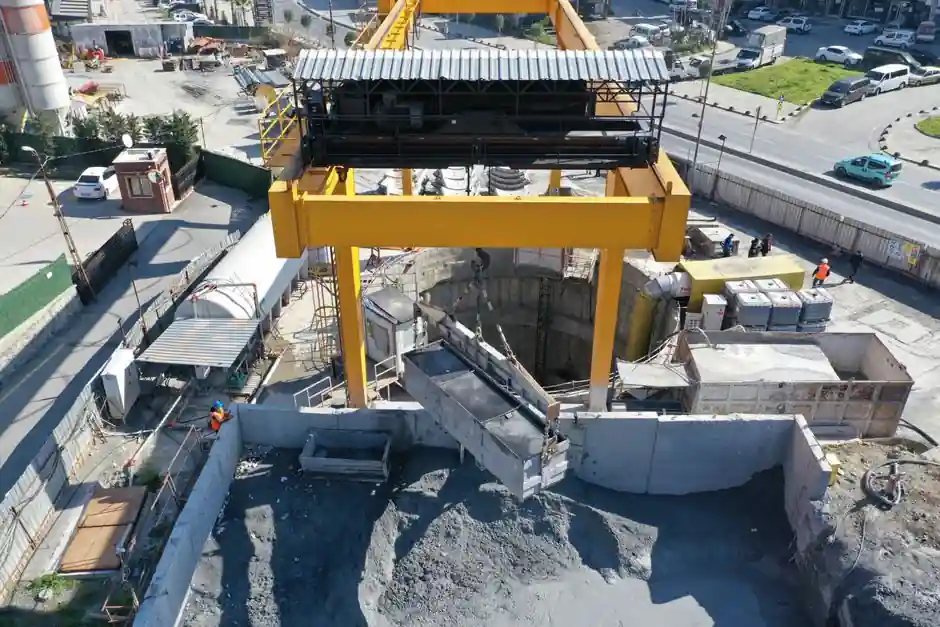
Climbing tower cranes transfer all vertical and overturning loads into the host building's floor slabs and bracing collars, so they need no standalone gravity foundation beyond a temporary base. Static (freestanding) tower cranes require a designed foundation or structural support plus a 1:500 plumb

· CONSTRUCTION VEHICLES · 35 min read

ASTM A996 Rail and Axle Steel Rebar: Spec Scope, Grades, and Selection

ASTM A996/A996M-16 covers three product types of recycled-content deformed reinforcement bars: rail-symbol, Type R (rail steel), and Type A (axle steel), in Grade 40, 50, and 60 yield levels. Compared to A615 billet rebar, A996 axle and rail bars offer comparable minimum yield and tensile strength b

· BUILDING MATERIALS · 43 min read

Class E vs Class G Hard Hat: Voltage Rating, Use Case, Spec Pick

Class E hard hats are proof-tested at 20,000 volts for high-voltage work above 2,200 V, while Class G hard hats are proof-tested at only 2,200 V phase-to-ground for general low-voltage exposure. Pick Class E for utility linework and energized equipment; pick Class G for typical construction where on

· SAFETY & CERTIFICATION · 35 min read

Butterfly vs Globe Control Valve: Rangeability Compared

A globe control valve with equal-percentage trim delivers 50:1 to 100:1 rangeability, while a butterfly control valve is generally usable across only 25% to 50% of its travel. Choose globe for wide turndown; choose butterfly for large line size, low pressure drop, and budget.

· PUMPS, VALVES & PIPING · 37 min read

Ball Splines Take Radial Loads, but Torque Stays the Primary Job

Yes, ball splines accept radial loads perpendicular to the shaft axis, but torque transfer is their primary design purpose. Grooved-shaft contact geometry lets them also resist moment and overhung loads up to roughly twice what comparable linear bushings handle.

· POWER TRANSMISSION · 30 min read

A36 vs 1018 vs 1045 carbon steel: spec map and grade selection

A36 is the cheap structural workhorse (36,000 psi yield, hot-rolled), 1018 is the machinist's bar (53,700 psi yield, cold-drawn, 0.18% C), and 1045 is the medium-carbon upgrade (roughly 40% stronger than 1018, needs preheat to weld). Pick A36 for welded structures, 1018 for machined parts, 1045 for

· MATERIALS & RAW STOCK · 45 min read

Extending or Rerouting an Existing Overhead Conveyor Loop

Yes, an existing overhead conveyor loop can be extended or rerouted: forged rivetless chain (X348 / X458 / X678), standard I-beam and Unibilt enclosed track sections are modular, allowing on-site additions, curve changes, and re-routing during installation with no full system replacement.

· LOGISTICS & PACKAGING · 33 min read

Bushing and OLTC Lead Times Now Exceed the Transformer Build Cycle

Transformer bushing and on-load tap changer (OLTC) lead times are now the binding constraint on U.S. power transformer delivery: high-voltage bushings run up to 130 weeks, OLTCs 80-90 weeks, and rigid single-source component specs add 18-24 months on top of an already 24-36 month transformer build.

· ELECTRICAL & AUTOMATION · 36 min read

Skid Steer Chain Case Oil Level and Drive Chain Tension Check

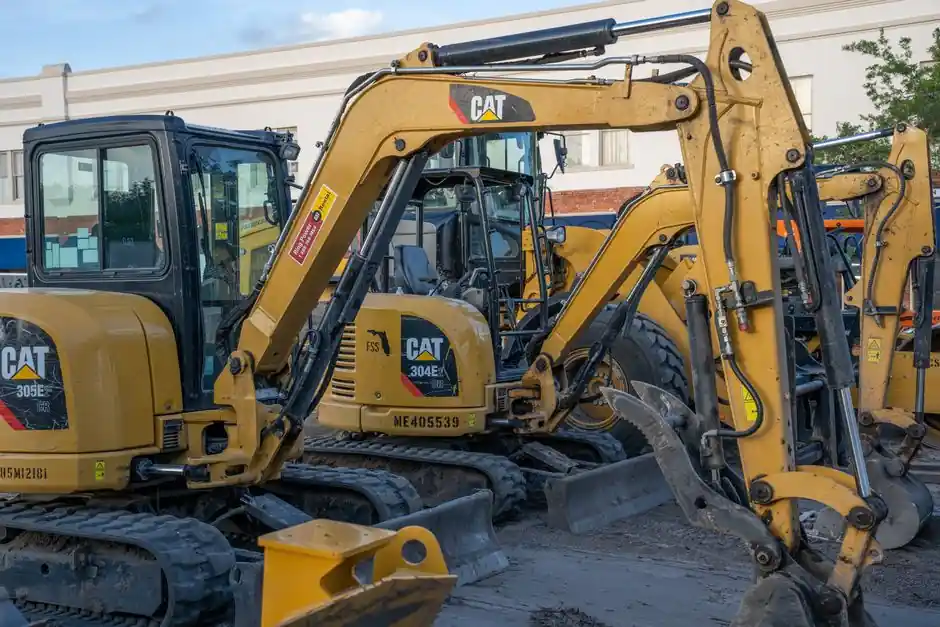
Skid-steer chain-case oil level is checked with the machine level, fluid filled to the plug threads (11 L / 3 gal per side on John Deere units), while chain tension is verified by rotating each tire and accepting 0-6.35 mm (0-1/4 in.) tread movement before loosening the eight axle hub bolts for shim

· CONSTRUCTION VEHICLES · 37 min read

Automatic Level Compensator Working Range Before Out-of-Range Error

Automatic level compensators self-level within roughly ±10 to ±30 arc-minutes of vertical-axis tilt; outside that window the pendulum or prism assembly hits its mechanical stops, the line of sight is no longer corrected, and the instrument throws an out-of-range error rather than a graded reading.

· CONSTRUCTION TOOLS · 42 min read

Squeeze Casting Wrought 6061 Aluminum: Process, Properties, Trade-offs

Yes, squeeze casting of wrought 6061 aluminum is technically validated: applied pressure of 60-90 MPa cuts porosity and refines dendrites, yielding as-cast or T6 mechanical properties comparable to wrought 6061 stock. Process trade-offs include Mg2Si segregation at thick sections, narrow 60-80 MPa p

· CASTING EQUIPMENT · 48 min read

ASTM A820 Type I to V Steel Fiber Classification: Spec, Strength, and Selection

ASTM A820 sorts steel fibers for fiber-reinforced concrete into five types (I cold-drawn wire, II cut sheet, III melt-extracted, IV mill cut, V modified cold-drawn wire), with a 345 MPa (50,000 psi) minimum tensile strength and 10% dimensional tolerance that apply to all types regardless of manufact

· BUILDING MATERIALS · 37 min read

AI Data Center Critical Path Equipment: 2026 Procurement Order

Medium-voltage transformers, switchgear, generators, UPS skids, and liquid-cooling heat-rejection plants are the 2026 AI data center critical path. Lock factory slots, commissioning labor, and grid interconnection in that order before breaking ground.

· SUPPLY CHAIN & SOURCING · 43 min read

Stop Category 0 vs Stop Category 1 per IEC 60204-1: Selection Rules, Wiring, and Drive

IEC 60204-1 defines Stop Category 0 as immediate uncontrolled power removal to actuators, while Stop Category 1 is a controlled stop with power retained until motion ceases, then cut. ISO 13850 permits only these two categories for emergency stop, with the choice driven by risk assessment and machin

· SAFETY & CERTIFICATION · 41 min read

Butterfly Valve FL and xT: How Pressure Recovery Drives Cavitation Risk

Butterfly control valves sit in the 0.55-0.68 FL band (centric disc), the lowest liquid pressure recovery of any common control-valve style, and cavitation onset triggers as low as 36% of effective inlet pressure drop. FL and xT are dimensionless IEC 60534-2-1 / ANSI/ISA-75.01.01 coefficients, not s

· PUMPS, VALVES & PIPING · 34 min read

Adjustable vs Fixed Deadband Pressure Switch: Spec Decision Map

Adjustable deadband pressure switches separate set and reset points across the full operating range, while fixed deadband units lock the gap by mechanical design. For pump/compressor cycling, HVAC staging, and explosion-proof service, the adjustable type is the standard pick in 2026 datasheets from

· MEASUREMENT & TEST · 35 min read

C5 vs C9 Hydrocarbon Tackifier Resins for Hot Melt Adhesives: Spec Decision Map

C5 aliphatic tackifier resins (softening point 90–135°C, low odour, EVA/SIS/SEBS compatible) are the workhorse for hot melt and pressure-sensitive adhesives, while C9 aromatic resins run hotter at 100–140°C with stronger thermal stability but darker colour and poorer elastomer compatibility. C5/C9 c

· MATERIALS & RAW STOCK · 42 min read

Centrifugal Bucket Elevator Speed: 225 to 300 fpm Design Window

Centrifugal discharge bucket elevators run at 225 to 300 fpm (1.14 to 1.52 m/s) belt speed, with throughput up to 5,000 ft³/h or 150 tons/h on free-flowing granular stock. Speed is set by head-pulley diameter and tip speed needed to throw material clear of the bucket into the discharge chute, not by

· LOGISTICS & PACKAGING · 34 min read

3.5 Ohm vs 5 Ohm Brake Resistor: Heat Dissipation and Stopping Trade-Off

For a fixed DC bus voltage, dropping from 5 ohm to 3.5 ohm on a VFD brake resistor raises peak current by ~43% and peak power by ~43%, which raises heat dissipation rate and stopping torque but can exceed the brake transistor limit. Use the lower ohm only if the drive's minimum resistance floor allo

· ELECTRICAL & AUTOMATION · 38 min read

Center-Mount vs Side-Shift Backhoe Loader: Selection Map

Side-shift backhoes win tight European worksites and parallel trenching with a sliding boom and vertical stabilizers, while center-mount designs hold sway in North America for raw digging force and wider radial stabilizer stance. Both share the same tractor front half, so the real decision is worksi

· CONSTRUCTION VEHICLES · 43 min read

Automatic Level Compensator Accuracy in Arc Seconds: Reading the Spec Without Getting

An automatic level's compensator holds the line of sight to a horizontal reference within roughly ±0.5 arc seconds on premium models, equating to about ±1.5 mm at 76 m or ±1.6 mm at 30 m; mid-range optical auto levels deliver ±1.5 mm at 30 m, while 20-30 arc-second vial instruments are confined to r

· CONSTRUCTION TOOLS · 30 min read

Cupola Iron for Ductile Iron: Why Desulfurization Is Mandatory

Cupola iron cannot be used directly for ductile iron without desulfurization: the coke bed drives sulfur pick-up well above the 0.015-0.020% ceiling that magnesium treatment requires, so in-stream or ladle desulfurization is mandatory before nodulizing.

· CASTING EQUIPMENT · 32 min read

A706 vs A615 Rebar: Specifying Seismic-Grade Welded Reinforcement

For seismic detailing in North America, specify ASTM A706 Grade 60: it caps carbon equivalent for reliable welding per AWS D1.4, mandates fu/fy ≥ 1.25 with 14% elongation, and sets both minimum and maximum yield limits. Use A615 only where no welding and no seismic ductility apply.

· BUILDING MATERIALS · 44 min read

AOC vs DAC in 2026 AI Clusters: Lead Time, Reach, and the Cabling Decision

For 2026 AI cluster builds, passive copper DAC wins on unit price and lead time inside the rack (sub-3 m runs), while active optical cable (AOC) is the safer pick at 5-100 m once lead-time risk on copper-heavy gauge assemblies, airflow, and rework cost enter the picture.

· SUPPLY CHAIN & SOURCING · 53 min read

Safety Glasses Under Face Shields: Required Stacking Explained

Yes, safety glasses should always be worn under a face shield for full eye and face protection. The face shield is classified as secondary impact protection, with gaps that allow debris to enter from below or the sides, so ANSI Z87+ rated safety glasses underneath are required by OSHA 1910.133.

· SAFETY & CERTIFICATION · 36 min read

±2 °C or 2% of reading: how compound accuracy actually behaves

±2 °C or 2% of reading is a compound accuracy statement: the larger of an absolute 2 °C floor and a proportional 2% of the indicated value (rdg) applies at every point, so a 50 °C reading carries ±2 °C, while 500 °C carries ±10 °C. Choosing between this format and a straight 2% full-scale (FS) spec

· MEASUREMENT & TEST · 37 min read

ASTM D2000 FE and GE Callouts for Silicone: How to Read and Apply Them

ASTM D2000 FE and GE designations locate silicone (VMQ) compounds on the high-temperature side of the standard's Type table, with F=200°C and G=225°C test points and E-class oil-swell limits, separating them from lower-temperature FC silicone grades. Engineers pair the callout with a durometer digit

· MATERIALS & RAW STOCK · 49 min read