Industry News

Industry News · Page 29

Battery Cell Lead Time 2026: What Industrial Buyers Should Plan For

Industrial battery cell lead times in late 2026 are driven by three variables: cell qualification queue depth, pack customization stage count, and factory capacity absorption, not by a single posted number. Expect 4-12 weeks for repeat-order Li-ion packs with stable BMS and 12-26 weeks for first-art

· SUPPLY CHAIN & SOURCING · 35 min read

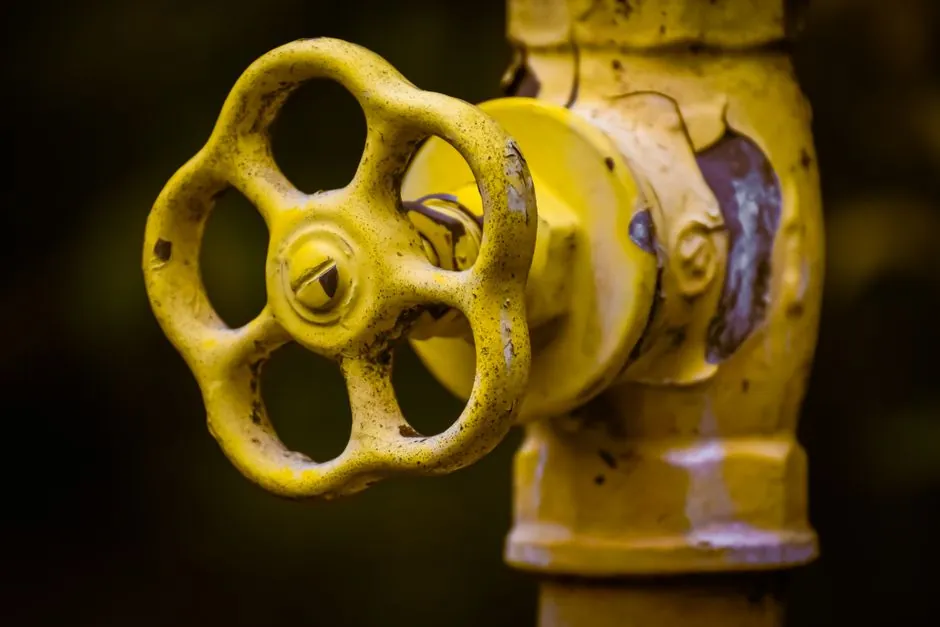
FBE vs liquid epoxy for gate valve bodies: spec-driven coating choice

Fusion bonded epoxy (FBE) and liquid epoxy are the two coating systems commonly specified for gate valve bodies; FBE wins on impact strength and surface smoothness, while liquid epoxy remains the cheaper field-repair option, with both typically applied at 8-16 mils over an AWWA C550/NFS 61 qualified

· PUMPS, VALVES & PIPING · 37 min read

Capacitive vs Eddy-Current vs LVDT: Range, Target, Environment

Capacitive, eddy-current, and LVDT displacement sensors each dominate a different operating envelope: capacitive wins on sub-micron resolution against any target material, eddy-current excels on harsh dirty conductive-target service, and LVDT handles long-stroke millimetre-to-metre ranges with the h

· MEASUREMENT & TEST · 46 min read

FKM vs NBR O-rings: hot oil and fuel resistance decision guide

FKM O-rings outperform NBR O-rings in hot oil and fuel above 120°C with continuous ratings to 204°C and superior resistance to aggressive fuels, while NBR remains the cost-effective default for mineral oil, hydraulic fluid and diesel up to 100–120°C at roughly 3.9x lower raw material cost than FKM [

· MATERIALS & RAW STOCK · 28 min read

Pharma Line Conveyor Integration With Serialization Stations: Spec Map

Pharmaceutical line conveyor integration with serialization stations depends on stable product spacing, validated controls, and parent-child aggregation under DSCSA and EU FMD frameworks. Selection criteria split into mechanical handling, vision/print quality, and GMP-grade data integrity. Plan chan

· MANUFACTURING & INDUSTRY 4.0 · 49 min read

EN 528:2021+A1:2022 safety rules for rail-dependent S/R machines

EN 528:2021+A1:2022 is the active European safety standard for rail-dependent storage and retrieval (S/R) machines, superseding EN 528:2008. It covers unit-load, long-goods, and order-picking cranes operating indoors, including aisle transfer equipment, with EMC and noise provisions.

· LOGISTICS & PACKAGING · 34 min read

XLPE Insulated Power Cable Specification Map: Voltage, Conductor, Insulation

XLPE insulated power cables cover voltage classes from 0.6/1kV up to 35kV per IEC 60502, with conductor sizes typically spanning 1.5–630 mm² in copper or aluminium. Continuous conductor rating is 90°C and short-circuit rating 250°C for 5 seconds, enabling 15–30% higher ampacity than equivalent PVC c

· ELECTRICAL & AUTOMATION · 34 min read

Excavator bucket breakout vs arm crowd force: spec-by-spec comparison

Bucket breakout force and arm crowd force are two separate spec-sheet numbers under SAE J1179 and ISO 6015, with bucket force typically higher because of shorter leverage. Choose by job: bucket force for prying and breaking hard ground, arm force for sustained trenching. Always match standard and st

· CONSTRUCTION VEHICLES · 45 min read

Dry-cut carbide saw vs abrasive chop saw: spec-level decision guide

Dry-cut carbide metal saws run 1000-1500 rpm with replaceable toothed blades, while abrasive chop saws spin 3500-5000 rpm with $5 consumable discs. Choose carbide for clean, burr-free cuts and aluminum compatibility; choose abrasive for low-cost, high-speed rough cutting of steel stock.

· CONSTRUCTION TOOLS · 36 min read

Drum Ladle vs Bucket Ladle for Molten Iron Transfer

Drum ladles dominate heavy-tonnage iron transfer in iron and steel mills, while insulated bucket ladles lose less heat per transfer and suit high-cycle foundry operations. A bucket-style refractory-lined ladle expected to survive 50 to 100 pours per lining cycle is the typical workhorse for mol

· CASTING EQUIPMENT · 43 min read

EN 14351-1 aluminium window DoP: what the 2024-2026 declarations actually declare

EN 14351-1:2006+A2:2016 Declarations of Performance (DoP) for aluminium and timber-clad windows and casement doors list six essential characteristics: wind load (EN 12210), water tightness (EN 12208), air permeability (EN 12207), thermal transmittance (EN ISO 10077-2), acoustic performance, and load

· BUILDING MATERIALS · 51 min read

Cylindrical vs Prismatic Cell Can and Casing Supply: 2026 Spec Map

Battery cell cans for cylindrical formats (18650, 21700, 4680) are standardized rigid steel or aluminum cases with wound jelly-roll internals; prismatic cans are larger welded aluminum or steel rectangular enclosures (20-100+ Ah) that swap volumetric efficiency for thermal headroom. Format choice is

· SUPPLY CHAIN & SOURCING · 60 min read

Hazardous-Area Oxygen Analyzer Certification: ATEX, IECEx, SIL 2 Spec Map

An oxygen analyzer for a hazardous area must carry an Ex mark scheme (ATEX 2014/34/EU, IECEx, or regional equivalents like CSA/UL/cQPSus) matched to the zone, gas group, and temperature class, plus a functional safety rating (typically IEC 61508 SIL 2) when used in a safety loop. Specifying a higher

· SAFETY & CERTIFICATION · 42 min read

EPDM vs PTFE-faced diaphragm valves: chemistry, temperature, cost decision guide

EPDM and PTFE-faced diaphragms are not interchangeable: EPDM suits water, steam, acids, and alkalis at low cost; PTFE (or PTFE-faced EPDM) is required for aggressive solvents, strong acids/bases, and service up to 200–250°C, but costs 5–10× more and tolerates less mechanical flexure. Pick by fluid c

· PUMPS, VALVES & PIPING · 37 min read

Heavy-Series Spherical Plain Bearings for High-Shock Boom Pins

Heavy-series radial spherical plain bearings sized for boom-pin pivots on mobile equipment pair a wider outer ring with case-carburized or through-hardened steel sliding surfaces, carry alternating heavy radial load plus shock, and conform to DIN ISO 12240-1 dimensional series E and C. For high-shoc

· POWER TRANSMISSION · 49 min read

Viton A, B, F, GF, GLT: FKM grade property differences explained

FKM fluoroelastomer grades A, B, F, GF, and GLT differ mainly in fluorine content (66% to 70%) and monomer architecture, which dictates chemical resistance, low-temperature flexibility, and compression set for sealing applications.

· MATERIALS & RAW STOCK · 45 min read

NFPA 79 vs IEC 60204-1: side-by-side electrical rules for machines

NFPA 79 (North America) and IEC 60204-1 (Europe) both govern electrical equipment of industrial machines, but diverge on North American-only Type MTW conductor rules, AHJ/UL listing paths, operator-interface color codes, and protective-bonding thresholds, so a single design must satisfy two parallel

· MANUFACTURING & INDUSTRY 4.0 · 48 min read

Brake Resistor Wattage: Dissipation Capacity, Not Heat Output

Higher brake resistor wattage does not mean the resistor dumps more heat in normal use; it means the part can survive a higher peak dissipation before its temperature limit is hit. Actual heat output is set by V²/R (ohmic value) and duty cycle, not by the nameplate wattage.

· ELECTRICAL & AUTOMATION · 32 min read

Equal-Wheel vs Unequal-Wheel Backhoe Loader: Selection Spec Map

Equal-wheel backhoe loaders use matched front and rear tyres, with the larger rear wheels giving higher tractive effort and lower ground pressure than unequal-wheel designs. Mismatched layouts keep the front bucket lighter and steering tighter, making them standard for urban utility work. Pick equal

· CONSTRUCTION VEHICLES · 38 min read

Drawn arc vs short cycle stud welding: process, time, and spec map

Drawn arc stud welding runs 100-1500 ms at diameters from 2 to 25 mm with a ceramic ferrule or shielding gas, while short cycle (SC) drawn arc cuts the weld time to a maximum of 100 ms, drops minimum sheet thickness to 0.5 mm, and removes the ferrule up to 8 mm stud diameter. Both lift the stud to s

· CONSTRUCTION TOOLS · 42 min read

Drop Bottom vs Roller Hearth Furnace for Aluminum Solution Treatment

Drop bottom furnaces deliver 5-10 second quench delays for thin-gauge aluminum, while roller hearth lines trade that speed for continuous throughput at 5-50 t/h and gentler handling of thin-wall castings. Drop bottom fits 5-100+ ton batch loads needing 5-7 s delays; roller hearth fits continuous sol

· CASTING EQUIPMENT · 51 min read

EN 13967 flexible damp-proof sheets: scope, types, and selection criteria

EN 13967:2012+A1:2017 governs plastic and rubber damp-proof and basement-tanking sheets, classifying Type A (damp-proof) and Type T (tanking) with watertightness tested to 2–60 kPa and water-vapour permeability around 17,000–19,000 µ. Specifiers should match sheet type, thickness, and reaction-to-fi

· BUILDING MATERIALS · 39 min read

Battery Foil Supply 2026: Aluminum and Copper Current Collectors Tighten on Ultra-Thin

Battery-grade aluminum foil demand is forecast to grow at a 9.4% CAGR to USD 6.3 billion by 2035, with cell makers transitioning from 12–15 μm foils to ≤8–10 μm grades at 70–75% rolling yield. Battery copper foil expands at 7.88–10.1% CAGR, with 4–6 μm electrodeposited foil priced at USD 22–28/kg.

· SUPPLY CHAIN & SOURCING · 50 min read

Hazardous-Area Oxygen Analyzers for Confined Space Entry: Spec Map

Hazardous-area capable oxygen analyzers for confined space entry must cover 19.5-23.5% O2 per OSHA 1910.146, with ATEX/IECEx/SIL2 certification for explosive atmospheres and electrochemical or paramagnetic sensing for the working range.

· SAFETY & CERTIFICATION · 37 min read

EPDM vs NBR vs FKM butterfly valve seat temperature limits

For soft-seated butterfly valves, EPDM seats are typically rated -34°C to 107°C, NBR seats -18°C to 82°C, and FKM (Viton) seats -26°C to 204°C, with FKM costing more and losing low-temperature flexibility.

· PUMPS, VALVES & PIPING · 39 min read

Single-Stage Harmonic Reducer Selection: Ratios Up to 160:1

Strain-wave harmonic reducers deliver single-stage ratios from 30:1 to 160:1, peak torque ratings spanning 450 in-lbs to 60,500 in-lbs, and zero-backlash accuracy across cup and shaft configurations for servo and stepper applications.

· POWER TRANSMISSION · 33 min read

Conductivity vs pH for strong-acid concentration control

Conductivity can substitute for pH on strong-acid streams only above roughly 0.5-1% acid, where H+ drives the ionic load; below that range, pH remains the more selective measurement.

· MEASUREMENT & TEST · 18 min read

FKM vs EPDM Gaskets in Mineral Oil: Material-by-Material Decision Guide

FKM gaskets are the correct choice for mineral oil service up to roughly 200°C, while EPDM swells, softens, and loses compression set in petroleum fluids and must be ruled out for any sustained oil contact, even when its temperature rating appears adequate.

· MATERIALS & RAW STOCK · 34 min read

NFPA 660 Replaces NFPA 652: What Changes Inside a Plant

NFPA 660, the consolidated combustible dust standard that replaced NFPA 652 and five commodity-specific predecessors, became effective December 6, 2024 and now drives Dust Hazard Analysis (DHA) reviews, dust-data refresh, and transfer-point controls in U.S. plants handling powders, metals, food, sul

· MANUFACTURING & INDUSTRY 4.0 · 37 min read

LFP vs NMC Battery Cell Price per kWh: 2026 Spec Map

In 2026, LFP battery cells run $60-$100/kWh versus $80-$150/kWh for NMC at the cell level, and LFP packs average $81/kWh against $128/kWh for NMC. The 30%-plus spread reflects chemistry, regional tariffs, and segment choice more than raw metal costs.

· INDUSTRY TRENDS & MARKETS · 39 min read

Forced air vs liquid cooling: how much does it lift a brake resistor's rating?

Forced-air cooling raises a static brake resistor's continuous power rating roughly 3-5x over natural convection, provided airflow velocity stays turbulent across the whole resistor bank. Liquid cooling extends that further, cutting package size about 80% versus equivalent forced-air units in electr

· ELECTRICAL & AUTOMATION · 51 min read

Enclosed Track Workstation Bridge Crane vs I-Beam Single Girder Crane

Enclosed track workstation bridge cranes suit light loads up to 2 tons with manual push force near 0.8 percent of suspended weight, while I-beam single girder cranes cover heavier capacities but cost more and almost always need motorization. The decision pivots on load, span, manual vs powered opera

· CONSTRUCTION VEHICLES · 45 min read

Drawn arc stud welding: lift height and plunge depth settings

Drawn arc stud welding requires a 1/8 inch (3.2 mm) plunge depth past the ferrule and a lift height of 1/16 to 1/8 inch depending on stud diameter, with current 600 to 3000 A and weld time 100 to 1500 ms for full-penetration ferruled welds on 2 mm plus base material.

· CONSTRUCTION TOOLS · 47 min read

CS(10\Y)300 Compressive Class: EN 13164 Spec Decoded

EN 13164 CS(10\Y)300 is the harmonised European compressive strength class for extruded polystyrene (XPS) insulation, declaring a minimum of 300 kPa at 10% deformation or yield per EN 826. Specified for foundation slabs, residential floors and accessible roofs; industrial floors and parking decks ty

· BUILDING MATERIALS · 35 min read