Industry News

Industry News · Page 414

Draw-Wire Sensor Selection for Brownfield PLC Upgrades

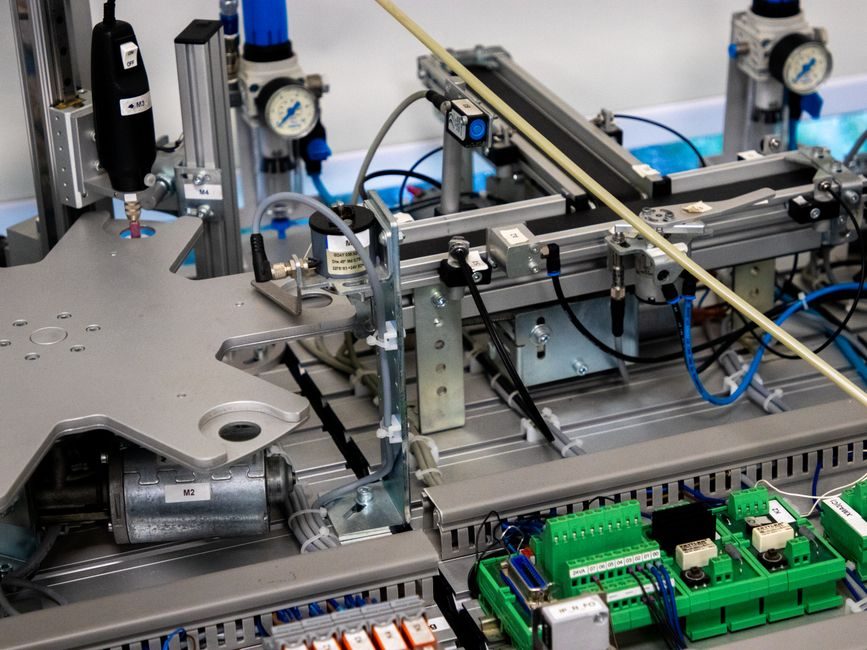
Brownfield PLC upgrades that introduce draw-wire position sensors fail most often on three points: 24 VDC wire voltage drop over long runs, excitation-voltage compatibility with the new I/O card, and linearity budget vs. required measurement length. Spec the sensor to match the existing wiring, the

· MEASUREMENT & TEST · 8 min read

Gauge Block vs Contour Measuring Machine: When to Specify Which Length Standard

A gauge block is a rectangular, parallel-faced length standard used to build fixed reference dimensions in a metrology lab or shop floor; a contour measuring machine is a stylus/optical profiler that traces 2D profile and surface texture on a part. They solve different problems and only overlap when

· MEASUREMENT & TEST · 7 min read

Gauge Block Buying Guide 2026: Grade, Material, Set Size and Calibration

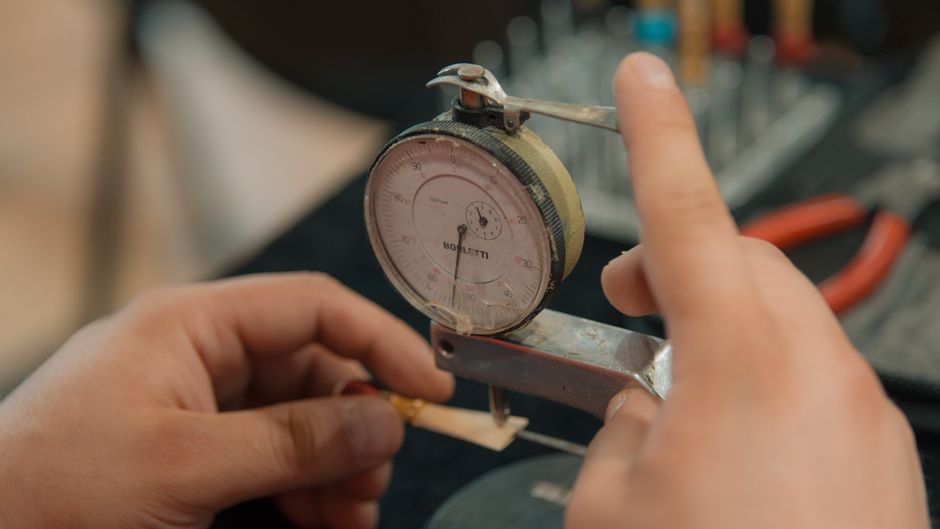
Steel gauge blocks are the shop-floor length standard for calibrating micrometers, indicators and CMMs; selection in 2026 hinges on grade (ASME/ISO), material, set size and recertification cycle, with NPL citing them among the most common length standards in engineering.

· MEASUREMENT & TEST · 5 min read

PRV vs electric ball valve: diaphragm material selection compared

Pressure reducing valves (PRVs) use an elastomeric diaphragm as the primary pressure-sensing element exposed to process fluid, while electric ball valves use a ball as the primary closure element and only carry diaphragm materials in the actuator or as secondary seals. Material selection therefore f

· PUMPS, VALVES & PIPING · 7 min read

Check Valve Selection Criteria for Corrosive Chemical Service

Check valve selection for corrosive chemical service requires matching body, trim, and seal materials to the specific media, temperature, and pressure envelope, with swing, lift, dual-plate, and nozzle designs each offering distinct trade-offs in pressure drop, maintenance access, and suitability fo

· PUMPS, VALVES & PIPING · 7 min read

Maintenance access: sewage pump vs magnetic drive pump

Magnetic drive pumps remove the mechanical seal — the most replaced wear part in centrifugal pumps — but lose solids above a few percent and require dry-run interlocks, keeping submersible sewage pumps the default in lift stations and wet wells.

· PUMPS, VALVES & PIPING · 8 min read

Digital Multimeter Selection: Six Criteria That Decide Fit Before Purchase

Digital multimeter selection in 2026 hinges on six decision criteria: true-RMS sensing, safety category (CAT II/III/IV at 600 V/1000 V), display resolution (3.5 to 8.5 digits), NIST-traceable calibration certificates, intended application tier (HVAC/R, electronics bench, industrial process), and mea

· MEASUREMENT & TEST · 8 min read

Online Water Quality Analyzer Buying Guide 2026: Parameters, Sensors, Protocols, Price

Online water quality analyzers in 2026 are multi-parameter platforms covering pH, conductivity, turbidity, chlorine, ozone and TOC, with Chinese vendor listings clustering in the US$420–4,800 per-piece band and dual-parameter electrode-method units dominating drinking-water and cooling-water bids.

· MEASUREMENT & TEST · 8 min read

Moisture Analyzer Price 2026: Tiers, Drivers, and Real Cost Guide

Moisture analyzer purchase prices span roughly US$310–440 for entry-level Chinese benchtop units (1-piece MOQ), rising sharply for laboratory halogen desiccators (MOC-63U NEURTEK) and online process gas/moisture analyzers (AMI) used in petrochemical lines. Total cost of ownership

· MEASUREMENT & TEST · 7 min read

Gas Chromatograph Price 2026: Tiers, Detectors, and Real Cost Drivers

Gas chromatograph list prices in 2026 span roughly US$2,920 for a basic Chinese-made educational unit to over US$13,000 for insulated GC-MS analyzers, while premium modular and high-resolution TOFMS systems from Jeol, Shimadzu and PerkinElmer are quoted on-request only.

· MEASUREMENT & TEST · 5 min read

Gas Chromatograph vs pH Meter: When Each Analyzer Earns Its Slot

Gas chromatographs and pH meters solve different analytical problems: GC separates and quantifies volatile chemical species in a gas or vapor sample, while a pH meter measures hydrogen-ion activity in an aqueous solution with a glass-reference electrode pair.

· MEASUREMENT & TEST · 6 min read

Gas Chromatograph Buying Guide 2026: Detector, Column, and Application Fit

A gas chromatograph (GC) separates vaporized analytes on a column and quantifies them with FID, TCD, FTD or MS detection. Specifying one in 2026 means matching injector type, detector set, column chemistry, and footprint to the application envelope before chasing price.

· MEASUREMENT & TEST · 5 min read

Gas Chromatograph Selection Criteria: Detector, Column, Zone, Service

A gas chromatograph is selected by lining detector type, column configuration, carrier-gas budget, and zone-classification certifications against the actual analyte list; lab FID/PID/TCD stacks suit C1–C6 hydrocarbons while process GC installations in hazardous areas require ATEX/IECEx-certified enc

· MEASUREMENT & TEST · 7 min read

Spectrophotometer Price 2026: Bands, Drivers, Real Quotations

A 2026 spectrophotometer purchase spans roughly US$300 for portable colorimeters to US$18,549 for laboratory fluorescence units, with single-beam UV-Vis bench models clustering between US$1,300 and US$3,900.

· MEASUREMENT & TEST · 6 min read

Spectrophotometer Selection: 5 Hard Gates Before You Quote

Selecting a spectrophotometer is decided by five hard gates: spectral range (UV, VIS, NIR), bandwidth, photometric linearity under the Beer-Lambert law, sample format (cuvette, micro, probe), and a documented validation/cuvette path.

· MEASUREMENT & TEST · 6 min read

Turbidity Meter vs Gas Chromatograph: Picking the Right Analyzer for the Job

Turbidity meters quantify suspended particles by 90° scattered-light per EN ISO 7027, while gas chromatographs separate volatile analytes on a column and detect them with FID/TCD/MS — the two instruments solve disjoint analytical problems, so selection is decided by what the process actually needs t

· MEASUREMENT & TEST · 7 min read

Thickness Gauge vs CMM: Picking the Right Tool for Wall, Coating, and 3D Geometry

Thickness gauges and coordinate measuring machines (CMMs) answer different shop-floor questions: the first is purpose-built for wall-thickness or coating-thickness NDT, the second maps full 3D/GD&T geometry. Specifying one for the other's job wastes hours and produces misleading reports.

· MEASUREMENT & TEST · 6 min read

Contour vs Tensile Test Machines: Spec Engineer's Decision Frame

Contour measuring machines and tensile testing machines solve opposite problems on the QA floor: one quantifies a part's geometry against a 2D CAD profile, the other quantifies a material's strength and elongation under load. They share fixtures, software, and lab footprints but cannot be substitute

· MEASUREMENT & TEST · 6 min read

Gauge block price and cost guide: 2026 steel, carbide and ceramic set breakdown

Steel gauge-block sets commonly list between US$199 and several thousand USD on the secondary market in 2026, while new ISO 3650-grade carbide or ceramic sets from Mitutoyo, Starrett and TESA trade at indicative single-thousand to multi-thousand USD pricing dependent on grade and piece count.

· MEASUREMENT & TEST · 5 min read

Surface Roughness Tester Pricing 2026: What Drives Cost Across Handheld, Portable and

Surface roughness tester prices span roughly US$200 entry-level handheld to US$8,000+ shop-floor stylus profilometers, with Chinese OEM handheld units (Ra/Rz) clustering around US$700-1,200 FOB Shenzhen and brand-name portable gauges from Elcometer, PCE and Phase II sitting US$1,500-5,000 list.

· MEASUREMENT & TEST · 6 min read

Vision Measuring Machine Selection: 4 Gates That Decide Fit Before You Quote

Vision measuring machine selection hinges on 4 decision gates—measurement accuracy class, travel range vs part envelope, automation mode (manual / CNC), and probe/illumination flexibility—each verifiable against OEM datasheets like the Mitutoyo Quick Vision and Quick Scope QS-L.

· MEASUREMENT & TEST · 6 min read

GWR Level Meter Selection: Probe, Process, and Output Gates

Guided wave radar (GWR) level meters are specified when TDR microwave pulses on a probe must give reliable readings on foaming, turbulent, or low-DK liquids, with current OEM models rated up to 17 bar / 150 °C and probes covering both liquid and bulk-solid service.

· MEASUREMENT & TEST · 7 min read

MLG vs Guided-Wave Radar: Selection Logic for Process Engineers

KM26 magnetic level gauges have crossed 350,000 installed units worldwide; guided-wave radar (GWR) remains the go-to for non-invasive interface and low-DK liquid measurement where MLG cannot see through metal walls.

· MEASUREMENT & TEST · 5 min read

RF Admittance Level Switch Selection: 7 Spec Gates Before You Quote

RF admittance level switches are the dominant point-level choice for coating, foam, and aggressive-media tanks in 2026, with selection driven by probe coating immunity, hazardous-area approval, and process temperature rather than price. AMETEK Drexelbrook's Multipoint II and Safety IntelliPoint RF d

· MEASUREMENT & TEST · 7 min read

Magnetostrictive vs Capacitance Level Transmitter: 2026 Selection Specs

Magnetostrictive and capacitance level transmitters target different process pain points in 2026: magnetostrictive dominates clean-liquid precision and interface detection, while capacitance handles harsh media where a wetted moving part would fail.

· MEASUREMENT & TEST · 6 min read

Ultrasonic Level Meter vs Level Switch: Selection, Specs, and Trade-offs

Continuous ultrasonic level meters and ultrasonic point level switches solve different jobs: meters give an analog level reading across a range, switches deliver a single set-point relay output. The 2026 vendor catalog lists 28 ultrasonic level-switch products across 16 manufacturers.

· MEASUREMENT & TEST · 8 min read

Ultrasonic Level Meter Selection: Six Gates That Decide Fit Before You Quote

Ultrasonic level meters use airborne sound-wave reflection (Time-of-Flight) for non-contact level measurement, suited to open tanks, sumps, and bulk solids, with the six selection gates being range, media surface, foam/dust tolerance, mounting, output protocol, and hazardous-area certification.

· MEASUREMENT & TEST · 9 min read

MFC vs VA Flowmeter: When Active Mass-Flow Control Beats a Passive Sight Glass

Gas mass flow controllers (MFCs) measure and actively regulate mass flow via closed-loop control valves with ±0.6–1% accuracy, while variable area (VA) flowmeters are passive inline visual indicators with no moving control element. Pick MFC where setpoint stability, multi-gas/multi-range flexibility

· MEASUREMENT & TEST · 8 min read

Open Channel Flowmeter vs Thermal Mass Flowmeter: Spec Engineer's Decision Frame

Open-channel flowmeters and thermal mass flowmeters solve opposite problems: open-channel devices measure gravity-fed liquid level/velocity in weirs and flumes, while thermal mass flowmeters measure dry gas mass flow via heated-RTD thermal dispersion. Specifying one for the other job is the single m

· MEASUREMENT & TEST · 6 min read

Turbine vs Ultrasonic Flowmeter: Selection Specs for Process and Custody Service

Turbine flowmeters and ultrasonic flowmeters occupy overlapping but distinct niches in liquid and gas metering; turbine favors clean, low-viscosity service with high Reynolds numbers, while transit-time ultrasonic covers larger diameters, corrosive media, and bidirectional custody work.

· MEASUREMENT & TEST · 7 min read