Industry News

Industry News · Page 78

Jaw Coupling Selection for Agricultural Machinery: Specs, Spiders, and Field Realities

For agricultural machinery drives, jaw couplings are typically the lowest-cost three-piece flexible coupling option when the duty cycle stays under about 12,500 in-lbs (1,412 Nm) and ambient exposure includes oil, dust, and moisture. Pick hub material by corrosion exposure, spider durometer by torqu

· POWER TRANSMISSION · 40 min read

Pipe Clamp TCO: Cost Drivers and Lifecycle Spend Analysis

Sticker price for pipe clamps typically represents 10-30% of true 5-10 year cost; stainless steel, installation labor, downtime, and reconfiguration dominate the TCO. Specifying for lifecycle cost, not unit cost, cuts ownership spend 25-50% on modular framing work.

· PUMPS, VALVES & PIPING · 72 min read

Industrial Barcode Scanner Sizing: A Spec-Driven Selection Walkthrough

Industrial barcode scanner selection is decided in this order: symbology (1D vs 2D), reading mechanism (laser, linear imager, 2D area imager), scan range, environment (IP/drop), and form factor. Match a 1D laser (6 in to 2 ft) to clean retail; a 2D area imager (reads over 3 ft, any orientation) to w

· ELECTRICAL & AUTOMATION · 51 min read

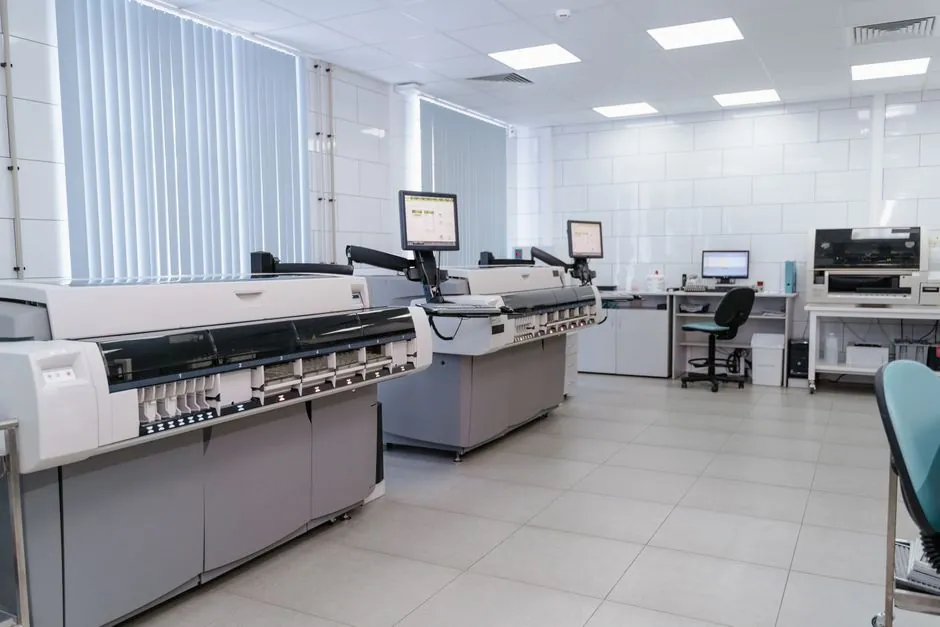
Gas Chromatograph Sizing and Selection: Column, Detector, and Carrier Gas Specs

Gas chromatograph selection hinges on four column parameters (length 10-100 m, ID 0.1-0.53 mm, film 0.1-5 µm, stationary phase polarity) plus detector class, carrier gas, and oven ramp. Match these to analyte chemistry, required resolution, and lab throughput, then validate against USP/Ph.Eur./ASTM

· MEASUREMENT & TEST · 52 min read

Circular Saw Spare Parts and Consumables: A Sourcing and Replacement Guide

Circular saw spare parts fall into wear items (blades, brushes, bearings, guards, springs) and dimensional consumables (rip fences, edge guides, depth levers) matched by model and catalog number. Matching by exact part number from the OEM service parts list prevents binding, runout, and guard-retrac

· CONSTRUCTION TOOLS · 48 min read

Skid Steer Loader Testing and Commissioning: Hour-Indexed Procedure

Skid steer loader testing and commissioning follows a four-tier hour-indexed sequence: pre-shift 15-point walkaround, 50-hour weekly service, 250/500/1000-hour PM, and 2000-hour powertrain service. Skid steers and backhoe loaders differ in steering, lift geometry, and drive system, so their inspecti

· CONSTRUCTION VEHICLES · 30 min read

Vibratory Feeder Specifications Explained: Drive, Tray, Frequency, and Throughput

Vibratory feeders are bulk-material handling devices that move parts or granules via controlled vibration, with electromagnetic, natural-frequency, and out-of-balance drive types covering ounces to tons per hour. Specifying one requires matching drive type, tray geometry, vibration frequency, and ca

· CASTING EQUIPMENT · 40 min read

Crucible Furnace Failure Modes and Spare-Part Sourcing for Maintenance

Crucible furnace failure modes cluster around four maintainable items: refractory lining breach, induction coil or water-cooled cable failure, thermocouple/sensor drift, and hydraulic or tilting seal leakage. Spare-parts sourcing should be sized to those four buckets, with coreless induction and cha

· SAFETY & CERTIFICATION · 40 min read

Aerospace Optical Glass Selection: Material Trade-offs for Windows, Domes, and Sensors

Aerospace optical glass selection pivots on five material families, fused silica, borosilicate, sapphire, ALON/spinel transparent ceramics, and aerospace-grade polymers, with radiation resistance, thermal shock tolerance, and specific gravity defining the cut. For criticality-1 windows the field sti

· MATERIALS & RAW STOCK · 50 min read

Strapping Band Selection for Food and Beverage Lines

PP strapping covers roughly 65% of light-to-medium food and beverage bundling, with PET used for heavier outdoor pallet loads; selection hinges on load weight, weld strength, and wash-down compatibility.

· LOGISTICS & PACKAGING · 33 min read

School Flooring Selection by Space: Materials, Wear Layers, and Slip Criteria

School flooring is selected by space and traffic pattern, not by a single product: homogeneous heat-welded sheet vinyl or rubber for cafeterias, LVT with 20 mil wear layer or rubber for hallways, carpet tile for classrooms and libraries, and resinous epoxy or urethane systems for labs and mechanical

· BUILDING MATERIALS · 45 min read

Disc Coupling Selection for Automotive Production Lines

Disc coupling selection for automotive production is driven by torque density, misalignment budget, and EV drivetrain requirements; global demand reached USD 1.5 billion in 2025 and is forecast to grow at 4.96% CAGR through 2035.

· POWER TRANSMISSION · 32 min read

Flange Types and Classifications: A Spec-First Reference for Process Engineers

ASME B16.5 classifies pipe flanges in seven pressure classes (150, 300, 400, 600, 900, 1500, 2500) for sizes NPS 1/2 to 24, with six common types: weld neck, slip-on, socket weld, lap joint, threaded, and blind. Selection turns on pressure, temperature, corrosion, and disassembly frequency.

· PUMPS, VALVES & PIPING · 53 min read

Industrial Barcode Scanners for Water Treatment: Specs, IP Ratings, and Model Picks

For water-treatment plants in 2026, the best industrial barcode scanner pairs IP65+ sealing, 1.8–2.4 m drop survival, and 2D imager optics so operators can read wet, dirty, or low-contrast labels on drums, totes, and asset tags. Honeywell CT70, Zebra DS2208-class handhelds, and Datalogic imagers dom

· ELECTRICAL & AUTOMATION · 35 min read

Choosing a Gas Chromatograph for Food and Beverage Labs

For food and beverage laboratories selecting a gas chromatograph, match the injector, column, and detector to the analyte class: 30 m × 0.25 mm × 0.25 µm capillary columns resolve 80-100 peaks for routine volatiles, while SPME/headspace inlets and FID or MS detectors cover pesticide residues, flavor

· MEASUREMENT & TEST · 42 min read

Concrete Groove Cutter Specs for Landscaping Jobs

Concrete groove cutters for landscaping span hand-held 133mm wall chasers at 4800W through to 355mm portable slab saws at 4000W and 76.5cc gas cut-off saws. Match power, blade diameter, groove width (15–63mm), and dust extraction to the substrate (paving, cured concrete, reinforced slab).

· CONSTRUCTION TOOLS · 37 min read

Riser Cutting Machine Failure Modes on the Mold Bench

Riser cutting machine failures on a mold maintenance bench fall into five predictable modes: cutting-wheel glazing, blade runout, clamping slip, dust evacuation clog, and hydraulic seal blow-by. Each has a measurable symptom and a bench-side corrective action, with most repaired in under 90 minutes

· SAFETY & CERTIFICATION · 34 min read

RFQ spec for lightweight partition panels in electrical enclosures: six decision lines

Specifying a lightweight partition panel on an enclosure-build RFQ hinges on six decision lines: load class, material grade and thickness, fire/smoke rating, panel dimensions with tolerances, mounting method, and compliance with UL 508A or IEC 61439 panel standards. Each line carries a typical numer

· SAFETY & CERTIFICATION · 52 min read

Confined Space Helmet Selection: Type II and EN 12492 Specs

Confined-space helmet selection defaults to a Type II / EN 12492-rated close-fitting safety helmet with a 50 kg-rated chin strap, since OSHA 29 CFR 1910.146 governs the entry and head protection must survive side impacts and snagging in tight bores. EN 397 is not enough on its own for permit spaces

· SAFETY & CERTIFICATION · 49 min read

Ceramic Tile Certification Checklist for Spare-Part Sourcing

Ceramic tile certification checks for maintenance spare-part sourcing reduce slip, hygiene, and audit risk on industrial floors. The CCTS program, CTDA reference guides, and ANSI lippage limits under 1/32 inch define the baseline evidence a spare-parts buyer should demand.

· SAFETY & CERTIFICATION · 43 min read

Safety Mat Selection 2026: PSD, Insulating, and Anti-Fatigue Specs

Industrial safety mat selection in 2026 hinges on matching mat family (PSD pressure-sensitive, electrical-insulating, anti-fatigue) to the documented hazard class, with ANSI/ESD STM4.1, ASTM F2913-24, and IEC 61111 governing the corresponding electrical, slip, and dielectric thresholds.

· SAFETY & CERTIFICATION · 44 min read

Respirator vs Safety Shoes: Selection Criteria and Hazard Mapping

Respirators and safety shoes protect different body systems: respirators filter inhalation hazards (dusts, vapors, oxygen-deficient atmospheres), while safety shoes guard feet from impact, puncture, slip, electrical, and chemical exposure. Both fall under the OSHA PPE hierarchy, are selected by haza

· SAFETY & CERTIFICATION · 43 min read

Mining Access Control: Spec Criteria for Harsh-Site Selection

Mining access control systems combine RFID, biometric, vehicle barriers, and visitor management to secure high-risk zones, enforce inductions, and meet MSHA/OSHA-style audit trails. Selection hinges on environment rating, biometric throughput, and integration with muster systems.

· SAFETY & CERTIFICATION · 46 min read

Lab Stretcher Specs: Load, Deck, and Material Criteria

Laboratory stretcher selection hinges on matching load class, deck material, and caster/control system to specimen weight, chemical exposure, and aisle width. Bariatric models 700-1000+ lbs serve cadaver and large-animal work, MRI-compatible non-magnetic decks suit imaging cores, and stainless frame

· SAFETY & CERTIFICATION · 35 min read

Stretcher selection for chemical plants: zone rating, geometry, weight class

Industrial rescue stretchers in chemical plants are selected on four hard criteria: confined-space geometry, ATEX/IECEx zone rating, patient weight class, and compatibility with hoisting/winching gear. Standard transport and ED units are wrong for the plant floor.

· SAFETY & CERTIFICATION · 30 min read

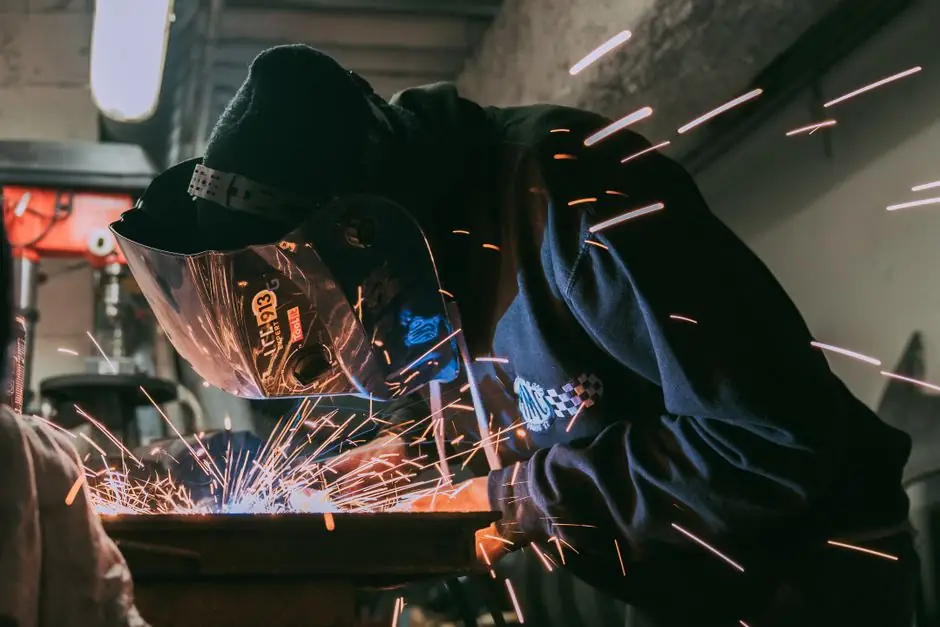
Gas Fire Suppression for Welding: Agent Types, Standards, and Selection Criteria

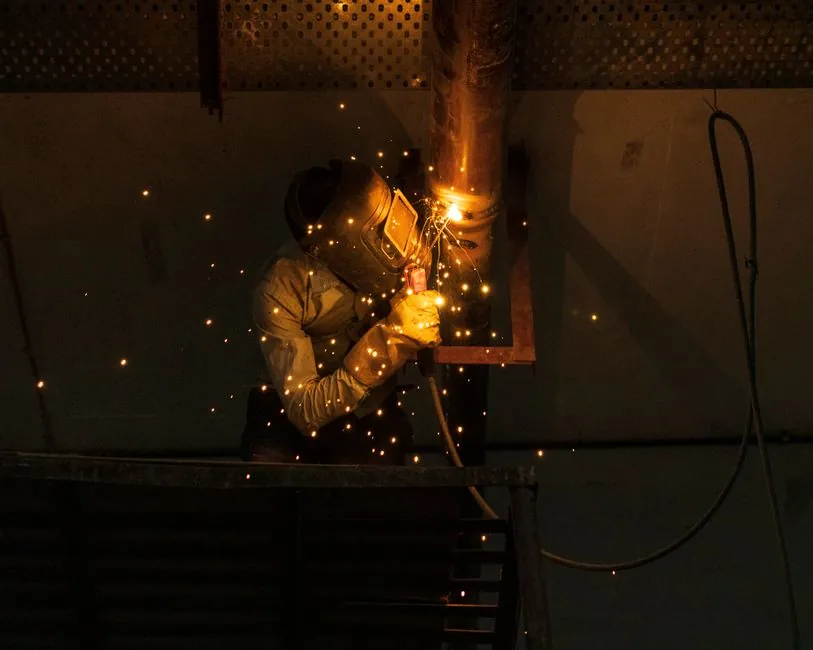
For welding operations, gas fire suppression selection hinges on matching agent chemistry to the Class A/B/C fire profile and the spark/slag travel distance (up to 35 ft per OSHA guidance). CO2, dry chemical, and clean agent systems are the three credible options; FM-200 and Novec 1230 lead where re

· SAFETY & CERTIFICATION · 50 min read

Fire Alarm Control Panel Selection for Laboratories: Spec, Sizing, and Integration

Laboratories should specify addressable, UL 864 9th/10th Edition listed fire alarm control panels with a minimum 24-hour standby plus 5-minute alarm battery, a Signaling Line Circuit sized for at least 20% spare detector addresses, and at least one dry-contact relay tied to gas-shutoff, hood-exhaust

· SAFETY & CERTIFICATION · 55 min read

Firefighting Fence Selection: ASTM E84 Class A vs Non-Combustible ASTM E136

For firefighting and WUI property protection, non-combustible fencing (steel, aluminum, masonry) tested to ASTM E84 Class A or ASTM E136 is the only defensible choice in Zone 0; fire-retardant treated wood is combustible and degrades. Material, height, and Zone 0 placement decide the spec.

· SAFETY & CERTIFICATION · 40 min read

Lab Safety Fence Selection: Mesh vs Framed Systems Compared

Lab safety fence selection turns on four engineering decisions: barrier type (HDPE mesh vs framed steel), impact rating (e.g. 1608 J captive-nut systems), compliance with EN ISO 14120 / ANSI/RIA R15.06, and a height/visibility/clean-room balance. Match the fence class to the hazard class, not to the

· SAFETY & CERTIFICATION · 33 min read

Firefighting Safety Mat Selection: ASTM E648, ISO 13849-1, and Fire Station Floor Mat

Safety mat selection for firefighting splits into two distinct procurement lanes: ASTM E648 Class I critical radiant flux ≥0.45 W/cm² for station corridors and apparatus bays, and ISO 13849-1 PLd Category 3 pressure-sensitive presence sensing for hazmat and equipment service areas. Fire stations als

· SAFETY & CERTIFICATION · 58 min read

Lab Safety Mat Selection: Type, Material, and Standard Fit

Lab safety mat selection hinges on matching the mat type to the actual hazard: silicone bench mats rated to 260°C for hot-plate work, sticky-mat entries for cleanroom contamination control, anti-fatigue polyurethane or nitrile mats for standing-work ergonomics, and pressure-sensitive safety mats for

· SAFETY & CERTIFICATION · 47 min read

Two-Hand Control Selection for Chemical Plant Machinery: EN 574, EN ISO 13849, and

Two-hand controls for chemical-plant machinery must satisfy EN 574 Type III C (synchronous actuation within 500 ms), EN ISO 13849-1 PL d minimum, and anti-tie-down/anti-repeat logic to qualify for press, mixer, and reactor-loading stations. Selection is driven by hazard category, hold-time requireme

· SAFETY & CERTIFICATION · 51 min read

Safety Interlock Switch Selection for Oil and Gas Facilities

For oil and gas facilities, safety interlock switches must be selected by matching guard-door risk to ISO 13849-1 category (B/1/2/3/4), choosing keyed or non-contact construction, and verifying IECEx/ATEX hazardous-area certification before purchase.

· SAFETY & CERTIFICATION · 55 min read

Safety Relay Specs for Firefighting Loads: F&G vs ESD, 1oo3, and NFPA 72

Firefighting safety relays are specified as either Energize-To-Safe (F&G) or De-energize-To-Safe (ESD) types, with 1oo3 architectures and SIL certification, and must meet NFPA 72 listing for alarm-system integration. Select by load voltage/current, fail-safe direction, and the governing code path.

· SAFETY & CERTIFICATION · 37 min read

Safety relay selection for warehouse conveyor and robot-cell duty

Safety relay selection for warehouse operations is governed by EN ISO 13849-1 or IEC 62061, with Performance Level (PL) or Safety Integrity Level (SIL) targets set by a documented risk assessment. Three families fit warehouse duty: single-function E-stop relays, multi-function monitoring relays, and

· SAFETY & CERTIFICATION · 42 min read