Industry News

Industry News · Page 20

Hot Box vs Cold Box Core Shooter: Tooling Cost Compared

Hot box and cold box core shooter tooling cost diverge by process stage: hot box favors low per-shot tooling spend but higher energy, while cold box requires amine-gas equipment and PU resin tooling that raise initial cost but cut cycle time. Choose hot box for short runs and small cores, cold box f

· CASTING EQUIPMENT · 32 min read

Amorphous metal fibers vs carbon steel fibers in concrete: spec-by-spec breakdown

Amorphous metal fibers (AAF) deliver superior corrosion resistance and higher bond strength than carbon steel fibers, with flexural strength rising about 9% after geothermal-water immersion, but they localize at just 1.4% strain versus 2.9-3.5% for steel, making AAF better for durability-critical ch

· BUILDING MATERIALS · 35 min read

5G URLLC latency in real plants: where the 1 ms claim actually lands

5G URLLC marketing routinely quotes the 1 ms air-interface target, but real plant deployments in 2024-2026 still measure 1-10 ms one-way over the air and 5-50 ms end-to-end when PROFINET, PROFIsafe and TSN bridging are included. Engineers should plan deterministic closed-loop control on wired or TSN

· MANUFACTURING & INDUSTRY 4.0 · 38 min read

Needle Valve Cv for Gas Metering: Equation, Inputs, and Selection Margins

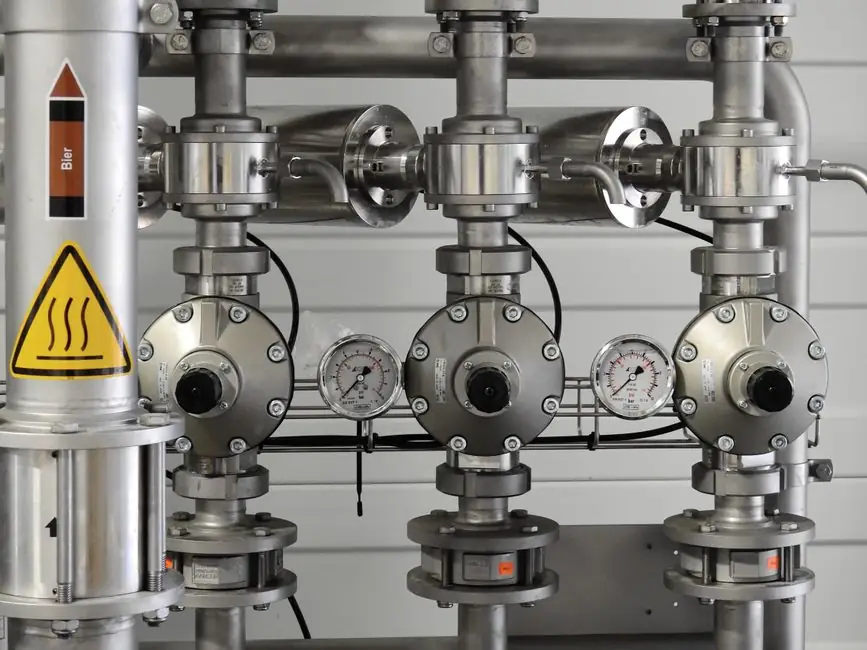
Needle valve Cv for gas metering is calculated with a compressible-flow equation, not the liquid Cv = Q·√(SG/ΔP) form, because gas density changes across the pressure drop. Use Q (Nm³/h or SCFH), inlet pressure P1 (psia), outlet pressure P2 (psia), specific heat ratio k, and gas-specific gravity to

· PUMPS, VALVES & PIPING · 43 min read

ISO 5294 inch-pitch timing pulley dimensions: spec, selection, and gotchas

ISO 5294:2012 governs inch-pitch synchronous belt pulleys (MXL, XXL, XL, L, H, XH, XXH) with involute or straight-sided teeth, fixed pitch-to-pitch tolerances, and preferred diameter and width tables. Specifying MXL or XL stock pulleys per this standard gives interchangeability with ISO 5296-1 belts

· POWER TRANSMISSION · 41 min read

Fan Beam vs Cone Beam CT for Dense Parts: Spec-by-Spec Selection

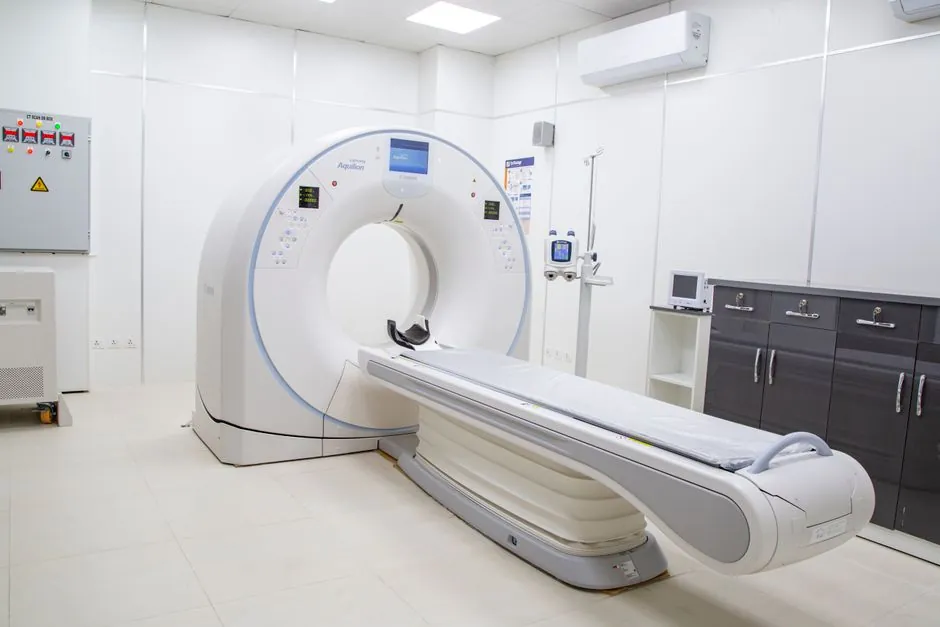
For dense industrial and cast-metal parts, line-detector fan beam CT delivers cleaner reconstructions than flat-panel cone beam CT, with cone beam CT's lower scan time and cost offset by severe scatter artifacts on high-attenuation parts. Pick fan beam CT for tight-tolerance, high-density work; pick

· MEASUREMENT & TEST · 35 min read

Five Reactive Industrial Adhesive Families: Spec-Level Comparison

Industrial adhesive selection maps to five dominant reactive families: epoxy, polyurethane, silicone, acrylic, and cyanoacrylate. Epoxy leads on shear and temperature, polyurethane wins on flexibility, silicone on thermal/UV endurance, acrylic on tolerant surface prep, and cyanoacrylate on seconds-f

· MATERIALS & RAW STOCK · 48 min read

VCBs at transmission voltage: where the technology line sits in 2026

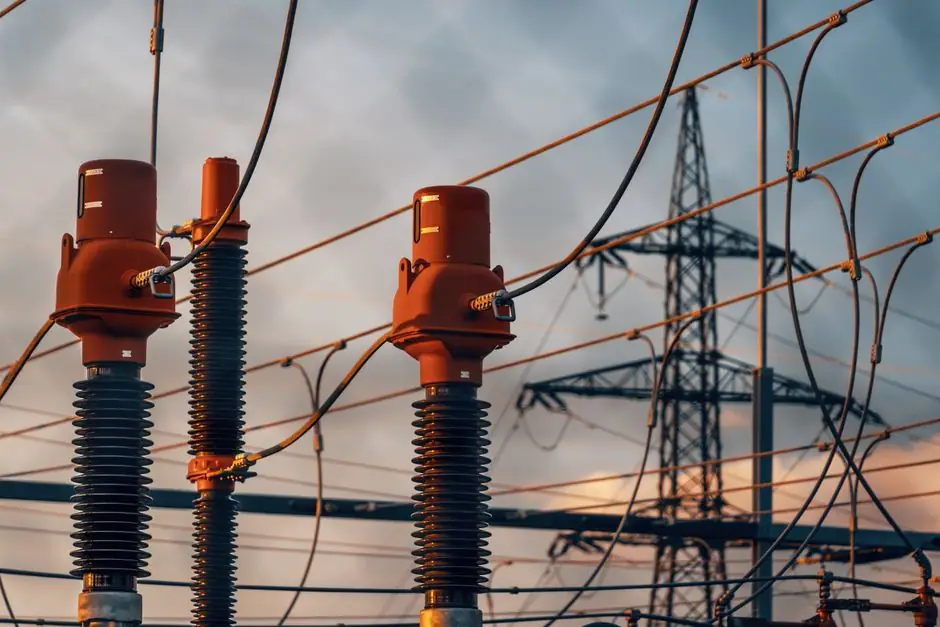
Vacuum circuit breakers (VCBs) are mature and dominant from 1 kV up to 40.5 kV, with breaking capacities to 63 kA and 10,000+ mechanical operations, but at transmission voltages above 72.5 kV SF6 gas breakers remain the default in US practice. SF6 has a global warming potential 23,500 times that of

· INDUSTRY TRENDS & MARKETS · 38 min read

Fixed IR vs Contact Wireless Sensors in Switchgear

Fixed infrared non-contact sensors and contact wireless (battery-free or powered) sensors serve different points inside switchgear: fixed IR wins for safe standoff on a few known hot joints, while contact wireless wins for continuous 24/7 trend data on bolted connections a camera cannot see. Selecti

· ELECTRICAL & AUTOMATION · 38 min read

Front vs Rear Discharge Concrete Mixer Trucks: Spec-Driven Selection

Front-discharge concrete mixer trucks cost more than rear-discharge units but offer single-operator chute control, shorter wheelbase, and better visibility on tight sites, while rear-discharge models remain the iconic industry default. Choose front-discharge for crowded urban, muddy, or precision-fi

· CONSTRUCTION VEHICLES · 38 min read

Poker vibrator vibration velocity: mm/s ranges, head diameter, and selection

Poker vibrators typically deliver peak vibration velocity of roughly 1.0 to 3.0 mm/s at the head, driven by eccentric weights spinning at 8,000 to 16,000 vpm across 25-100 mm head diameters. Selection hinges on matching head diameter to element thickness, not chasing the highest amplitude.

· CONSTRUCTION TOOLS · 32 min read

Cut Hot Box Core Shooter Energy with Smarter Box Insulation

Insulating the heated core box on a hot box core shooter can cut thermal losses from the 250–350°C tool surface and shrink per-core electrical draw, with the largest gains on long-curing-cycle cores where the 40–120 s dwell dominates the energy bill. Practical retrofits: ceramic-fibre blanket behind

· CASTING EQUIPMENT · 38 min read

Hot-Rolled vs Welded Built-Up Steel Section for Long Spans: Decision Matrix

Hot-rolled open sections are normally stocked up to about 25 m and dominate small and medium buildings, while welded built-up plate girders, box sections and tapered I sections become the economical answer above roughly 18-21 m (60-70 ft) clear spans, with crossover at 50-60 ft for pre-engineered me

· BUILDING MATERIALS · 59 min read

Breakbulk and Heavy-Lift Capacity Tightens Around Transformers and Turbines in 2026

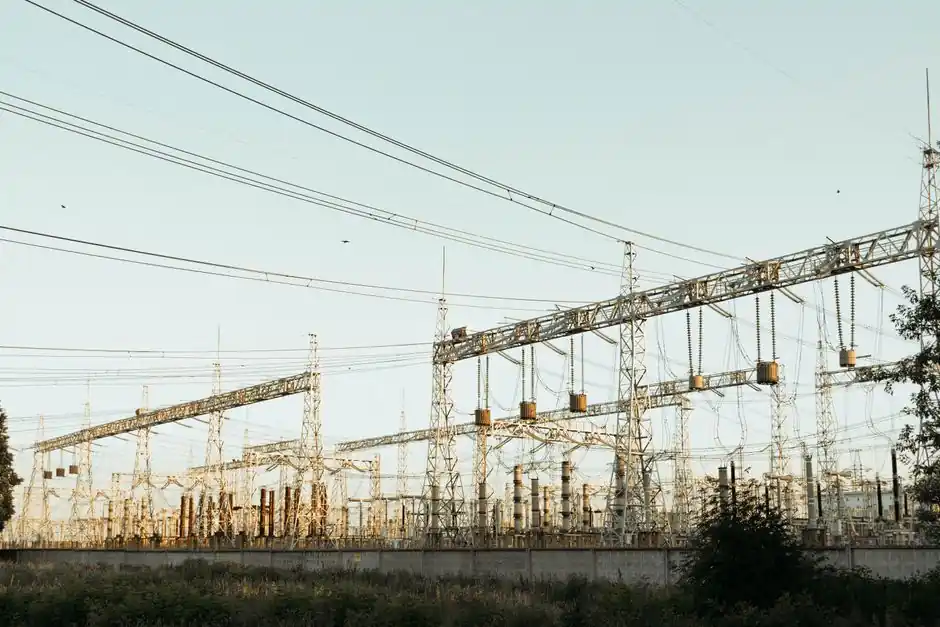
U.S. data-center and grid buildout is driving heavy-lift demand for power transformers, gas turbines, and substations, with about 82% of large power transformers imported and lead times stretching to 128-144 weeks. Carriers report stronger Americas demand in 2026 than 2025, but heavy-lift fleet capa

· SUPPLY CHAIN & SOURCING · 53 min read

EN 166 phase-out: ISO 16321 takes over occupational eye protection

EN ISO 16321-1:2022+A1:2025 replaced EN 166:2001 for occupational eye and face protection on 11 November 2025 across CEN member states, with an extended coexistence window running into 2027 for some product categories. The new standard modernises impact, optical, and marking requirements; existing E

· SAFETY & CERTIFICATION · 46 min read

Calculate Air Cylinder Force: Bore, Pressure, and Rod Area in Practice

Air cylinder output force equals supply pressure times effective piston area: F = P × πD²/4 for the extend stroke and F = P × π(D² − d²)/4 for the retract stroke, where D is bore and d is rod diameter. Real output runs 10–15% below theory after seal friction and back-pressure losses.

· PUMPS, VALVES & PIPING · 42 min read

ISO 17396 T and AT trapezoidal metric profile pulleys

ISO 17396 specifies metric-pitch synchronous belt drives with T and AT trapezoidal tooth profiles for power transmission and indexing. ISO 17396:2014 is withdrawn and replaced by ISO 17396:2017 (also withdrawn, revised by ISO 17396:2024). Specifiers use it together with ISO 13050 for curvilinear pro

· POWER TRANSMISSION · 45 min read

IEC 60672 C 799 vs C 795: Alumina Class Spec Comparison

IEC 60672 classifies alumina-rich ceramics into C 700 group, with C 799 as the high-purity ≥99% Al2O3 grade and C 795 as a lower-alumina variant. Specifying engineers pick between them on alumina content, dielectric loss, mechanical strength, and cost.

· MATERIALS & RAW STOCK · 35 min read

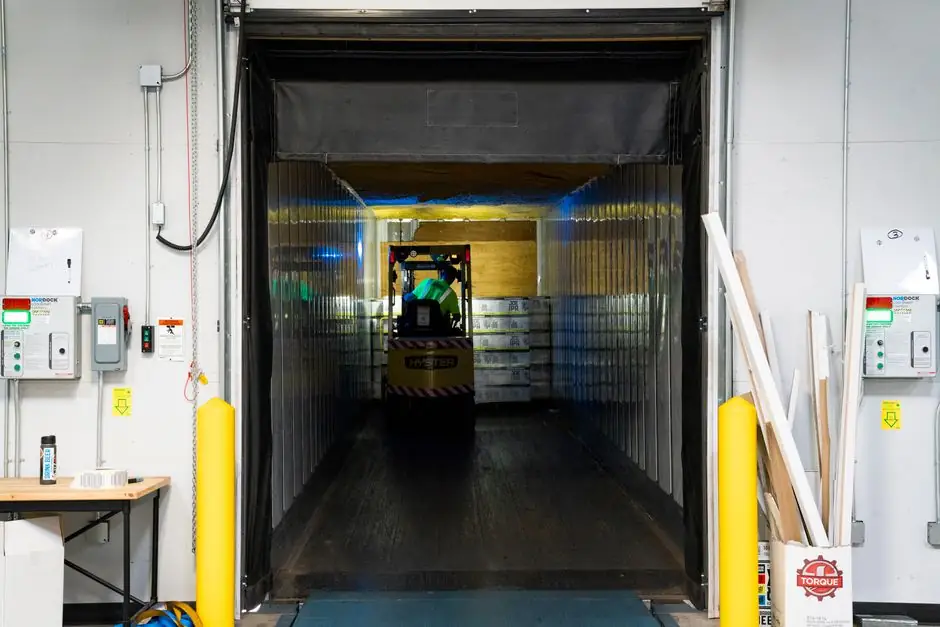
Dock Leveler Install Time Per Door: Type, Pit, Crew

A new exterior-mount dock leveler can be installed in 1-2 days per door, a pit-style hydraulic replacement takes 1-2 days of crew work after pit prep, and full new-pit projects run 4-6 weeks of facility downtime. Plan lead time, crew mix, and dock door count before scheduling.

· LOGISTICS & PACKAGING · 48 min read

Chemical recycling: where the volume actually stands by 2026

Chemical recycling in 2026 still processes only a small share of global plastic waste, with pyrolysis dominating capacity and depolymerisation scaling for PET. The pathways that close the loop, depolymerisation back to monomer, conversion to cracker feed, and feedstock flexibility, remain constraine

· INDUSTRY TRENDS & MARKETS · 36 min read

Five Full Threads: The Explosion-Proof Conduit Entry Rule Engineers Keep Misreading

Five full threads of engagement is the NEC and IEC baseline for explosion-proof conduit entries: NPT field threads and metric entries need 5 full threads; listed equipment with factory-cut NPT entries is allowed 4½ under NEC 500.8(E)(1). Thread count alone is not enough, taper, wrench-tight

· ELECTRICAL & AUTOMATION · 58 min read

Friction vs Interlocking Kelly Bar: Selection Matrix for Rotary Rigs

For soft-to-medium soil, friction kelly bars deliver lower cost and simpler maintenance; for hard rock, gravel, or deep foundations, interlocking kelly bars transmit higher crowd force and torque without slippage. Selection hinges on formation hardness, depth, and required torque capacity, not rig s

· CONSTRUCTION VEHICLES · 39 min read

Couplers vs Lap Splices: Real Rebar Savings and Where They Show Up

Mechanical couplers cut rebar use by up to 50% versus lap splices on congested or epoxy-coated joints, with the splice hardware adding roughly 0.2% to total structure cost. The rebar savings alone usually offset that premium on columns using #14+ bars.

· CONSTRUCTION TOOLS · 35 min read

Hot-Air Welded Seam vs Adhesive Seam for Sheet Waterproofing Membrane

Hot-air welded seams deliver molecular fusion on PVC, TPO, and modified-bitumen membranes, outperforming adhesive bonds in strength, weathering, and service life. The two methods are not interchangeable: EPDM and most self-adhered systems require chemical bonding because the polymer does not melt cl

· BUILDING MATERIALS · 40 min read

Laser Triangulation vs Structured Light vs Stereo: 3D Vision Method Selection

Laser triangulation, structured light, and stereo vision are the three most common active 3D imaging methods on the factory floor, each trading resolution, standoff, motion tolerance, and cost differently. For most sub-millimetre inspection of moving parts, laser triangulation wins on accuracy; for

· MANUFACTURING & INDUSTRY 4.0 · 39 min read

Lead-Free Brass Rod Supply and the C69300 Transition

Lead-free brass rod is replacing leaded brass in plumbing fittings and water-contact components, with the global market valued at USD 1,704.4 million in 2025 and projected to reach USD 2,404.2 million by 2035 at a 3.5% CAGR. Supply options now include C69300 ECO BRASS rods alongside C36000, with lea

· SUPPLY CHAIN & SOURCING · 32 min read

Trapped Key vs Electrical Guard Locking: Which Interlock Fits the Job

Trapped-key interlocks and electrical guard locking solve the same access problem through different physics: mechanical coded key transfer versus solenoid-driven guard locking with safety-rated contacts. Neither is universally better; the right choice is driven by access frequency, environment, wiri

· SAFETY & CERTIFICATION · 50 min read

How to Build a Chemical Transfer Hose Spec: STAMPED Method, Tube Polymers, and Ratings

A chemical transfer hose spec is built by locking the media first (SDS-driven), then matching tube polymer, working pressure, temperature envelope, suction rating, and coupling system against the STAMPED method. XLPE, UHMWPE, EPDM, and PTFE tubes each cover different chemical families and temperatur

· PUMPS, VALVES & PIPING · 46 min read

Compression Column vs Rocker Column Load Cell for a Weighbridge

Rocker column and straight compression column load cells both suit weighbridges, but rocker columns self-align to absorb off-axis load, while fixed compression columns need external guides. Capacity spans 10,000–1,000,000 kg; OIML C3/C4 accuracy and IP68/IP69K sealing dominate the spec sheet.

· MEASUREMENT & TEST · 41 min read

HSLA vs Q&T Alloy Plate: Spec-Driven Selection for Structural and Heavy Equipment

HSLA steel plate and quenched & tempered (Q&T) alloy plate serve overlapping structural roles, but Q&T reaches higher hardness/toughness via a two-stage heat treat (austenitize ~800–950°C, quench, temper ~150–700°C), while HSLA relies on microalloying plus TMCP. Pick Q&T (ASTM A514, A710) for heavy

· MATERIALS & RAW STOCK · 46 min read

Stacker Crane Travel and Hoist Speeds: Simultaneous Motion, Real Throughput

Modern single-mast stacker cranes travel up to 160 m/min unloaded and hoist at 66 m/min unloaded (54 m/min loaded), with combined-axis motion driven by the WCS to compress cycle time. Realistic aisle throughput lands in the 30-60+ dual-command cycles/hour band for pallet AS/RS, versus 200-1,000+ mov

· LOGISTICS & PACKAGING · 46 min read

Ammonia and methanol as shipping fuels: realistic decarbonization levers

Ammonia and methanol can cut shipping CO2 by 90-95% on a tank-to-wake basis, but only if upstream production, bunkering, and engine slip/NOx controls scale in parallel. Methanol leads near-term with ~60 vessels in service and 300+ on order; ammonia is still in proof-of-concept, constrained by toxici

· INDUSTRY TRENDS & MARKETS · 41 min read

Free-Standing vs Tied-In Tower Cranes: Structural Support Decision

Free-standing tower cranes are limited to their rated free-standing height, with horizontal stability provided solely by the foundation and mast; tied-in (or internally climbing) cranes use structural tie-ins or climbing collars to transfer horizontal loads into the building frame, allowing the cran

· CONSTRUCTION VEHICLES · 48 min read

2D vs 3D Vision for Robot Guidance: 2026 Selection Matrix

2D vision systems deliver sub-0.1 mm repeatability on flat, indexed parts at lower cost, while 3D vision is required for stacked, overlapping, or randomly oriented parts where depth data is mandatory; the decision hinges on part geometry, lighting control, and cycle-time budget.

· MANUFACTURING & INDUSTRY 4.0 · 44 min read