Industry News

Industry News · Page 47

Aggregate and Sand Shortage Hits Construction and Glass Supply Chains

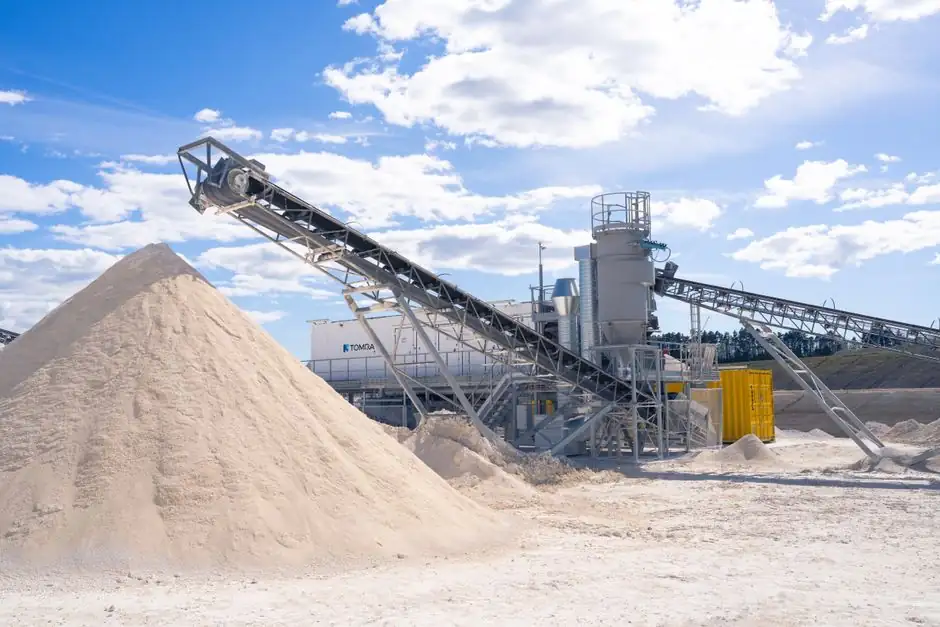
Construction-grade sand and aggregate demand hits roughly 50 billion tonnes per year globally, while desert sand cannot substitute for the coarse, water-swept grains concrete and container glass require. Aggregate shortfalls, transport costs, and stricter mining rules now price-spec concrete, mortar

· SUPPLY CHAIN & SOURCING · 34 min read

Bump cap vs ANSI Z89.1 hard hat: protection level and selection map

Bump caps and ANSI Z89.1 hard hats are not interchangeable: hard hats rated Type I/II plus Class G/E/C protect against falling objects and up to 20,000 V of electrical contact, while bump caps meet ANSI/ISEA 100-2024 only for low-energy worker-generated impacts and offer zero falling-object or OSHA-

· SAFETY & CERTIFICATION · 35 min read

Absolute Multi-Turn Draw-Wire vs Incremental With Homing: Decision Map

Absolute multi-turn draw-wire sensors report true position at power-up with no homing cycle, while incremental draw-wire sensors with homing are cheaper but lose all counts on power loss. Pick absolute when downtime or safety stops a homing move, and incremental when budget, high pulse rates, and sh

· MEASUREMENT & TEST · 35 min read

ASTM D1418 FKM Type 1 dipolymer: composition, cure, and where it actually fits

ASTM D1418 FKM Type 1 is the dipolymer of vinylidene fluoride (VDF) and hexafluoropropylene (HFP), the baseline general-purpose grade of fluoroelastomer, typically cured with bisphenol and rated for service roughly from -17°C TR-10 to about 200–230°C continuous.

· MATERIALS & RAW STOCK · 38 min read

UL and CE Marking Calibration: In-House Lab vs Outsourced Traceability

UL Follow-Up Services require traceable calibration of all IMTE used to verify compliance, but do not mandate an in-house lab; CE marking applies only when a product is placed on the market, with calibration driven by ISO/IEC 17025 traceability and customer-process needs.

· MANUFACTURING & INDUSTRY 4.0 · 49 min read

AEM Electrolyzer Commercialization Hits Multi-Megawatt Scale in 2026

AEM electrolyzers moved to multi-megawatt commercial delivery in 2026, with Power to Hydrogen installing a 500 kW system at Port of Antwerp-Bruges on 250 kW stack modules and Horizon shipping a 5 MW unit in April. CAPEX claims of up to 65% below PEM remain vendor-stated.

· INDUSTRY TRENDS & MARKETS · 43 min read

ATEX Cable Gland Selection: Zone 1 vs Zone 2 Decision Matrix

ATEX cable gland selection for Zone 1 mandates Ex d or double-sealed Ex e barrier glands with IP66/IP68 ratings and matched gas-group/temperature class, while Zone 2 accepts simpler Ex e single-compression brass or nylon designs; a Zone 1 marked gland is always permissible in Zone 2, never the rever

· ELECTRICAL & AUTOMATION · 43 min read

Arc vs TIG welding for pipe root pass: process selection, prep geometry, and code fit

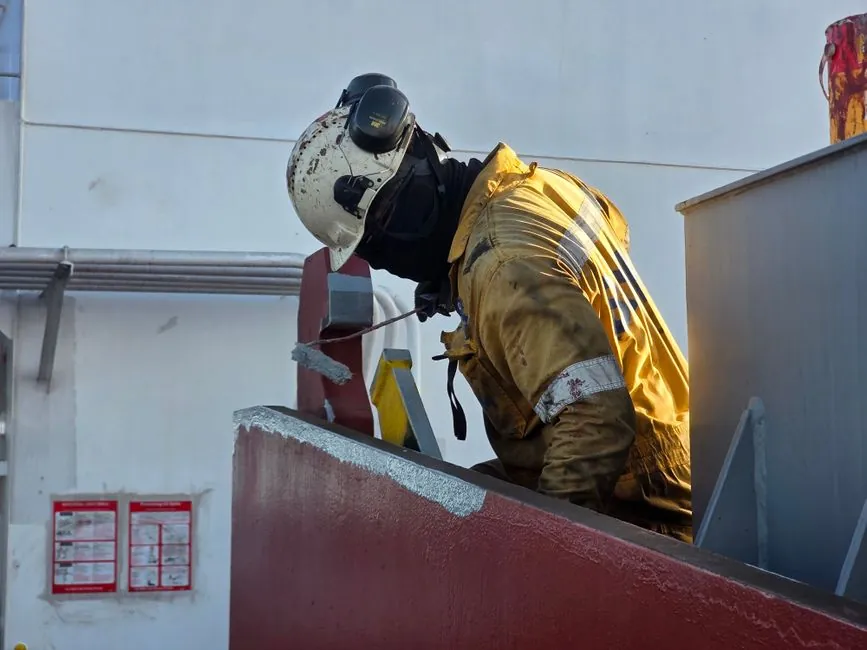
For pipe root passes, TIG (GTAW) and Stick (SMAW) dominate field and shop practice, with TIG specified for stainless, aluminum, and code-critical joints, and Stick chosen for portable, outdoor, multi-pass fill work. Selection hinges on base metal, weld position, code requirements, and field conditio

· CONSTRUCTION TOOLS · 41 min read

Brass vs aluminum squeeze casting machine: selection map

Brass and aluminum squeeze casting machines differ mainly in melt temperature, die material and clamp-force demand. Aluminum units lead the market for automotive structural parts, while brass machines stay the choice for bushing and gear foundries running copper alloys above 900 deg C.

· CASTING EQUIPMENT · 42 min read

ANSI/BHMA A156.1 vs EN 1935: Hinge Grade Classification Compared

ANSI/BHMA A156.1 grades butts and hinges on cycle endurance, material gauge, and wear tolerance in three or four tiers (Grade 1 Heavy Duty through Grade 3 or 4 Light Weight), while EN 1935 grades European hinges by a 1-to-14 digit/durability class. The two systems are not interchangeable at the mode

· BUILDING MATERIALS · 45 min read

Bolt guard locking vs tongue actuator guard locking: ISO 14119 selection map

Bolt-type guard locking and tongue-actuator guard locking are the two ISO 14119 paths to holding a movable guard closed during run-down. Bolt units win for large personnel doors needing a mechanical latch and rear escape release; tongue switches win for compact hatches where a coded key in a 1.0–3.5

· SAFETY & CERTIFICATION · 63 min read

Bare-Shaft Pump vs Packaged HPU for a New Press Build

A bare-shaft pump needs on-site shaft alignment, reservoir plumbing, valve block wiring, and filtration setup before it can run; a packaged hydraulic power unit is delivered factory-tested and ready to plumb into the press. For most new press builds, the packaged HPU is the lower-risk choice, while

· PUMPS, VALVES & PIPING · 47 min read

Ball screw vs lead screw: efficiency and backlash decision matrix

Ball screws reach 90% or higher mechanical efficiency while lead screws sit around 20% to 40% on the same duty; back-driven ball screws need a brake, lead screws do not. The right pick is a four-axis call: efficiency, backlash, duty cycle, and self-locking.

· POWER TRANSMISSION · 41 min read

ASTM D1418 FKM types: how to read the designation and pick the right grade

ASTM D1418 groups FKM fluoroelastomers into five polymer types based on monomer chemistry and fluorine content, with FKM covering about 80% of all fluoroelastomers by volume. Selection turns on fluid compatibility, low-temperature TR-10, and cure system rather than generic FKM vs Viton labels.

· MATERIALS & RAW STOCK · 45 min read

ISO/IEC 29158 DPM Grading: 2025 Revision, Parameters, and Verifier Setup

ISO/IEC 29158:2025 supersedes the withdrawn 2020 edition and is the current direct part marking (DPM) quality guideline published March 2025 under ISO/IEC JTC 1/SC 31. It grades Data Matrix and QR marks lasered, dot-peened or etched onto metal, plastic or electronic substrates, using modified illumi

· MANUFACTURING & INDUSTRY 4.0 · 50 min read

Belt vs Screw Conveyor for Enclosed Dusty Material

Enclosed screw conveyors (U-trough or tubular) handle enclosed dusty powders at 15-45% trough loading and short 60-80 ft runs; belt conveyors win for long distances and gentle throughput but need covers and dust extraction for dust-tight duty.

· LOGISTICS & PACKAGING · 38 min read

Aluminum vs Alloy Steel vs Stainless Load Cell Module: Material Trade-Offs

Alloy steel load cells cost 30-50% less than stainless equivalents and dominate dry industrial use, while 17-4PH stainless wins in wet or corrosive service, and aluminum 2024/2023 alloys stay confined to single-point, low-capacity platforms under 100 kg.

· ELECTRICAL & AUTOMATION · 37 min read

Bridge Formula axle spacing for concrete mixer trucks: 427 in minimum and weight

U.S. federal Bridge Formula caps a single axle at 20,000 lb, a tandem (axles 40-96 in apart) at 34,000 lb, and gross vehicle weight at 80,000 lb, so most concrete mixer trucks need at least 427 in from front steer to rear booster axle to qualify for a 36 ft external bridge.

· CONSTRUCTION VEHICLES · 47 min read

Brass Squeeze Casting Output Per Hour for Small Valve Bodies

Brass squeeze casting machines for small valve bodies typically run 8-25 shots per hour per cavity, with cycle time dominated by 5-10 min of pressure-hold solidification rather than injection; output is set by tonnage, melt temp, and pour weight, not machine speed.

· CASTING EQUIPMENT · 42 min read

Anchor Rod Projection Above Concrete for Leveling Nuts and Grout

Anchor rod projection above concrete for leveling-nut base-plate erection is set as the distance from the top of concrete (referenced from the bottom of grout) to the top of the rod, and must accommodate two heavy nuts plus two washers plus the base-plate thickness plus grout clearance, typically dr

· BUILDING MATERIALS · 39 min read

Aerospace Titanium Lead Times 2026: Plate, Bar, and Forging Cycles

AMS 4911 plate lead times in 2026 run 8 to 16 weeks, AMS 4928 bar and forging cycles 14 to 18 weeks, and titanium and nickel tubing still stretches 50 to 60 weeks. Sponge net import reliance is 100% and alpha-beta Ti-6Al-4V holds 51% grade share, so qualification, not headline price, controls aerosp

· SUPPLY CHAIN & SOURCING · 38 min read

AWWA C503 Wet Barrel Hydrant: Spec Requirements, Materials, and 2026 Procurement Notes

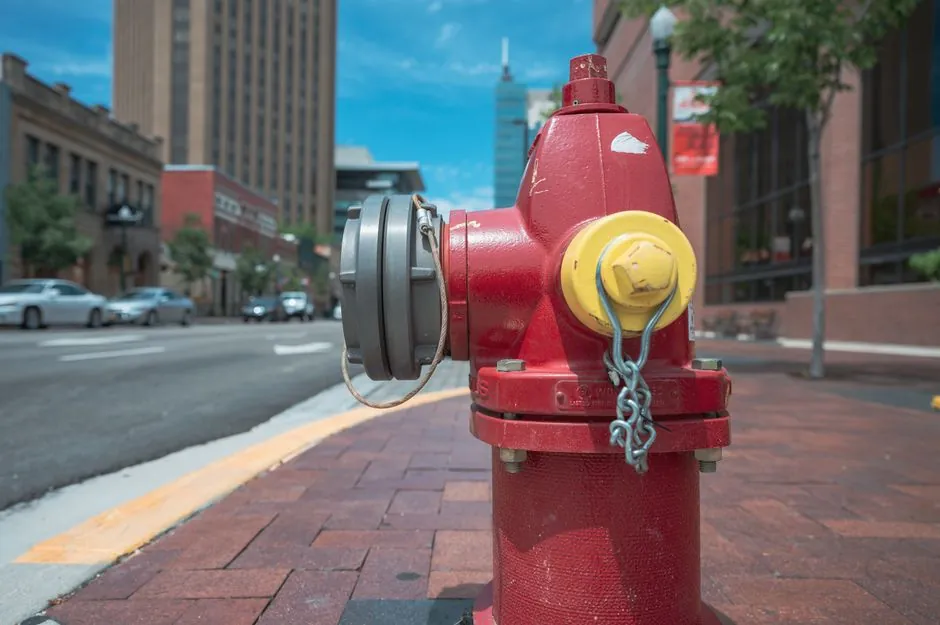
AWWA C503 governs wet-barrel fire hydrants for non-freezing climates, with the 2018 edition and a C503-21 comment cycle shaping procurement today. The standard mandates working pressure ratings of 200-250 PSI, ductile iron or stainless steel bodies, AWWA C110 Class 125 flanged inlets, NSF/ANSI 61 ce

· SAFETY & CERTIFICATION · 48 min read

Ball Valve Datasheet Parameters for High-Pressure Gas Service

High-pressure gas ball valves are typically specified using ASME B16.34 pressure-temperature classes (150, 300, 600, 900, 1500, 2500), with floating-ball designs for low-pressure lines and trunnion-mounted designs above Class 600 or 8 inches. Key datasheet parameters: body and seat material, port co

· PUMPS, VALVES & PIPING · 43 min read

Ball Screw Spline Combined Shaft for SCARA Z-Theta Axis

A combined ball-screw-and-ball-spline shaft on a SCARA robot Z-theta axis merges vertical lift and end-of-arm rotation on a single shaft, cutting part count, footprint and alignment work versus dual-shaft designs. The architecture is dominated by a rotary ball spline: grooved shaft for Z travel, int

· POWER TRANSMISSION · 36 min read

8-Channel Temperature Transmitters for Tank Farm Spot Sensing

An 8-channel temperature transmitter consolidates clustered RTD or thermocouple inputs at tank farms, reaction columns, and rotating equipment onto a single bus-powered fieldbus segment, cutting cable runs from eight to one and integrating average-temperature calculation with the tank gauging system

· MEASUREMENT & TEST · 36 min read

ASTM D1238 MFI for Polyolefins: Film Extrusion vs Injection Molding Grade Selection

ASTM D1238 melt flow rate separates polyolefin grades for film extrusion (low MFI, higher melt strength) from injection molding (higher MFI, easy cavity fill). Typical polyolefin MFI spans 0.06–33 g/10 min for HDPE and 0.6–150 g/10 min for LDPE at 190°C/2.16 kg. Resin lot-to-lot variation, additives

· MATERIALS & RAW STOCK · 44 min read

Digital twin for wind turbine blade production: process data spine and sensor stack

A digital twin for wind turbine blade production combines a physics-based blade model with live MES, layup, cure, and CT-scan data to monitor each part during manufacturing. Field examples, including the Aerosense MEMS-based monitoring twin and a University of Hull blade-factory digital twin project

· MANUFACTURING & INDUSTRY 4.0 · 50 min read

Belt vs Chain Bucket Elevator: Spec-Based Selection Guide

Chain-driven bucket elevators outperform belt units on hot, abrasive, or high-shock loads and on tall lifts, while belt units win on cost, noise, corrosion resistance, and capacity up to 5,000 cu ft/h. Choose by material temperature, particle size, lift height, and total cost of ownership.

· LOGISTICS & PACKAGING · 40 min read

Air Break Switch with Arcing Horns vs Vacuum Pole-Top Load Break Switch

An air break switch with arcing horns is a low-cost, no-load isolating device for 11-33 kV overhead lines; a vacuum pole-top load break switch uses a vacuum interrupter to break full load current at 12-36 kV, 630 A, 50/60 Hz. Choose ABS for isolation and light duty, vacuum LBS where load interruptio

· ELECTRICAL & AUTOMATION · 38 min read

200 A Arc Welder Duty Cycle: Reading the Rating Without Burning the IGBTs

An arc welding machine rated at 200 amps with an 80% duty cycle can sustain arc-on time for 8 minutes of every 10-minute cycle under 40°C ambient conditions, per the Amico ARC-200 spec sheet. At 60% duty cycle the same machine delivers 6 minutes of welding per 10-minute window; at 30% it drops

· CONSTRUCTION TOOLS · 36 min read

Anchor Bolt Cage Templates for Column Base Embedded Parts: Spec-First Guide

ASTM F1554 Grade 36/55/105 anchor bolt cages set on rigid steel templates are the de facto standard for column base embedded parts, with minimum 25x bolt-diameter embedment and 1-2 inch grout below the base plate. Critical failure points are template deflection, thread contamination, and projection

· BUILDING MATERIALS · 51 min read

AWWA C502 Dry-Barrel Hydrant: Spec Breakdown and 2024 Comment Cycle

AWWA C502 sets the minimum requirements for post-type, dry-barrel fire hydrants with compression or gate shutoff, delivering 1000 to 1500 gpm through a 4½-inch pumper outlet at 20 psi residual pressure. The current revision is C502-18, with a public comment period that opened on 20 May 2024 on the n

· SAFETY & CERTIFICATION · 44 min read