Industry News

Industry News · Page 24

CONSTRUCTION TOOLS38 min read

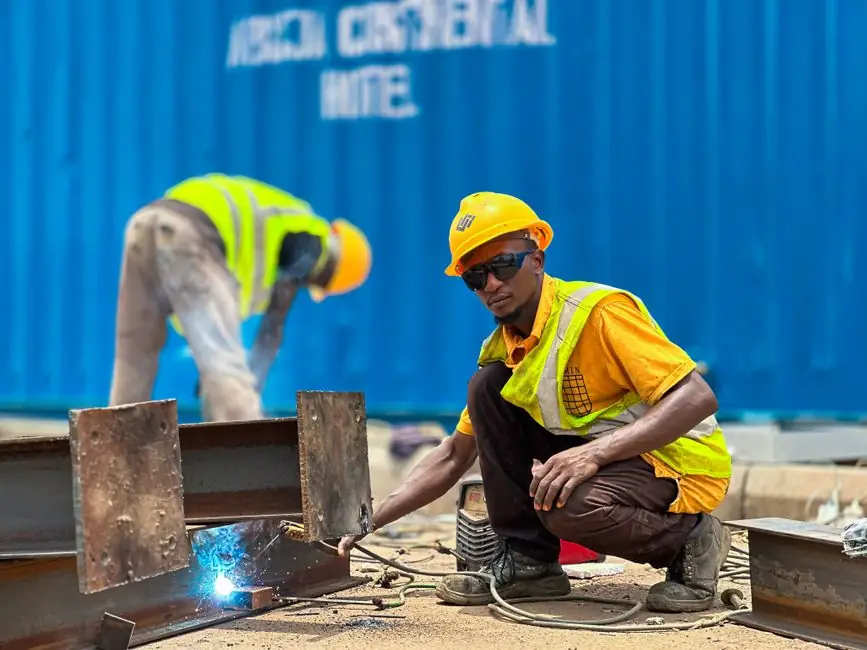
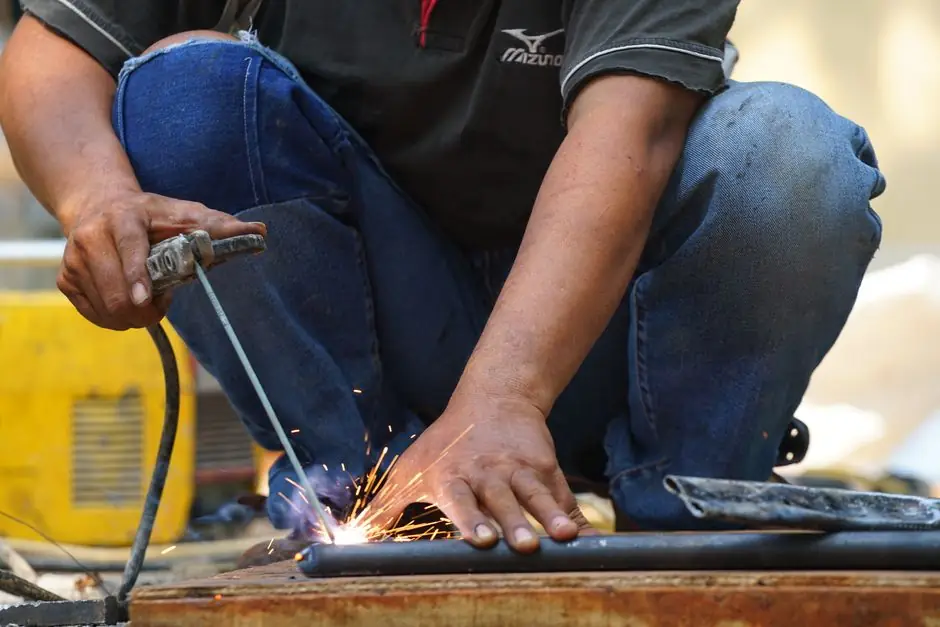
How an Arc Welding Machine Strikes and Holds the Arc

An arc welder strikes and holds an arc by forcing welding current across a sustained gap between electrode and base metal, typically at about 20 V for stick welding, with arc length setting voltage and current setting heat input. A constant-current supply keeps amperage steady as the operator varies

Read →


Hand-shank ladle vs geared crane ladle: foundry pouring decision guide

Hand-shank ladles cap at roughly 20 kg operator load for iron-pouring work, while geared crane ladles scale from 450 kg to 165,000 lb (75 t) on worm-and-wheel gearboxes. Choose hand-shank for short, low-temp, intermittent pours; choose geared crane for any job above operator limit, continuous duty,

· CASTING EQUIPMENT · 38 min read

Fly Ash vs Sand AAC Blocks: 2026 Spec Decision Map

Fly ash AAC blocks typically reach 0.14-0.16 W/mK thermal conductivity, dry density near 550-650 kg/m3, and use 70 percent fly ash by binder, while sand-based AAC delivers lower drying shrinkage near 0.03 percent, higher compressive strength, and a stable calcium silicate matrix from quartz silica.

· BUILDING MATERIALS · 35 min read

Spindle Angular Contact Bearing Preload: How Much, How Set

Spindle angular contact bearings need only a small factory preload (light or extra-light class) to remove internal clearance, typically producing 2x to 3x rigidity gain. The exact preload force is set by race grinding at the bearing maker, then carried into the spindle via ground spacers or a measur

· POWER TRANSMISSION · 33 min read

Choosing kV Range for Inspecting Thick Steel Castings

For thick steel castings, plan X-ray kV around 130-400 kV at 25-100 mm wall thickness, switch to Iridium-192 or Cobalt-60 gamma sources above ~100 mm, and move to a linear accelerator (MeV-range) beyond roughly 250 mm, with ultrasonic thickness gauging as a paired method for one-sided wall verificat

· MEASUREMENT & TEST · 34 min read

Hot Melt vs Solvent Contact Adhesive: Open Time Decision Guide

Hot melt adhesives bond in 1-30 seconds with zero VOCs, while solvent-based contact adhesives need 30-120 seconds of evaporation. For production lines, hot melt wins on speed, safety, and shelf life; solvent-based still wins on long open time and stress-crack resistance.

· MATERIALS & RAW STOCK · 38 min read

What Category 4 Safety Circuits Require Beyond Simple Redundancy

Category 4 safety circuits under EN ISO 13849-1 require more than dual-channel redundancy: they demand diagnostic coverage ≥99%, well-tried safety principles, high MTTFd per channel, measures against common-cause failure, and single-fault detection before the next demand, with fault accumulation con

· MANUFACTURING & INDUSTRY 4.0 · 42 min read

How to Design Pipe Diameter for a Pneumatic Conveying System

Pipeline diameter in a pneumatic conveying system is set by three coupled choices: conveying mode (dilute vs dense), material saltation velocity, and required mass throughput, with the final bore derived from the continuity equation Q = v × A at a target gas velocity 20-30% above saltation. Typical

· LOGISTICS & PACKAGING · 40 min read

Bio-Based Plastics Market 2026: Capacity, Segments, and Sourcing Reality

Global bio-based plastics production capacity is set to double from 2.31 Mt in 2025 to 4.69 Mt by 2030, with the broader bioplastics market valued between USD 21.7 B and USD 28.08 B in 2026 depending on scope, growing at a 17.5-17.9% CAGR through 2033-2035.

· INDUSTRY TRENDS & MARKETS · 30 min read

Ex tb Cable Glands for Zone 21: Spec, Marking, and Selection Rules

Ex tb cable glands for Zone 21 combustible dust areas are dust-ignition-protected by enclosure (IEC 60079-31) and must achieve IP6X. Selection hinges on matching dust group IIIA/IIIB/IIIC, EPL Db, and ATEX Category 2 D marking to the equipment.

· ELECTRICAL & AUTOMATION · 44 min read

Flat Top Tower Cranes on Multi-Crane Sites: Why the Topless Geometry Wins

Flat top tower cranes eliminate the A-frame, cat-head, and pendant lines found on hammerhead designs, giving a lower head profile that lets jibs on adjacent machines overlap safely in shared airspace. That geometry is the single biggest reason contractors specify them for multi-crane sites, tight ur

· CONSTRUCTION VEHICLES · 43 min read

How a bar bender reads a bar bending schedule: BBS fields, shape codes, and bend math

A bar bender reads a bar bending schedule (BBS) row by row, treating each line as one fabrication instruction: bar mark, diameter, shape code (BS 8666:2020 or IS 2502), cutting length in mm, and quantity. Operators cross-check shape codes against bending machine pin sets, then bend each bar to the s

· CONSTRUCTION TOOLS · 32 min read

Gray Iron Green Sand Molds: GCS Target and Process Levers

For gray iron green sand molds, the operational target for green compression strength (GCS) is 1,800 g/cm², paired with permeability 130, moisture ~2.8%, and mold hardness 90. Permeability contributes 61.53% of casting-quality variance, GCS 21.54%, and pouring temperature 5.52%, defining the hierarc

· CASTING EQUIPMENT · 48 min read

Exposed vs Concealed Grid Suspended Ceiling: Cost and Spec Tradeoffs

Exposed-grid suspended ceilings typically run $1.00–1.25/sf for grid material plus roughly $0.50/sf for tiles, while concealed-grid systems add labour and specialty hardware, lifting total cost into the mid-to-high range. Specifiers should choose exposed for budget, fast install, and frequent plenum

· BUILDING MATERIALS · 43 min read

Beryllium Supply Risk: Aerospace, Defense, and Electronics Exposure

Beryllium supply risk for aerospace and electronics stems from a tightly concentrated value chain: the U.S., Kazakhstan, and China dominate production, with Materion running the only fully integrated mine-to-metal facility. Aerospace and defense account for nearly 40% of 2024 demand, while substitut

· SUPPLY CHAIN & SOURCING · 37 min read

Category 1 Emergency Stop Delay: How to Set It Right

Category 1 emergency stop delay is not a fixed number; ISO 13850 and IEC 60204-1 require a controlled deceleration followed by STO, with the actual time delay set per-machine by risk assessment. Practical SS1-t implementations use 0.5 s to several seconds, matched to drive ramp + braking torque.

· SAFETY & CERTIFICATION · 36 min read

Guided Twin-Rod vs Single-Rod Cylinders: Side-Load Decision Guide

Guided twin-rod cylinders outperform single-rod cylinders on side-load capacity and anti-rotation, while through-rod (double-end) cylinders only equalise extension and retraction force. Pick guided twin-rod for eccentric lateral loads, single-rod for compact economy, and through-rod for symmetrical

· PUMPS, VALVES & PIPING · 47 min read

12V Linear Actuator Full-Load Current: Real Amp Draw, Sizing Math, and Pitfalls

A 12V linear actuator typically draws between 2A and 12A at full rated load, with a 400 lb unit commonly hitting 12A and a lighter 150 lb load on the same unit dropping to about 7A. Startup surge can spike to 5x the running current, so a properly sized DC supply should carry 1.25x to 1.5x headroom o

· POWER TRANSMISSION · 40 min read

Choosing Data Logger Sample Rate From Signal Bandwidth and Nyquist

For a band-limited analog signal with maximum frequency fmax, choose a data logger sample rate of at least 2 x fmax (Nyquist), with 10 x fmax recommended and 20 x fmax conservative for clean join-the-dots reconstruction. Failing this, aliased low-frequency artifacts appear that no software filter ca

· MEASUREMENT & TEST · 41 min read

High-Nickel Austenitic Cast Iron: Specs, Grades, Selection

High-nickel austenitic cast irons (Ni-Resist family, 15–36% Ni) deliver a stable austenitic matrix for heat, corrosion, and wear service up to ~900°C. Selection hinges on Ni level, Cr content, and graphite form (flake vs nodular), with D-2/D-5 ductile grades preferred for toughness and Type 1/2 flak

· MATERIALS & RAW STOCK · 46 min read

CE marking documentation for machine builders: the 2026 file set and what 2023/1230

A machine builder placing machinery on the EU market must keep an EN ISO 12100 risk assessment, the full technical file, an up-to-date EU Declaration of Conformity, and translated instructions in every member-state language; from 20 January 2027 this sits under Machinery Regulation (EU) 2023/1230, n

· MANUFACTURING & INDUSTRY 4.0 · 41 min read

Bucket Elevator Capacity Formula: t/h from Volume, Speed, and Spacing

Bucket elevator capacity in t/h is calculated as: Capacity (t/h) = (V × ρ × S × 60) / D, where V is bucket volume, ρ is bulk density, S is belt speed, and D is bucket spacing. Centrifugal discharge units run 1.0–2.5 m/s; continuous-discharge units 0.5–1.0 m/s, with fill factors of 0.75 typical for g

· LOGISTICS & PACKAGING · 41 min read

Bifacial module share in 2026: spec, gain, and procurement reality

Bifacial PV module share of newly installed utility-scale solar power is on track to reach roughly 90% by 2033, up from 5% in 2017. With bifacial gain commonly running 8-15% in real projects and dual-glass designs holding 57.4% of 2026 shipments, specifying the format correctly is now the defau

· INDUSTRY TRENDS & MARKETS · 48 min read

Ex nR Cable Gland Spec: Restricted-Breathing Interface Rules

Ex nR cable glands must preserve restricted-breathing integrity: only IEC 60079-0 compliant Ex e glands (or integral/integrated entries) with verified sealing at the enclosure interface are accepted, and barrier compound glands are explicitly not required for nR (unlike Ex d). Specifiers verify by r

· ELECTRICAL & AUTOMATION · 43 min read

Stud welding in vertical and overhead positions: process, parameters, pitfalls

Drawn-arc stud welding can be performed in vertical and overhead positions on qualified CD studs with ferrule, using short weld times under 1 s and adjusted current/lift to hold the molten pool against gravity. The process is more tolerant of position than arc welding because the stud itself is plun

· CONSTRUCTION TOOLS · 46 min read

Gravity Die Casting vs Sand Casting: 2026 Volume Break-Even Map

Gravity die casting breaks even against sand casting between roughly 500 and 5,000 parts per run, with GDC dominating the 1,000–50,000 unit band where sand casting quality is insufficient but HPDC tooling cannot yet be justified. Below 300 parts, sand casting wins on tooling cost; above 10,000 parts

· CASTING EQUIPMENT · 32 min read

Expansion Anchors for Machine Base Plates: Spec, Capacity, and Installation Rules

Wedge-style expansion anchors deliver roughly 8-12 kN tension at 65 mm embedment in 25 MPa concrete, making them the standard post-installed fastener for steel machine base plates where cast-in J- or L-bolts were never placed. The correct call is a torque-controlled wedge or sleeve anchor matched to

· BUILDING MATERIALS · 39 min read

BeCu vs Phosphor Bronze Connector Strip: Spec, Cost, Supply

Beryllium copper and phosphor bronze dominate copper-alloy connector strip supply, with BeCu delivering higher tensile strength and conductivity at 3-5x the unit cost. BeCu suits miniature and high-cycle contacts, while phosphor bronze fits larger pitch strips and harsh-environment pins where cost a

· SUPPLY CHAIN & SOURCING · 35 min read

Gas detector mounting distance from leak sources: rules, ranges, and field layout

Fixed gas detectors should be mounted within 0.3-2.0 m of credible leak sources, with the exact distance governed by gas density relative to air, ventilation, and release pressure. Industry guidelines cap combustible detector spacing at 10 m outdoors and 5 m indoors, toxic detectors at 4 m and 2 m r

· SAFETY & CERTIFICATION · 44 min read

Grooved vs Wafer Butterfly Valves on Fire Sprinkler Mains

For fire sprinkler mains, grooved-end butterfly valves install up to 3x faster and allow drop-out maintenance without draining the line, while wafer butterfly valves save space, weight, and unit cost where flanges already exist. The right pick depends on whether the main is flanged or grooved, the w

· PUMPS, VALVES & PIPING · 45 min read

Ball Spline Track Count: 2 to 6 Grooves, 4 Most Common

Standard ball splines use 2 to 6 ball tracks on the shaft, with 4 tracks the most common configuration; a 3-track gothic-arch design yields 6 contact rows. Track count directly governs load capacity, moment rigidity, and recirculation geometry.

· POWER TRANSMISSION · 38 min read

High ENB vs Low ENB EPDM: Cure Rate, Compression Set, and Selection

High ENB EPDM (8–12% diene) cures faster and gives better compression set, but loses low-temperature flexibility and ageing life versus low ENB grades. Specify high ENB for injection-moulded seals, low ENB for cold-rated roofing and coolant hose.

· MATERIALS & RAW STOCK · 30 min read

CE-to-NFPA 79 export: what actually changes on a machine

Exporting a CE-marked machine to an NFPA 79 market swaps the legal addressee (operator vs manufacturer), the electrical reference standard (EN 60204-1:2018 vs NFPA 79), and the evidence path (self-declared technical file vs NRTL/AHJ approval), so wiring colors, surge protection, and the documentatio

· MANUFACTURING & INDUSTRY 4.0 · 45 min read

Calculating belt conveyor TPH from belt width and speed

Belt conveyor capacity in TPH equals belt speed (ft/min) times load cross-sectional area (ft²) times bulk density (lb/ft³) times 60, divided by 2000. For a 36-inch troughed belt running 300 ft/min at 100 lb/ft³, the calculated throughput is 450 TPH.

· LOGISTICS & PACKAGING · 40 min read

Ex de GRP Control Stations: Enclosure, Contact Block, Specs

Ex de control stations in carbon-loaded, antistatic GRP housings pair a factory-sealed Ex d contact block with Ex e increased-safety terminal compartments, certified for Zones 1, 2, 21 and 22. Pepperl+Fuchs GR and LCP series cover 7 enclosure sizes, up to 68 operators, IP66, and ambient range –40 to

· ELECTRICAL & AUTOMATION · 54 min read

Class 6 vs Class 7 dump truck: axle count rules and lift-axle traps

FHWA Class 6 and Class 7 differ by axle count, not GVWR: Class 6 is exactly three-axle single-unit trucks, Class 7 is single-unit trucks with four or more axles. Dump trucks appear in both classes depending on tag-axle and lift-axle position.

· CONSTRUCTION VEHICLES · 37 min read

Tilting gravity die casting machine: controlled-pour mechanism and 2026 spec snapshot

Tilting gravity die casting machines fill the mould by rotating it from a near-horizontal pour position back to vertical, keeping the metal head low and the flow laminar. Tilting up to 90 degrees with PLC-controlled speed on 300 kN-class hydraulic platens is the standard configuration for gas-tight

· CASTING EQUIPMENT · 41 min read