Industry News

Industry News · Page 23

Why Additive Production Lines Need a Dedicated MES Layer

Additive production lines need a dedicated MES layer because legacy MES was architected for stable, low-mix discrete or batch lines under the ISA-95 Level 3 model, while AM operates with high-mix jobs, geometry-driven scheduling, iterative design changes, and per-build traceability of material batch

· MANUFACTURING & INDUSTRY 4.0 · 35 min read

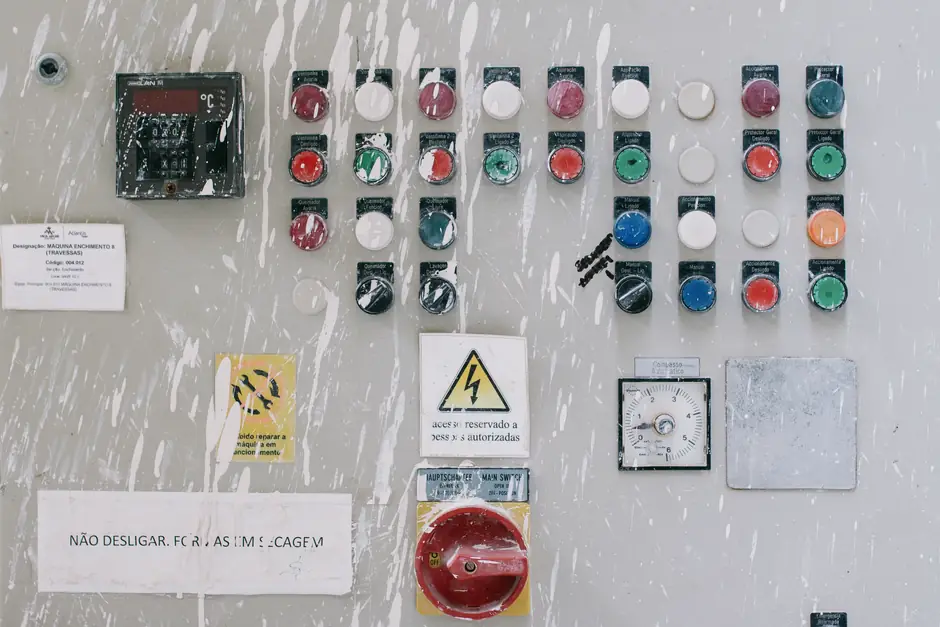
Roller conveyor gate interlock with drive motor: wiring, logic, and standards

A roller-conveyor gate interlock is a safety switch wired in series with the drive-motor contactor or variable-frequency drive enable circuit. When the gate opens, the interlock breaks the enable, the drive drops out, and the rollers coast to zero before a worker can reach the nip point.

· LOGISTICS & PACKAGING · 48 min read

Explosion-Proof Junction Box vs Distribution Box: Function, Layout, and Spec

An explosion-proof junction box is a passive splice enclosure that terminates and routes cables without breaking current, while an explosion-proof distribution box is an active panel carrying breakers, contactors, and busbars that switch and feed downstream loads in Zone 1/2 hazardous areas. Functio

· ELECTRICAL & AUTOMATION · 45 min read

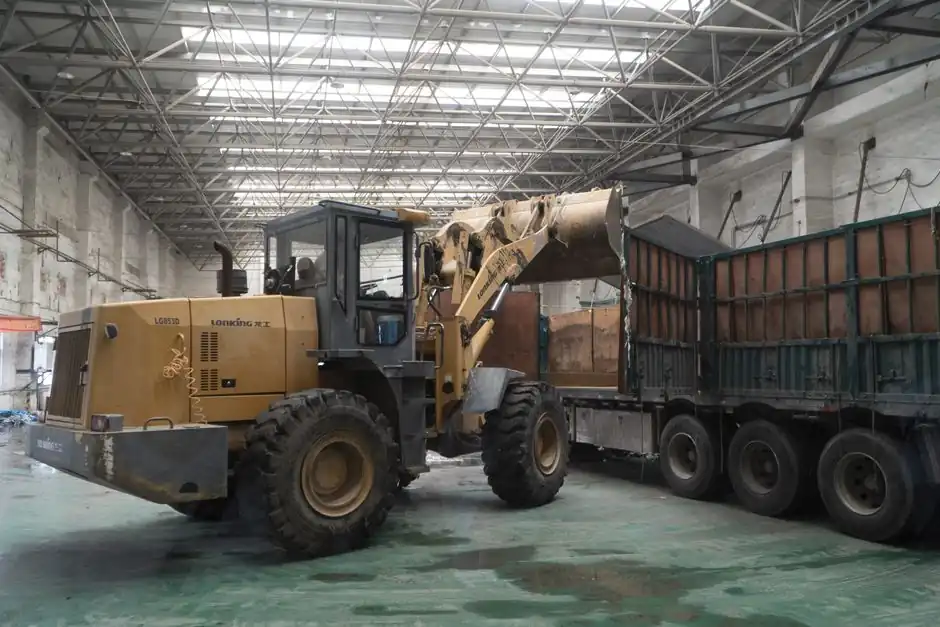
Counterbalance vs Reach Truck: Load-Stability Design, Aisle Math, and Spec Tradeoffs

Counterbalance forklifts stabilize a forward load with a rear cast-iron mass and operate in 3.5-4.5 m aisles, while reach trucks solve stability with outrigger legs plus a pantograph mechanism and run in 2.5-3 m aisles. Pick counterbalance for outdoor yards and heavy loads; pick reach for high-bay n

· CONSTRUCTION VEHICLES · 40 min read

Heated Amine Vapor Generator vs Liquid Amine Injection: Process Selection Criteria

Heated amine vapor generators and liquid amine injection differ fundamentally in V/L distribution, fouling tendency, and pH control band. Vapor feed favors pH 7.5-9.0 condensate chemistry for direct steam humidification, while liquid injection suits low-pressure scavenging but raises degradation ris

· CASTING EQUIPMENT · 37 min read

Foil-Faced XPS Under Radiant Floor Pipes: Spec, Performance, and Selection

Foil-faced XPS board is a defensible, not essential, underlayment for staple-up radiant floor heating: a 1-2 inch foil-faced foam with a 19 mm air gap outperforms an unfaced batt at equivalent R-value, while EPS (R-10, 94% retention) outperforms XPS (R-10, 52% retention) for thermal retention in sol

· BUILDING MATERIALS · 45 min read

IEC 60079-29-4 Open Path Detector Performance: Standard Scope, Tests, and Plant Use

IEC 60079-29-4:2009 is the international standard setting performance and test requirements for open-path flammable gas detectors. It is one part of the IEC 60079-29 series, adopted across Europe and North America as EN 60079-29-4:2010 and UL 60079-29-4 Ed. 1-2018 for hazardous-area plant use.

· SAFETY & CERTIFICATION · 52 min read

Triplex Plunger Pump Specs for Well Service: 2026 Sizing Field Guide

Triplex plunger pumps for well service cover 6.9 to 689 bar at 0.49 to 908 L/min, with high-end oilfield models reaching 20,000 PSI (1,379 bar) and 5,000 BHP. Specifying one starts with the operating duty point and fluid chemistry, not a model number.

· PUMPS, VALVES & PIPING · 30 min read

How to Read a Ball Bearing Dimension Series Code

A ball bearing designation decodes in three parts: first digit = bearing type, second digit = dimension series (width/OD), last two digits = bore in mm (×5 above 10 mm). Reading 6206 gives type 6, series 2, 30 mm bore.

· POWER TRANSMISSION · 38 min read

Reading FKM compound codes: hardness, polymer type, fluid limits

An FKM compound designation like "70 FKM 576" breaks down as 70 Shore A hardness, FKM base polymer family per ASTM D1418, and a vendor-specific material code (576). Pair this with the A/B/F polymer subtype, which sets fluorine content at 66%, 68%, or 70% respectively and governs fluid and temperatur

· MATERIALS & RAW STOCK · 37 min read

Repair vs Replace an Aging PLC: Decision Criteria for 10–20 Year Service Life

Replace an aging PLC at 10–20 years of service or sooner if spare parts are obsolete, software is unsupported, or repair exceeds 50–60% of replacement cost. Documented component-level repair is usually smarter than marketplace "new" spares for legacy Allen-Bradley or Siemens controllers.

· MANUFACTURING & INDUSTRY 4.0 · 34 min read

How a Dock Leveler Bridges a Trailer Gap: Mechanism, Types, and Spec Ranges

A dock leveler is a steel or aluminum platform that bridges the typical 8-10 inch gap and 12 inch up/down height swing between a fixed 48 inch dock and a 36-60 inch trailer bed, using a hydraulic cylinder, air bladder, or spring to raise the deck, extend a hinged lip onto the truck, and float with t

· LOGISTICS & PACKAGING · 38 min read

Wind blade recycling in 2026: capacity build-out, cost gap, and process choice

Wind blade recycling capacity scales sharply in 2026 as retirements hit 3,000-9,000 blades/yr, with mechanical, thermal, and chemical routes competing at $1,000-2,000/ton versus $60-150/ton landfilling. Glass fiber recovery and AI-driven blade sorting now anchor commercial deployment.

· INDUSTRY TRENDS & MARKETS · 44 min read

T4 vs T6 Stepper Motors: Surface Temperature, Gas Fit, Cost

Explosion-proof stepper motors with T4 rating cap surface temperature at 135°C while T6 units hold it to 85°C, a 50°C gap that determines gas compatibility, duty cycle, and overall cost in hazardous areas.

· ELECTRICAL & AUTOMATION · 36 min read

How an Underdeck Suspended Platform Travels Along a Bridge Girder

An underdeck suspended platform travels along a bridge girder by hanging from wire ropes or hangers anchored to the deck above, then shifting horizontally on rollers, wheeled bogies, or a dedicated under-bridge access carriage as work progresses.

· CONSTRUCTION TOOLS · 55 min read

T6 Solution Treatment for Aluminum Castings: Temperature, Soak, and Furnace Control

T6 solution treatment for aluminum castings runs at 500-550 °C (typically 530-540 °C) for 1-12 h, held within ±5-6 °C of setpoint and 10-25 °F below the alloy's eutectic, then water-quenched at 66-100 °C and aged at 154-227 °C to hit T6 mechanical targets of ~235 MPa UTS, 165 MPa yield, 70-105 BHN.

· CASTING EQUIPMENT · 59 min read

Foamed Cement Core vs EPS Bead Cement Core: Partition Panel Spec Tradeoffs

Foamed cement cores (cement + foam agent) and EPS bead cement cores (cement + expanded polystyrene beads) are the two mainstream lightweight partition panel technologies, with 2025-era EPS-bead panels reaching 1000–1100 kg/m³ density, 3.5–7.5 MPa strength, and 47% lower thermal conductivity versus b

· BUILDING MATERIALS · 45 min read

Bismuth and Indium Supply Risk: Electronics Spec Impact, 2026

China's January 2025 export controls on bismuth and indium now sit inside a list of 16 restricted critical minerals, exposing electronics assembly lines to multi-month supply bottlenecks and sharp price pass-through on ITO targets, low-melt solders, and connector plating.

· SUPPLY CHAIN & SOURCING · 47 min read

Fire Hydrant Nozzle Height Above Finished Grade: Jurisdictional Specs Compared

Fire hydrant nozzle height above finished grade is governed locally: 16-30 in (lowest outlet) per Painesville OH, 18 in minimum (lowest outlet) per Clarkston WA, steamer connection 18-24 in per IFC criteria, and ground ring flush to 2 in above grade per MUD 2025 standard. Always

· SAFETY & CERTIFICATION · 42 min read

Ball Bearing Shaft Fit: Tightness Range, Load Class, and Selection Rules

Radial ball bearing inner rings on a rotating shaft are typically installed with an interference fit in the j5 to m6 range, while the stationary outer ring uses a loose H6/H7 housing fit. Tightness scales with load severity, and ABMA Standard 7 governs metric series fits.

· POWER TRANSMISSION · 35 min read

Stud, Adhesive, or Magnet: Picking the Right Mount for High-Frequency Bearing Fault

Mounting method controls whether accelerometer resonances above 20-50 kHz reach the data acquisition chain; stud-mounting with a flat, prepared surface is required for high-frequency bearing fault detection, while handheld probes and magnetic mounts are limited to low and mid-band work.

· MEASUREMENT & TEST · 42 min read

Sizing Load Cell Capacity for a 10-Cell Truck Scale

For a 10-cell truck scale, divide the maximum gross vehicle weight by 10, then apply a 1.5 to 2.0 safety factor and a 1.2 to 1.5 dynamic-impact factor so each cell is sized for roughly 15 to 30 percent of truck GVW. Double-ended shear beams (1,000 to 200,000 lb) and canisters (20,000 to 500,000 lb)

· LOGISTICS & PACKAGING · 42 min read

Bismuth 2026 Price Surge: Supply Squeeze, Cost Pass-Through, Spec Response

Refined bismuth traded at $67.00/kg on 25 September 2026, up 275.77% since the start of 2025 and 465.40% since January 2024. The driver is a supply squeeze, not a demand boom: China export curbs since early 2025, plus concentrated by-product output. Specification impact is highest for low-

· INDUSTRY TRENDS & MARKETS · 43 min read

Explosion-Proof Stepper Motor Ratings for Hazardous Locations

Class 1 Division 1 Group D explosion-proof stepper motors are stocked with torque from 1.27 to 9.82 N-m (NEMA 34/42 frames), while purged-and-pressurized (NFPA 496) PT-series steppers cover Class I/II/III at up to 700 W. Selection pivots on division/zone, T-code, and frame size, not just enclosure t

· ELECTRICAL & AUTOMATION · 52 min read

Forklift Class I to VII: power source, tires, and where each applies

Forklifts are sorted into seven classes (I through VII) by the OSHA/ANSI/ITSDF B56.1 system, grouped by power source, tire type, and operating environment, and operator certification under OSHA 1910.178(l)(3) is class-specific, so a Class I certificate does not authorize Class IV or Class VII operat

· CONSTRUCTION VEHICLES · 37 min read

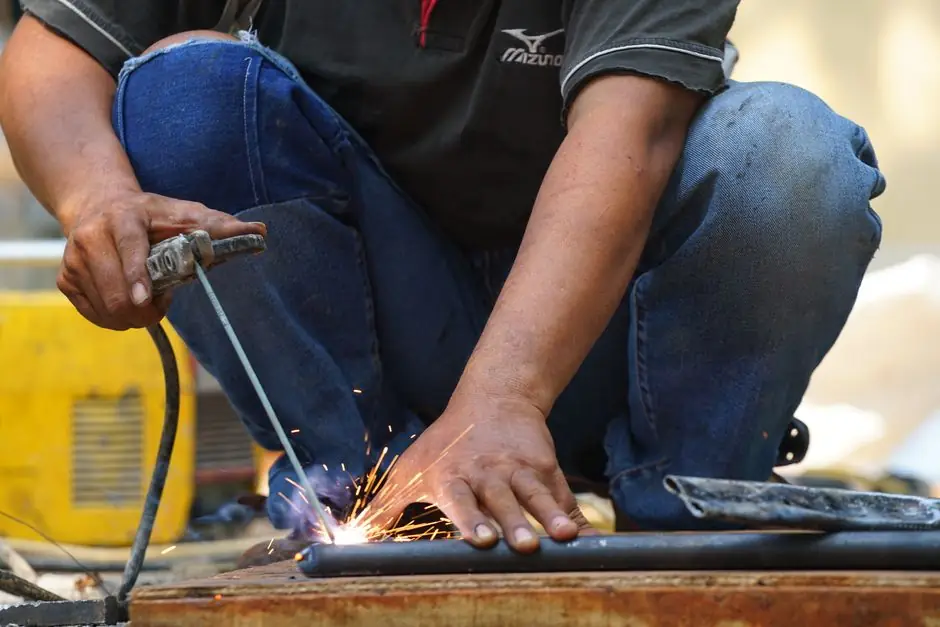
How an Arc Welding Machine Strikes and Holds the Arc

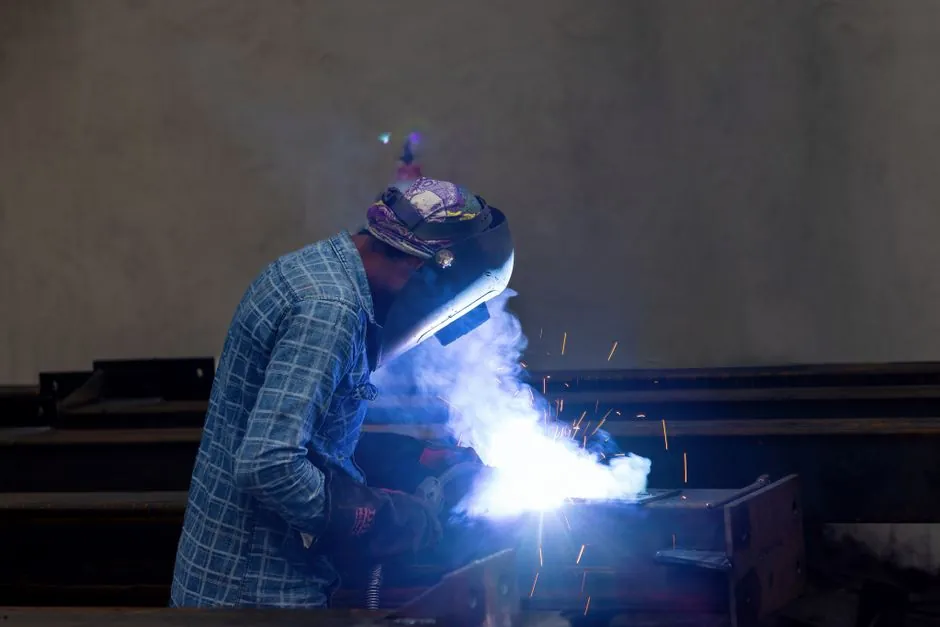
An arc welder strikes and holds an arc by forcing welding current across a sustained gap between electrode and base metal, typically at about 20 V for stick welding, with arc length setting voltage and current setting heat input. A constant-current supply keeps amperage steady as the operator varies

· CONSTRUCTION TOOLS · 38 min read

Hand-shank ladle vs geared crane ladle: foundry pouring decision guide

Hand-shank ladles cap at roughly 20 kg operator load for iron-pouring work, while geared crane ladles scale from 450 kg to 165,000 lb (75 t) on worm-and-wheel gearboxes. Choose hand-shank for short, low-temp, intermittent pours; choose geared crane for any job above operator limit, continuous duty,

· CASTING EQUIPMENT · 38 min read

Fly Ash vs Sand AAC Blocks: 2026 Spec Decision Map

Fly ash AAC blocks typically reach 0.14-0.16 W/mK thermal conductivity, dry density near 550-650 kg/m3, and use 70 percent fly ash by binder, while sand-based AAC delivers lower drying shrinkage near 0.03 percent, higher compressive strength, and a stable calcium silicate matrix from quartz silica.

· BUILDING MATERIALS · 35 min read

Spindle Angular Contact Bearing Preload: How Much, How Set

Spindle angular contact bearings need only a small factory preload (light or extra-light class) to remove internal clearance, typically producing 2x to 3x rigidity gain. The exact preload force is set by race grinding at the bearing maker, then carried into the spindle via ground spacers or a measur

· POWER TRANSMISSION · 33 min read

Choosing kV Range for Inspecting Thick Steel Castings

For thick steel castings, plan X-ray kV around 130-400 kV at 25-100 mm wall thickness, switch to Iridium-192 or Cobalt-60 gamma sources above ~100 mm, and move to a linear accelerator (MeV-range) beyond roughly 250 mm, with ultrasonic thickness gauging as a paired method for one-sided wall verificat

· MEASUREMENT & TEST · 34 min read

Hot Melt vs Solvent Contact Adhesive: Open Time Decision Guide

Hot melt adhesives bond in 1-30 seconds with zero VOCs, while solvent-based contact adhesives need 30-120 seconds of evaporation. For production lines, hot melt wins on speed, safety, and shelf life; solvent-based still wins on long open time and stress-crack resistance.

· MATERIALS & RAW STOCK · 38 min read

What Category 4 Safety Circuits Require Beyond Simple Redundancy

Category 4 safety circuits under EN ISO 13849-1 require more than dual-channel redundancy: they demand diagnostic coverage ≥99%, well-tried safety principles, high MTTFd per channel, measures against common-cause failure, and single-fault detection before the next demand, with fault accumulation con

· MANUFACTURING & INDUSTRY 4.0 · 42 min read