Industry News

Industry News · Page 80

SAFETY & CERTIFICATION52 min read

Respirator Selection for Warehouse Operations: A 1910.134 Spec Workflow

Warehouse respirator selection is governed by 29 CFR 1910.134: identify the airborne hazard, compute the hazard ratio, match it to the assigned protection factor (APF) of the chosen class, and integrate the device into a written respiratory protection program with fit testing.

Read →


Lab Respirator Selection: APR vs ASR, APF Match, and Cartridge Chemistry

Lab respirator selection hinges on matching NIOSH-approved APR or ASR types, assigned protection factors (APF 5–10,000), and chemical-specific cartridges to a documented hazard assessment, not a one-size-fits-all N95. Fit testing, medical evaluation, and a written respiratory protection program are

· SAFETY & CERTIFICATION · 66 min read

Respirator selection for electrical work: APF, filter class, and hazard map

For electrical work, respirator choice is hazard-driven: half-mask elastomeric APRs with P100 (HE-equivalent) filters cover most soldering and arc-flash particulate, while supplied-air (SAR) systems are required for oxygen-deficient panels. Match OSHA 29 CFR 1910.134 APF (10, 50, 1000) to the task a

· SAFETY & CERTIFICATION · 39 min read

Respirator selection in chemical plants: APR vs SCBA, cartridge logic, and OSHA-matched

For chemical plants, respirator selection is governed by 29 CFR 1910.134 plus chemical-specific standards (e.g. 1910.1045 for acrylonitrile, 1910.1018 for arsenic), with the match driven by contaminant, concentration, and oxygen level. Cartridge change schedules and IDLH thresholds decide APR versus

· SAFETY & CERTIFICATION · 47 min read

Construction-Site Respirator Selection: N95 vs P100, APF, and Silica Table 1

Construction-site respirator selection is dictated by OSHA 29 CFR 1926.1153 (silica) and 29 CFR 1910.134 (respiratory protection program): match the filter class (N95 vs P100), assigned protection factor (APF), and task-specific Table 1 entry to the hazard. About 2 million U.S. construction workers

· SAFETY & CERTIFICATION · 55 min read

Safety Helmet Selection for Work at Height: EN 12492 vs EN 397 vs ANSI Z89.1

For work above 2.5 m, EN 12492 mountaineering helmets with chin strap and side-impact protection are the spec-first choice; EN 397, EN 14052, and ANSI Z89.1 helmets only cover top impact and electrical classes unless paired with a 3-point retention harness.

· SAFETY & CERTIFICATION · 45 min read

Firefighting Helmet Selection: Shell, Style, Standard, Soft-Goods

Firefighter helmet selection hinges on four spec axes: shell material (leather vs composite vs thermoplastic), shell style (traditional, modern, jet), NFPA 1971 structural compliance, and replaceable soft-goods for decontamination. Departments should buy through a committee trial, weight-test sample

· SAFETY & CERTIFICATION · 38 min read

Warehouse Safety Helmet Selection: EN 397, EN 12492, EN 14052 Compared

EN 397 Type I industrial safety helmets (Class E, ~440 V insulation) are the correct baseline for warehouses, with EN 12492 or EN 14052 specified only where fall-from-height or heavy lateral-impact risks dominate. Selection must pair the standard with shell material, harness fit, accessory compatibi

· SAFETY & CERTIFICATION · 45 min read

Food Processing Helmet Selection: EN 812 Bump Cap vs EN 397 Hard Hat

Food processing head protection typically defaults to EN 812 bump caps for low-impact zones, while EN 397 industrial helmets are required where falling objects exist. Selection pivots on hazard class, hygiene, and electrical risk, not on style.

· SAFETY & CERTIFICATION · 38 min read

Lab Safety Helmet Selection: Standards, Materials, and Spec Criteria

For laboratory work, specify a lab-rated safety helmet meeting EN 397 or ANSI/ISEA Z89.1 Type I/II, Class E or G, with chemical-resistant shell, integrated visor, vented comfort system, and full PPE compatibility. Avoid industrial construction helmets for chemical or biological labs.

· SAFETY & CERTIFICATION · 55 min read

Dust Detector Selection Criteria for Warehouse and Distribution Center Operations

Warehouse dust detector selection hinges on four spec-driven choices: sensing principle (triboelectric vs laser scattering vs electrostatic), measurement range, explosion-proof certification, and alarm thresholding. For logistics facilities 50,000+ sq ft, particulate from forklift traffic and cardbo

· SAFETY & CERTIFICATION · 54 min read

Warehouse Oxygen Detector Selection: Setpoints, Sensor Tech, and Use-Case Fit

Warehouse oxygen monitoring centers on three setpoints: 19.5% Vol. low-alarm, 23.5% Vol. high-alarm, and 16.0–18.0% Vol. for hypoxic fire suppression, paired with electro-chemical or zirconia sensors and IP65+ housings. Selection is driven by whether the goal is personnel safety, product integrity,

· SAFETY & CERTIFICATION · 49 min read

Oxygen Detector Selection for Electrical Confined-Space Work

For electrical work in confined spaces, select an O2 detector with audible + visual + vibration alarms, dual 19.5% low / 23.5% high thresholds, and an OSHA-compliant sensor density of one monitor per 400-600 sq ft.

· SAFETY & CERTIFICATION · 44 min read

Toxic Gas Detector Selection for Firefighting: Sensor, Channel Count, Mission Match

Toxic gas detectors for firefighting typically combine CO and HCN sensors in a single multi-gas unit, with STEL targets of 100 ppm for CO and 4.5 ppm for HCN, and add LEL/O2 plus PID channels for VOCs at the HazMat level. Selection hinges on the mission: single-gas for rehab/CO calls, 4-gas for over

· SAFETY & CERTIFICATION · 39 min read

Toxic Gas Detector Selection for Chemical Plants: Sensor, Standard, and Layout

Specifying a toxic gas detector for a chemical plant starts with matching the target gas to sensor technology (electrochemical for Cl2, CO, H2S, NH3, SO2; PID for VOCs; IR for hydrocarbons), then validating ATEX 2014/34/EU or IEC 60079 hazardous-area certification, sensor life, response time, and DC

· SAFETY & CERTIFICATION · 43 min read

Fixed Gas Detector Selection for Chemical Plants: Sensor, Certification, Layout

Fixed gas detectors in chemical plants must be selected by target gas, sensor technology, hazardous-area certification (ATEX/IECEx), and output protocol. Match electrochemical, infrared, catalytic bead, and PID sensors to specific gas hazards and plant conditions, with sensor placement dictated by g

· SAFETY & CERTIFICATION · 36 min read

Gas Alarm Controller Selection Criteria for Mining Operations

Gas alarm controllers for mining should be selected around site atmospheric hazards, methane-CH4, CO, H2S, and O2, not the sensor count. MSHA approval applies to gassy U.S. underground coal/metal mines; IR, electrochemical, and catalytic-bead sensor types each carry distinct drift, poisoning, and ca

· SAFETY & CERTIFICATION · 46 min read

Perimeter Alarm System: Pros, Cons, and Detector Trade-Offs

Perimeter alarm systems detect intruders at a site's boundary rather than inside, with the three dominant outdoor technologies being underground seismic, fence-mounted, and infrared beam detectors, each trading off visibility, weather resilience, and defeat resistance differently.

· SAFETY & CERTIFICATION · 45 min read

Access Control System Types: Model Categories, Hardware, and Selection Map

Access control systems split into three primary logical models (MAC, DAC, RBAC) plus ABAC and rule-based variants, and physical-layer types like card, biometric, and keypad. Choosing the right fit means matching data sensitivity, user count, and audit needs to model and hardware constraints.

· SAFETY & CERTIFICATION · 43 min read

Stretcher types and classifications: a spec-by-use reference

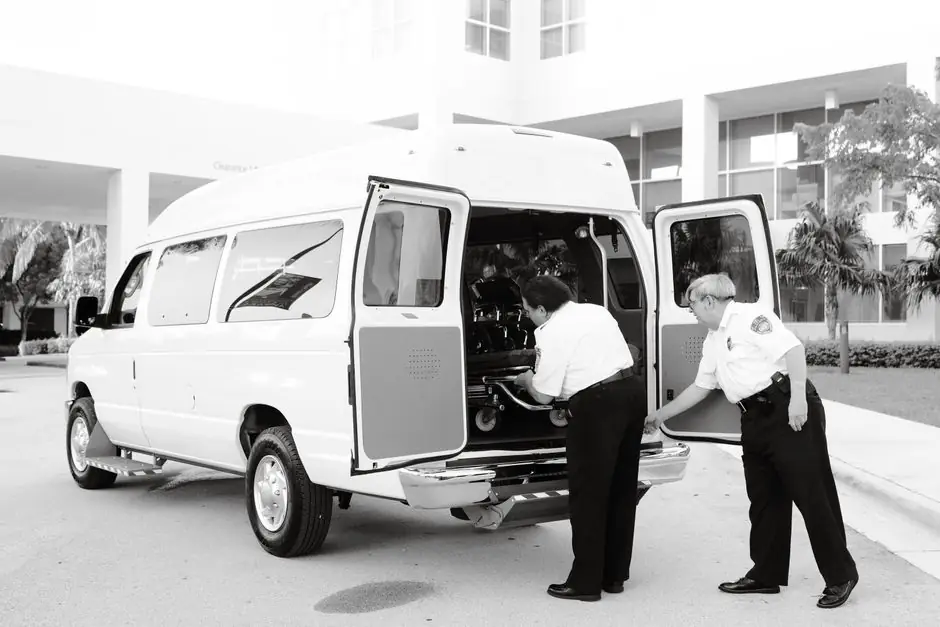
Stretchers fall into four broad classes: basic carry stretchers, flexible fabric models, wheeled transport/gurney trolleys, and specialty rescue variants (basket, scoop, spine board, stair chair). Selection is driven by patient condition, terrain, loading mechanism, and clinical setting, with bariat

· SAFETY & CERTIFICATION · 47 min read

Safety Fence Types and Classifications: A Spec-First Buyer's Reference

Safety fence selection runs on three independent axes: forced-entry resistance (LPS 1175 SR ratings), vehicle impact rating (ASTM M30–M50 / P1–P4), and application class (perimeter, anti-climb, pool, or crash). Specifying the right one requires matching all three to the threat profile and the releva

· SAFETY & CERTIFICATION · 45 min read

Safety mat types and classifications: PSD, insulating, and industrial mat families

Pressure-sensitive safety mats are floor-mounted presence-sensing devices (PSDs) classified under ANSI B11.19-2019 and OSHA 29 CFR 1910.212(a)(1), pairing normally-open conductive layers with Category 3 PLd controllers per ISO 13849-1. Distinct from electrical insulating mats (IEC 61111, ASTM D178)

· SAFETY & CERTIFICATION · 50 min read

Two-Hand Control: Benefits, Trade-offs, and Specification Criteria

Two-hand control devices force operators to press two buttons simultaneously, keeping hands out of crush zones on presses and assembly machinery. Standardised timing windows (typically under 250-500 ms) and Type III/Cat 3 or higher safety architectures make them effective but operator-fatigue sensit

· SAFETY & CERTIFICATION · 58 min read

Protective Clothing Types and Classifications: A Spec-First Reference for 2026

Chemical protective clothing is classified in two parallel systems: the European Type 1-6 scheme (gas-tight to limited spray) and the US EPA/NFPA 1991 Class A-D scheme (gas-tight to general duty). Selection hinges on hazard state, with NFPA 70E ATPV ratings governing arc exposure and ASTM F 1052 cer

· SAFETY & CERTIFICATION · 58 min read

Safety glasses types, ANSI Z87 ratings, and hazard-class selection

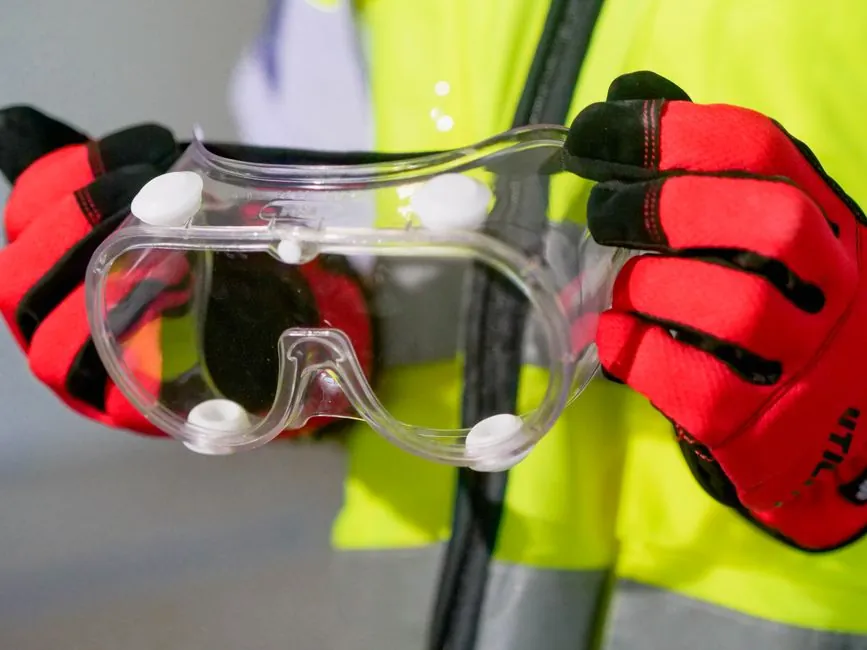
Safety glasses are classified by hazard type: spectacles with side shields for impact, sealed goggles for dust and chemical splash, and laser or welding shades rated by optical density and shade number, all governed by ANSI Z87.1 impact and marking rules.

· SAFETY & CERTIFICATION · 39 min read

Safety shoe types, EN S-classes, and ASTM F2413 ratings compared

Safety shoes are classified by toe material (steel, composite, alloy) and by EN ISO 20345 codes S1 through S5, with separate ASTM F2413 ratings for impact, compression, electrical hazard, and puncture protection. Choosing the right class depends on impact risk, electrical exposure, wet conditions, a

· SAFETY & CERTIFICATION · 41 min read

Respirator Installation: Specs, Standards, and Selection Logic

Respirator installation begins with oxygen verification above 19.5%, 42 CFR Part 84 Subpart J component matching, and a 0.2 µm hydrophobic PTFE sterile-grade tank vent. Match Type A/B/C to the hazard, then validate hose, harness, and facepiece specs against subpart G.

· SAFETY & CERTIFICATION · 43 min read

Respirator Types and Classifications: APR vs ASR, APF, and Fit-Class Specs

Respirators split into two NIOSH-recognized families, air-purifying (APR) and atmosphere-supplying (ASR), with five APR and three ASR sub-types, each carrying a different assigned protection factor. Selecting between them is driven by hazard type, oxygen level, and fit-test class, not by comfort or

· SAFETY & CERTIFICATION · 42 min read

Safety Helmet Types and Classifications: ANSI Z89.1 vs EN 397

Industrial safety helmets divide into two ANSI/ISEA Z89.1 impact types (Type I top-only, Type II top+side) and three electrical classes: Class E proof-tested at 20,000 V, Class G at 2,200 V, and unrated Class C. EN 397, EN 14052, EN 12492, and EN 50365 cover European equivalents.

· SAFETY & CERTIFICATION · 41 min read

Oxygen Detector Advantages and Disadvantages: A Practical Spec Comparison

Oxygen detectors fall into electrochemical, zirconia, optical, infrared, paramagnetic, ultrasonic and laser families, each with distinct cost, life, and accuracy trade-offs. Confined-space O2 alarms trip at 19.5% low and 23.5% high against the 20.9% atmospheric baseline. Selection hinges on measurin

· SAFETY & CERTIFICATION · 36 min read

Oxygen Detector Types and Classifications: Sensor, Form Factor, and Use-Case Guide

Oxygen detectors fall into three sensor families (electrochemical, zirconia, optical/IR) and three form factors (fixed, portable, multi-gas), with 19.5% volume as the OSHA-mandated low-oxygen alarm threshold. Selection hinges on response time, environment, and whether the device must also read CO or

· SAFETY & CERTIFICATION · 49 min read

Toxic Gas Detector Advantages and Disadvantages: A 2026 Spec-First Comparison

Toxic gas detectors use electrochemical, infrared, photoionization, or catalytic-bead sensing to identify hazards like H2S, CO, NH3, and arsine. Each technology trades sensitivity, selectivity, poisoning resistance, and cost, so selection should follow target gas, environment, and certification (ATE

· SAFETY & CERTIFICATION · 38 min read

Toxic Gas Detector Installation: Heights, Spacing, and Commissioning

Toxic gas detector installation hinges on three engineering decisions: match sensor mounting height to gas density versus air (0.2-0.5 m for heavier-than-air, 1.5-1.8 m breathing zone for near-neutral, within 0.3 m of ceiling for lighter), limit horizontal spacing to roughly 5-7 m or sit within 1 m

· SAFETY & CERTIFICATION · 52 min read

Dust Detector Selection: Principle, Range, Certification

Dust detector selection runs on four decision axes: sensing principle (optical, triboelectric, electrostatic, microwave), measuring range, hazardous-area certification, and output protocol. Match the principle to the dust (sub-micron smoke vs coarse stack particulate), the range to the duty (0-1000

· SAFETY & CERTIFICATION · 58 min read

Industrial Oxygen Detector Buying Guide 2026: Sensor, Range, and Certification

For 2026 industrial oxygen detector procurement, electrochemical fixed-point units with 4-20mA/RS485 outputs, Exd II CT6 explosion-proof rating, IP65, and 0-30% VOL range are the mainstream specification, while pump-suction portable units handle confined-space entry per GBZ/T 223-2009.

· SAFETY & CERTIFICATION · 47 min read

Oxygen Detector Selection: Sensor Tech, Alarm Setpoints, and IP Ratings

Oxygen detector selection starts with three numbers: 20.9% normal O2, 19.5% low alarm, 23.5% high alarm. Pick electrochemical for confined-space personal monitors, infrared or paramagnetic for fixed-area process, and match IP rating plus sensor life to the duty cycle.

· SAFETY & CERTIFICATION · 41 min read

ALC panel certificate traceability: what specifiers must verify before sign-off

ICC-ES ESR-5586 (reissued May 2026) confirms ALC wall panels FP-120 and FP-150 by Future Nest Inc. carry auditable code-compliance evidence for IBC 2024, IRC 2024 and IECC 2024 under ASTM C1694-09 and C1693-11, while Singapore and Malaysia ALC shipments additionally rely on CIDB, BCA, SIRIM, SGBC an

· SAFETY & CERTIFICATION · 48 min read