Industry News

Industry News · Page 311

PUMPS, VALVES & PIPING7 min read

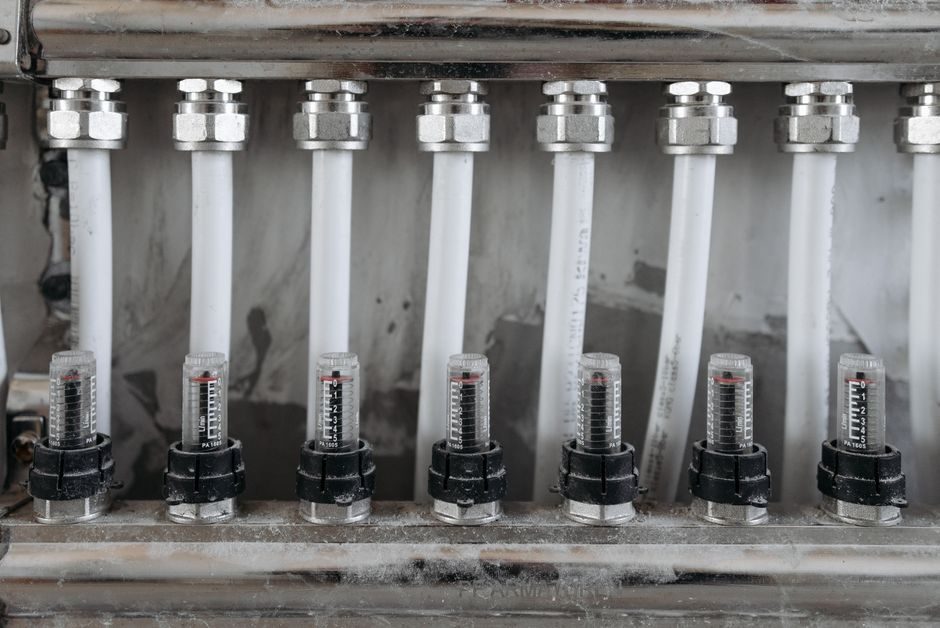
Balancing Valve Buying Guide: DN, PN, Body and Tap Selection

Hydronic balancing valves for HVAC must match DN 15-50 mm size, PN 16-25 bar rating, DZR brass body and dual pressure-tap test points; a V-port plug and 40-position memory stop define measurement precision. Pick fixed-orifice globe types for static balancing, differential-pressure types for dynamic

Read →
Steam Trap Selection Criteria: Type, Pressure, and Failure-Rate Gates

Steam trap selection hinges on operating pressure, condensate load, and discharge duty: match mechanical, thermostatic, or thermodynamic types to the steam system. Keep station failure rate below 3% to cap energy loss around 3.6% of system input.

· PUMPS, VALVES & PIPING · 5 min read

Safety Relief Valve vs Needle Valve: Function, Sizing, and Selection Map

Safety relief valves protect pressure vessels by popping at set pressure; needle valves throttle flow with fine stem control. Use a spring-loaded safety relief valve on steam, air, or hot water lines up to 12.5 bar, and a needle valve for instrumentation, sampling, or flow trim. Both occupy adj

· PUMPS, VALVES & PIPING · 7 min read

Needle Valve Selection Criteria: Spec Gates, Material Logic, and Duty Match

Needle valve selection is driven by four numeric gates: DN (0.25 in to 4 in), pressure class (125 psi to 10,000 psi), temperature window (-54 °C to 538 °C), and media compatibility. Match the body material and end connection to the duty, then verify Cv and seat type.

· PUMPS, VALVES & PIPING · 8 min read

Control Valve Buying Guide 2026: Sizing, Trim, and Duty Match

Control valve selection in 2026 hinges on matching four parameters—body style, flow characteristic, actuation, and trim material—to the specific process duty. Single-seat, double-seat, cage, and self-actuated designs cover most industrial needs when sized to Cv and rated to PN/ASME class.

· PUMPS, VALVES & PIPING · 7 min read

Check Valve Selection Criteria: Variant, Material, and Standard Fit

Check valve selection is driven by five engineering criteria: cracking pressure, installation orientation, fluid viscosity/solids content, pressure class per ASME B16.34 (NPS 3/8-4, Class 150-2500 LB), and body material (ASTM A105N, A182 F316). Match the variant to duty: swing for low-pressure drop,

· PUMPS, VALVES & PIPING · 7 min read

Butterfly Valve Selection Criteria: Seat, Body, and Duty Envelope

Butterfly valve selection is driven by seat style (concentric vs single, double, triple offset), body type (wafer, lug, double-flanged), pressure-temperature envelope, and media compatibility. For processes above 200 °C or with polymerization risk, double/triple-offset metal-seated designs such as t

· PUMPS, VALVES & PIPING · 8 min read

Ball Valve Selection Criteria: Body, Seat, and Pressure-Class Decision Map

Ball valve selection hinges on matching body style (floating vs trunnion), seat material (PTFE, R-PTFE, PEEK, metal), and pressure class to service media. PTFE seats cap near 400°F; metal-seated trunnion designs exceed 1000°F and reach ANSI 2500 lb and above.

· PUMPS, VALVES & PIPING · 5 min read

Air Solenoid Valve vs Push-In Fitting: EMC Immunity Trade-Offs

Air solenoid valves with integrated push-in fittings cut EMC pickup risk on 24 VDC coils versus remote-threaded valves with separate compression fittings. Specify metal-bodied, threaded-port solenoid valves with shielded DIN connectors and ≤1.5 W power draw on servo/inverter panels; use push-in only

· PUMPS, VALVES & PIPING · 7 min read

Steam Separator Selection for Outdoor Maintenance Areas

Outdoor steam separator selection hinges on matching max/min flow, pressure class (PN16/25/40 or ANSI 150/300/600), and a vertical vortex body with an integrated trap station. Drain must sit below the line; moisture target is 2–3% with inlet velocity around 30 m/s.

· PUMPS, VALVES & PIPING · 6 min read

Dust Collector Gasket Selection: Material, Leakage Class, and Service Limits

Gasket selection for dust collection systems hinges on matching material chemistry to dust abrasiveness, temperature, and pressure differential. Rubber, PTFE, and graphite dominate negative-pressure ductwork, while compressed fibre and spiral-wound grades handle high-temperature fume service above 2

· PUMPS, VALVES & PIPING · 7 min read

Bellows Seal Selection Criteria for Outdoor Maintenance Areas

Metal bellows seals are the default choice for outdoor maintenance-area pumps handling mild chemicals, with welded metal bellows rated −40 °C to +400 °C and no elastomer secondary seal to UV-degrade. For abrasive slurries, hot oils above 200 °C, or sanitary service, default to a cartridge pusher sea

· PUMPS, VALVES & PIPING · 7 min read

Pneumatic Tubing Selection Criteria for MCC Panel Builds

For MCC panel pneumatic tubing, pick Nylon 12 or PU in the 1/4-in. to 3/8-in. OD range rated to at least 4× the working pressure (e.g. 112 psi working from a 450 psi burst at 75°F), confirm material compatibility with oil mist, and route the run separately from VFD power cables to control noise and

· PUMPS, VALVES & PIPING · 5 min read

FRL Unit vs Pneumatic Cylinder: EMC Immunity Decision Map

For EMC-heavy plants (welding cells, VFD rooms, outdoor cabinets), pneumatic actuators and FRL units sit on opposite sides of the immunity question: cylinders are pure mechanical loads immune to radiated RF, while FRL packages with electronic regulators or pressure sensors are the components that ac

· PUMPS, VALVES & PIPING · 7 min read

Sanitary Process Piping: Stainless Steel Selection Criteria

Specify 304L or 316L austenitic stainless tubing in sanitary process areas: ASME BPE or ASTM A270 tube, sanitary ferrule clamp joints, ID electropolish to ≤ 20 µin Ra, and orbital TIG welds qualified to ASME B31.3 for cleanability.

· PUMPS, VALVES & PIPING · 8 min read

Industrial Filter Selection Criteria for a Chemical Process Skid

Filter selection for chemical process skids is driven by six quantifiable inputs — particle size cut, flow rate, material compatibility, ΔP budget, surface area, and footprint — and the dominant element types in 2026 remain cartridge, bag, and porous-metal (sintered) per OEM published guidance.

· PUMPS, VALVES & PIPING · 7 min read

Electric vs Pneumatic Valve Actuator: Gear Backlash Spec Map

Electric and pneumatic valve actuators trade off on gear-backlash tolerance: pneumatic rack-and-pinion units tolerate wider backlash via spring-air end-play, while electric actuators demand tighter gear mesh (typically under 1-2 degrees) for accurate modulation. Pneumatic suits fail-safe, high-cycle

· PUMPS, VALVES & PIPING · 7 min read

Sealing Washer vs Gasket: Material Compatibility Decision Map

For static bolted joints, specify a gasket; for fastener-loaded sealing faces with limited space, specify a sealing washer. Material compatibility is decided by medium, temperature, pressure, and torque-controlled compression — not by part name alone.

· PUMPS, VALVES & PIPING · 6 min read

Pneumatic Tubing Selection Criteria for a Conveyor Cell: Material, Diameter, Pressure

Polyurethane (PUR) is the default for short, flexible conveyor-cell pneumatic runs; nylon 12 and PTFE cover high-pressure or sanitary lines; metal (304/316 SS) handles long straight vacuum-conveying runs. Tubing is specified by outside diameter, hose by inside diameter, and the two must not be mixed

· PUMPS, VALVES & PIPING · 7 min read

Plastic Pipe Joints vs Flame Arrester Seating: Two Leak Paths, One Compatibility Rule

Plastic pipe joint integrity and flame arrester element seating are two distinct leak-paths that share one rule: material compatibility and joint-prep discipline decide 80% of the outcome. CPVC, PVC, PEX, and HDPE each have documented joint-failure modes; deflagration arresters require gasket-and-el

· PUMPS, VALVES & PIPING · 9 min read

Ball Valve Selection Criteria for Corrosive Chemical Service

For corrosive chemical service, ball valve selection hinges on body/ball/seat material compatibility, pressure-temperature rating, and seat弹性 — UPVC, stainless 316L, and duplex grades cover most duties per ASTM A216/A216M and ISO 5211.

· PUMPS, VALVES & PIPING · 6 min read

Submersible Pump Selection for Corrosive Chemical Transfer

For corrosive chemical transfer, pick a submersible pump by matching wetted-material chemistry (PP, PVDF, SS316, alloy 20, Hastelloy) to the specific gravity, temperature and solids content of the fluid, then verify seal and motor IP rating. Capacities up to 700 m³/h are available on chemical-duty v

· PUMPS, VALVES & PIPING · 5 min read

Multistage Centrifugal Pump Selection for Wastewater Lift Stations

Multistage centrifugal pumps for wastewater lift stations are specified on head (m), flow (m³/h), solids passage (mm), and material — typical horizontal multistage units cover H=13–232.8 m at Q=12.6–1260 m³/h with 0–105 °C fluid, while dry-installed sewage pumps with free-flow impellers handle 75–10

· PUMPS, VALVES & PIPING · 7 min read

Hazardous-Area Skid Hydraulic Valve Selection: Spec Criteria 2026

For 2026 hazardous-area skids, hydraulic valve selection is driven by zone rating (ATEX/IECEx), fluid cleanliness ISO 4406, peak pressure versus nominal, and connectivity (IO-Link, multi-Ethernet). Match proof-of-origin, not brochure language.

· PUMPS, VALVES & PIPING · 7 min read

Hydraulic Accumulator Selection for Structural Fabrication: Type, Size, and Precharge

For structural fabrication duty — press clamps, weld positioners, hydraulic jigs, and punching/forming circuits — bladder-type accumulators sized at 1-10 L with a 4:1 pressure ratio (precharge at ~25% of max working pressure) and PED 2014/68/EU certification are the most common 2026 selection. Match

· PUMPS, VALVES & PIPING · 6 min read

Steam Separator Selection Criteria for Chemical Process Skids

Steam separator selection for a chemical process skid is driven by six mechanical facts: matched saturated flow rate (lb/hr), maximum operating pressure, allowable pressure drop, inlet/outlet steam quality, horizontal-vs-vertical orientation, and ASME Section VIII Div. 1 materials of construction. S

· PUMPS, VALVES & PIPING · 7 min read

Outdoor Mechanical Seal Selection: Weather, Flush, and Failure-Mode Logic

Outdoor maintenance areas demand mechanical seals rated for weather, washdown, and ambient temperature swings from roughly -20 °C to 60 °C, with flushed, gas-off, or containment-guard arrangements as the baseline. Selection is driven by pumped fluid, T-bar/PV/Tc pressure/temperature envelope, and a

· PUMPS, VALVES & PIPING · 6 min read

FRL Unit vs Push-In Fitting for Pneumatic Diagnostics

For pneumatic diagnostic work, an FRL unit adds pressure-regulation and filtration ahead of any push-in fitting run; a bare push-in fitting alone cannot condition air, so pairing them — regulator/lubricator upstream, push-in tees and silencers at the test points — is the standard diagnostics-friendl

· PUMPS, VALVES & PIPING · 5 min read

Stainless Steel Pipe vs Sight Glass: Cleanability Decision Map

Stainless steel pipe (ASTM A270 sanitary tube) and sight glass windows are both CIP-friendly, but they answer different questions: pipe conveys and is cleaned in-line, while a sight glass lets an operator visually verify cleanability on the spot. Pick 316L sanitary tube with Ra ≤0.8 μm for the run,

· PUMPS, VALVES & PIPING · 5 min read

Screw Pump Selection for Corrosive Chemical Transfer: Spec Map and Material Logic

For corrosive chemical transfer, screw pump selection hinges on four spec axes: wetted-material compatibility (SS316, duplex, alloy 20, PTFE/stator elastomer), viscosity band, seal architecture, and the chemical class being pumped. Use a comparison grid of single-screw vs twin-screw vs triple-screw

· PUMPS, VALVES & PIPING · 7 min read

Vacuum Generator Sizing for MCC Panel Integration

Selecting a vacuum generator for an MCC panel comes down to three numbers: vacuum level (kPa abs), suction flow (Nl/min) and air-consumption ratio (Nl/min per Nl/min), plus matching the panel's 24 VDC I/O and pneumatic supply. Single-stage ejectors dominate light pick-and-place; multi-stage cartridg

· PUMPS, VALVES & PIPING · 8 min read

Solenoid vs Diaphragm Valve: Actuation Speed Decision Map

Solenoid valves typically shift in 5-50 ms via electromagnetic force, while diaphragm valves need 100-1000 ms because a pressure differential must build across the elastomeric membrane. Choose solenoid for sub-second cycling; choose diaphragm when the process fluid is dirty, aggressive, or requires

· PUMPS, VALVES & PIPING · 5 min read

Plug Valve vs Pinch Valve: Spec-Level Selection for Temperature-Limited Service

Plug valves and pinch valves are both isolation-class devices but diverge sharply when temperature limits, slurry handling, and actuation discipline are stacked side by side; pick a PTFE-sleeved plug valve for clean, high-temperature shutoff, a lubricated or metal-seated plug for steam and hydrocarb

· PUMPS, VALVES & PIPING · 7 min read

Multistage vs Self-Priming Pump: Dry-Run Risk Selection Map

Multistage centrifugal pumps tolerate dry-running only when fitted with an external protector (per S7), while self-priming centrifugal pumps tolerate dry-running for tens of seconds to several minutes by design. Spec a multistage for clean high-pressure water and a self-priming for solids-laden, int

· PUMPS, VALVES & PIPING · 8 min read

Diaphragm vs Inline Pipeline Pump: Calibration Interval Decision Map

Diaphragm pumps and inline pipeline pumps diverge sharply on calibration interval, leakage risk, and serviceable envelope: LEWA triplex diaphragm units reach 1,200 bar and 180 m³/h yet isolate process fluid from dynamic seals, while inline centrifugal pipeline pumps handle high-flow transfer with ro

· PUMPS, VALVES & PIPING · 6 min read

Magnetic-Drive vs Sealed Centrifugal Pump: Flow Stability Trade-Offs

For steady flow stability on corrosive or low-pressure chemical duty, magnetic-drive centrifugal pumps (5–1514 L/min, 4–23 m head) outperform sealed units by eliminating leak paths and shaft alignment drift. Sealed centrifugal pumps remain preferred for high-head, high-flow, abrasive, or hot-oil ser

· PUMPS, VALVES & PIPING · 8 min read

Hydraulic Pump vs Motor: Picking the Right Stage for Flow Stability

For flow stability on a fixed displacement load, a hydraulic motor driven by a load-sensing pump out-performs a fixed pump feeding a cylinder circuit; output ripple on piston motors is typically 1–3% versus 5–15% on gear units. Match topology to duty: LS for variable load, fixed plus accumulator for

· PUMPS, VALVES & PIPING · 7 min read

Force Gauge Price 2026: Cost Drivers, Spec Bands, and TCO Math

Digital force gauges in 2026 list from US$309 FOB-China for 1-piece MOQ entries, while Chatillon DFE3 and ergoFET 500 sit in the mid-to-upper band. Real cost is driven by load-cell class, accuracy, capacity, calibration cert, and accessory stack, not sticker price.

· MEASUREMENT & TEST · 5 min read